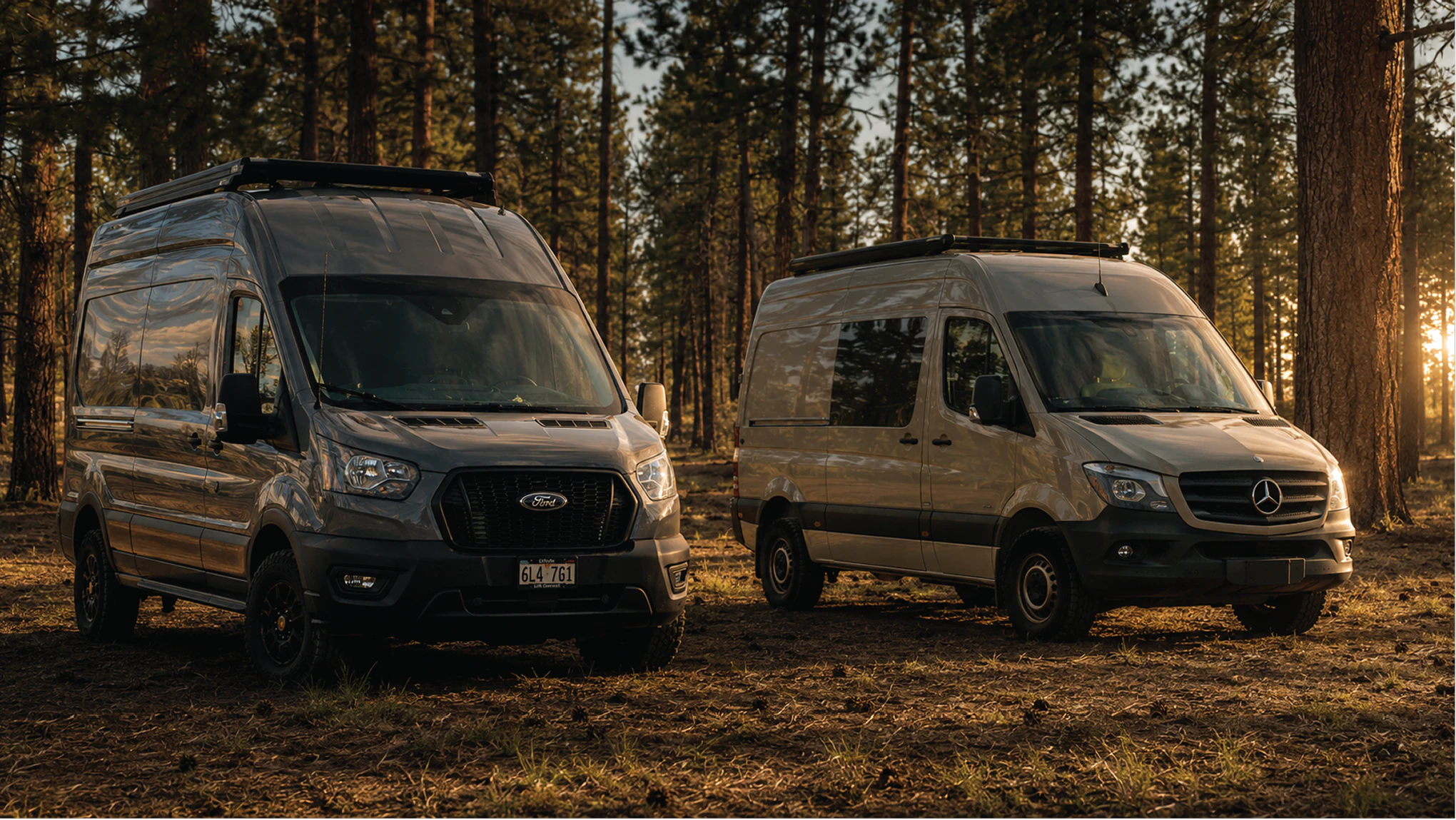
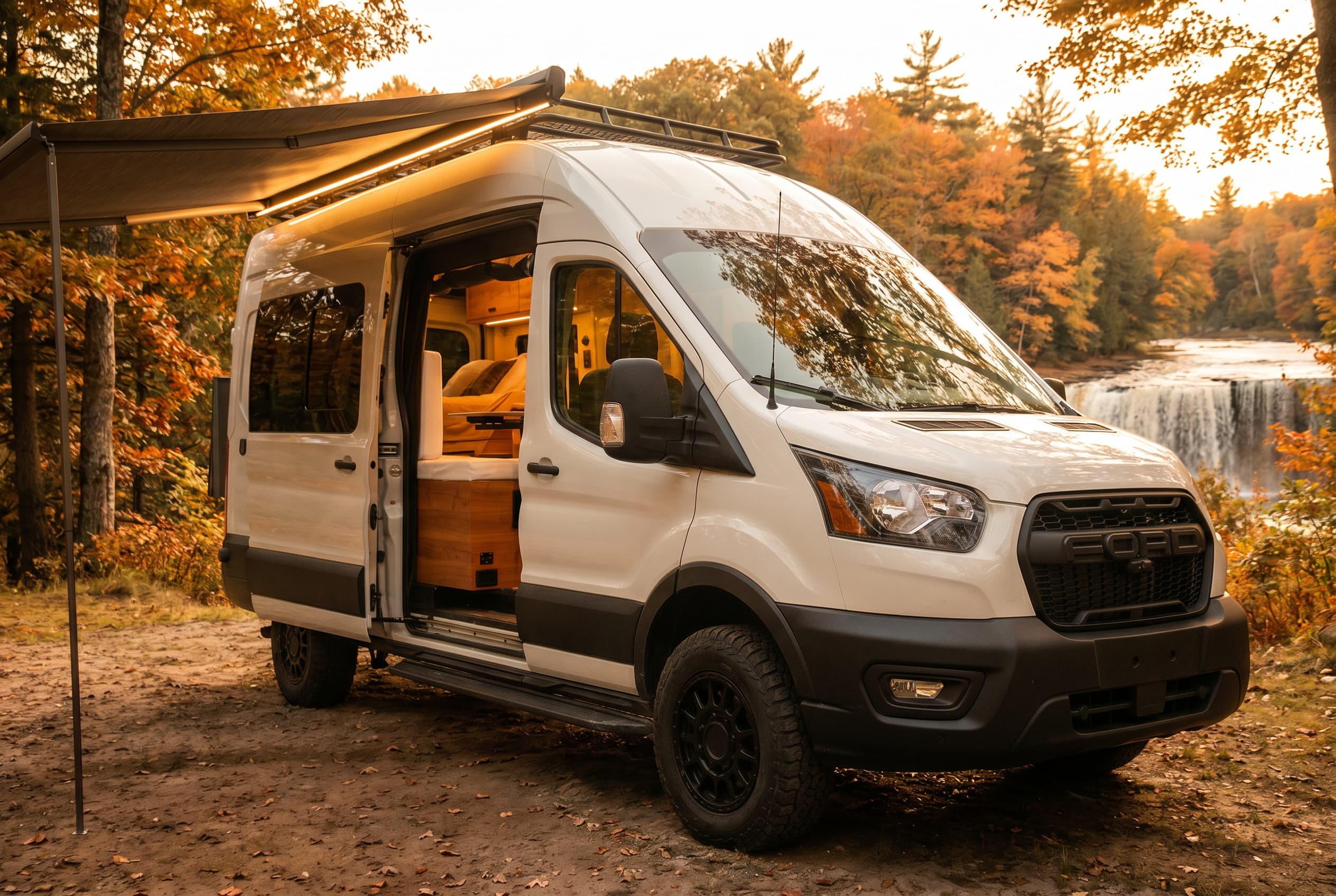
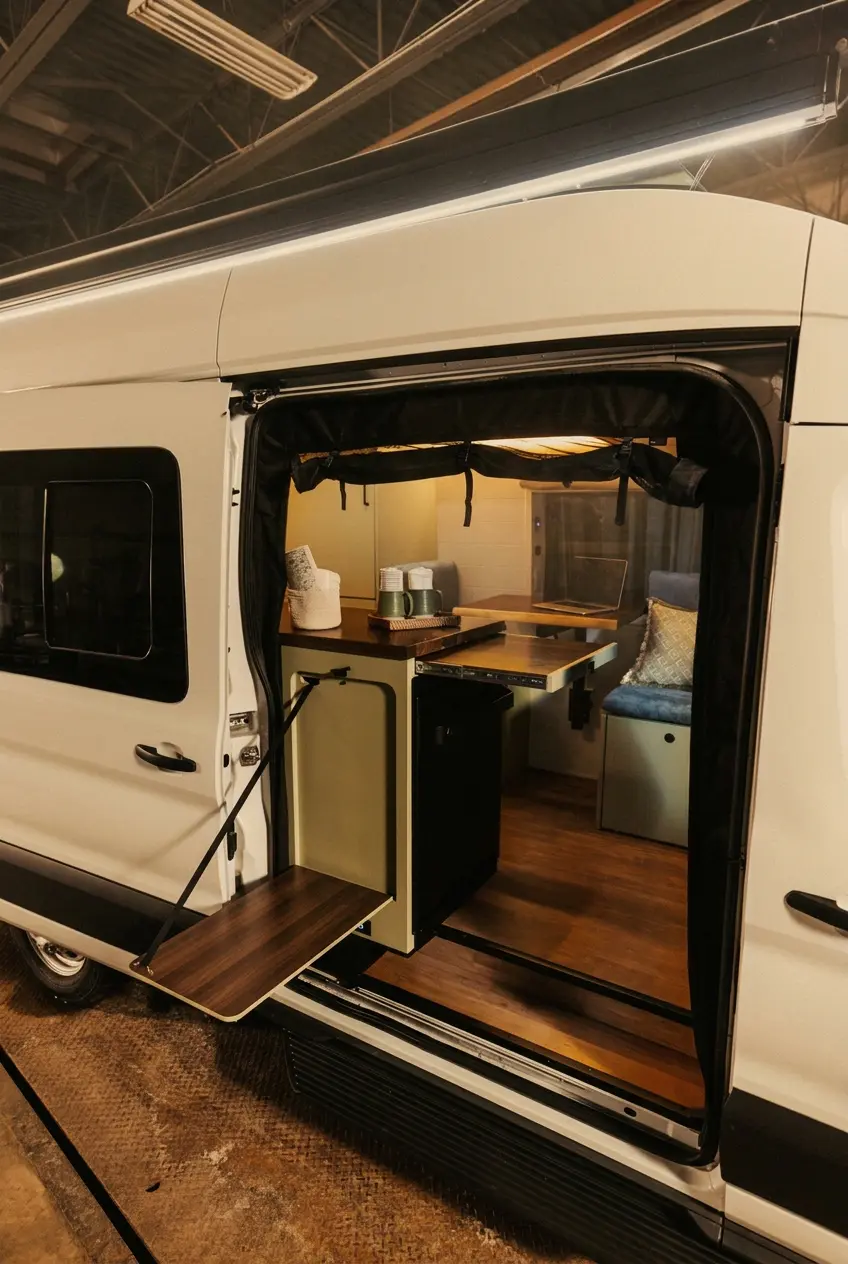
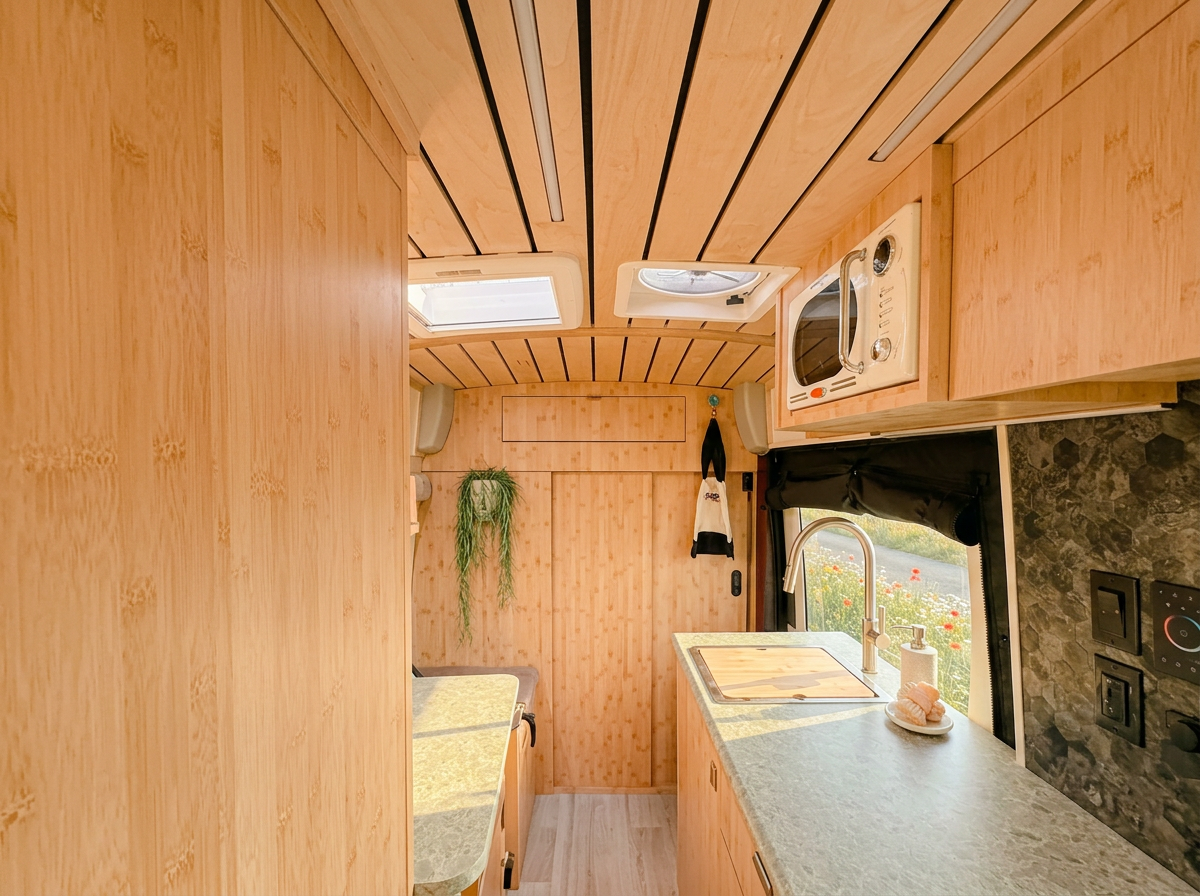
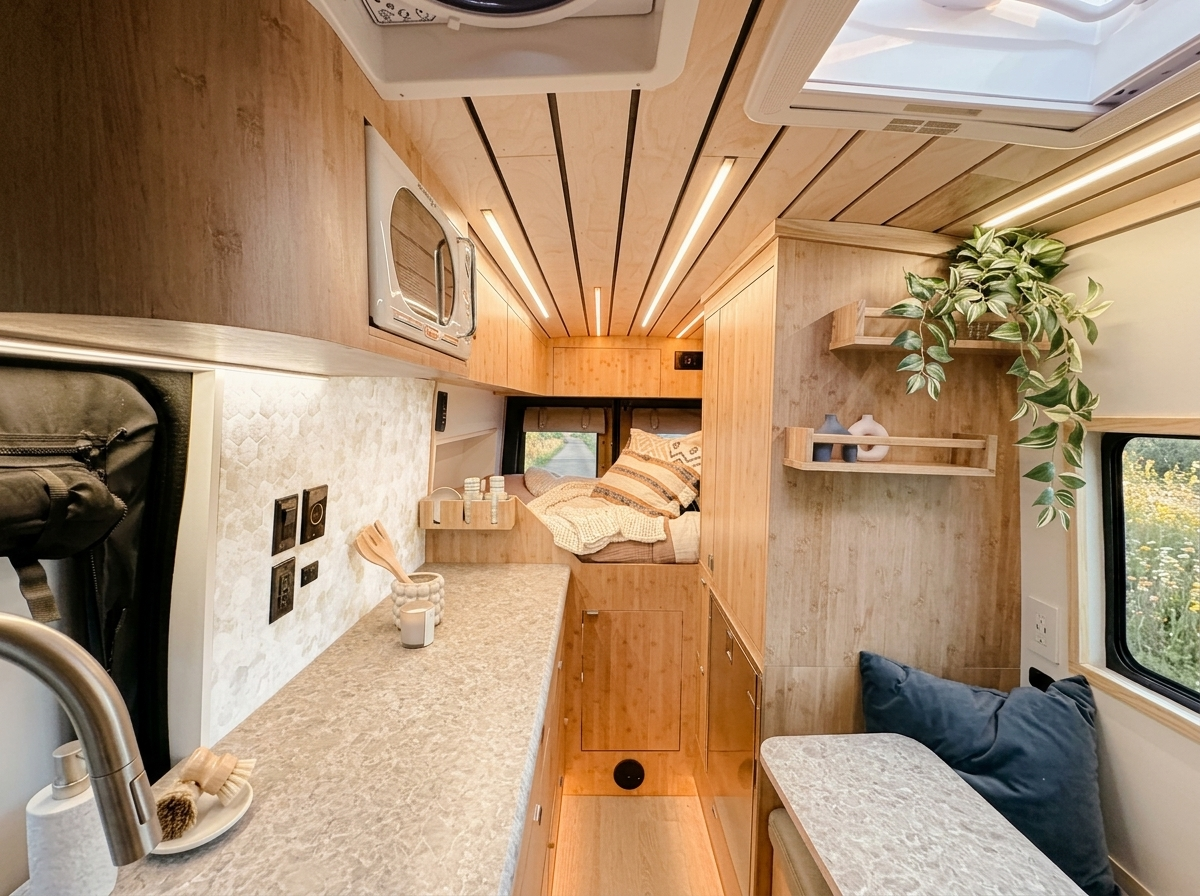
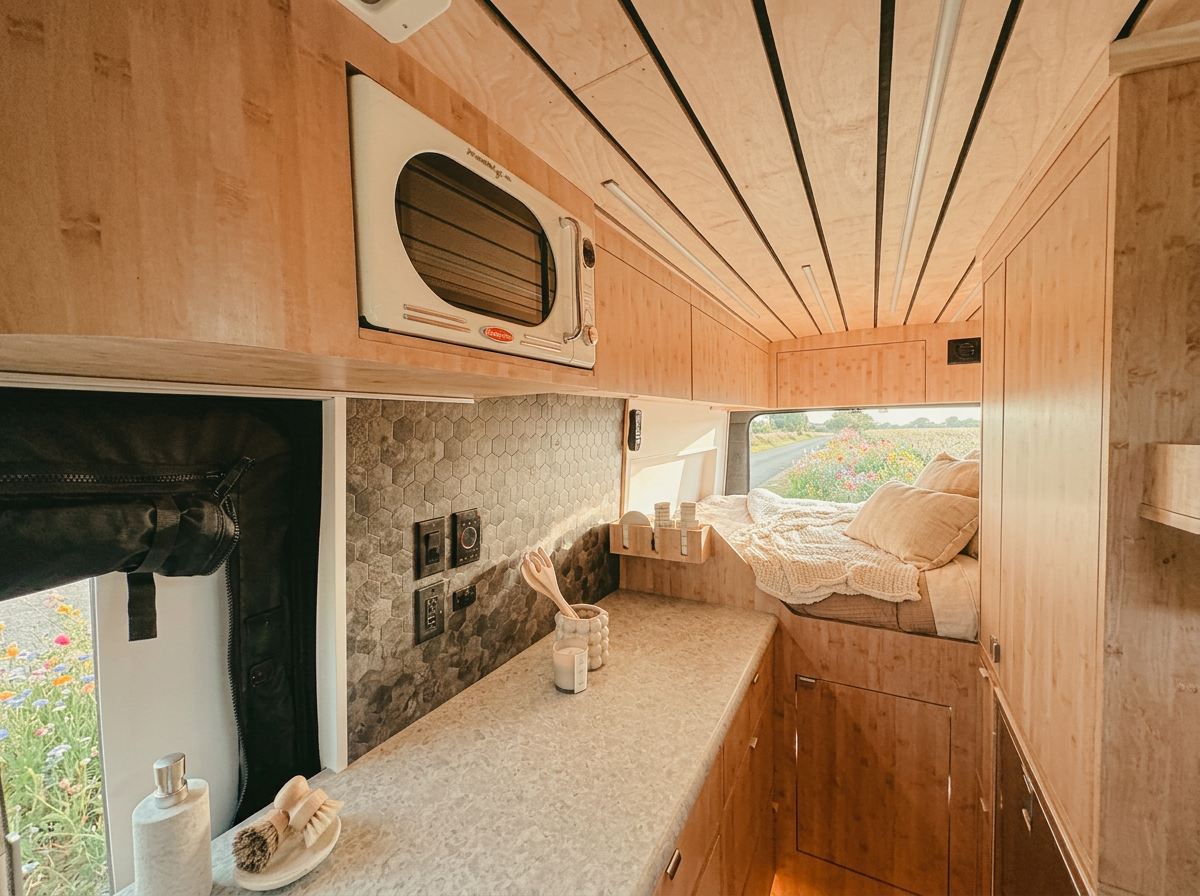
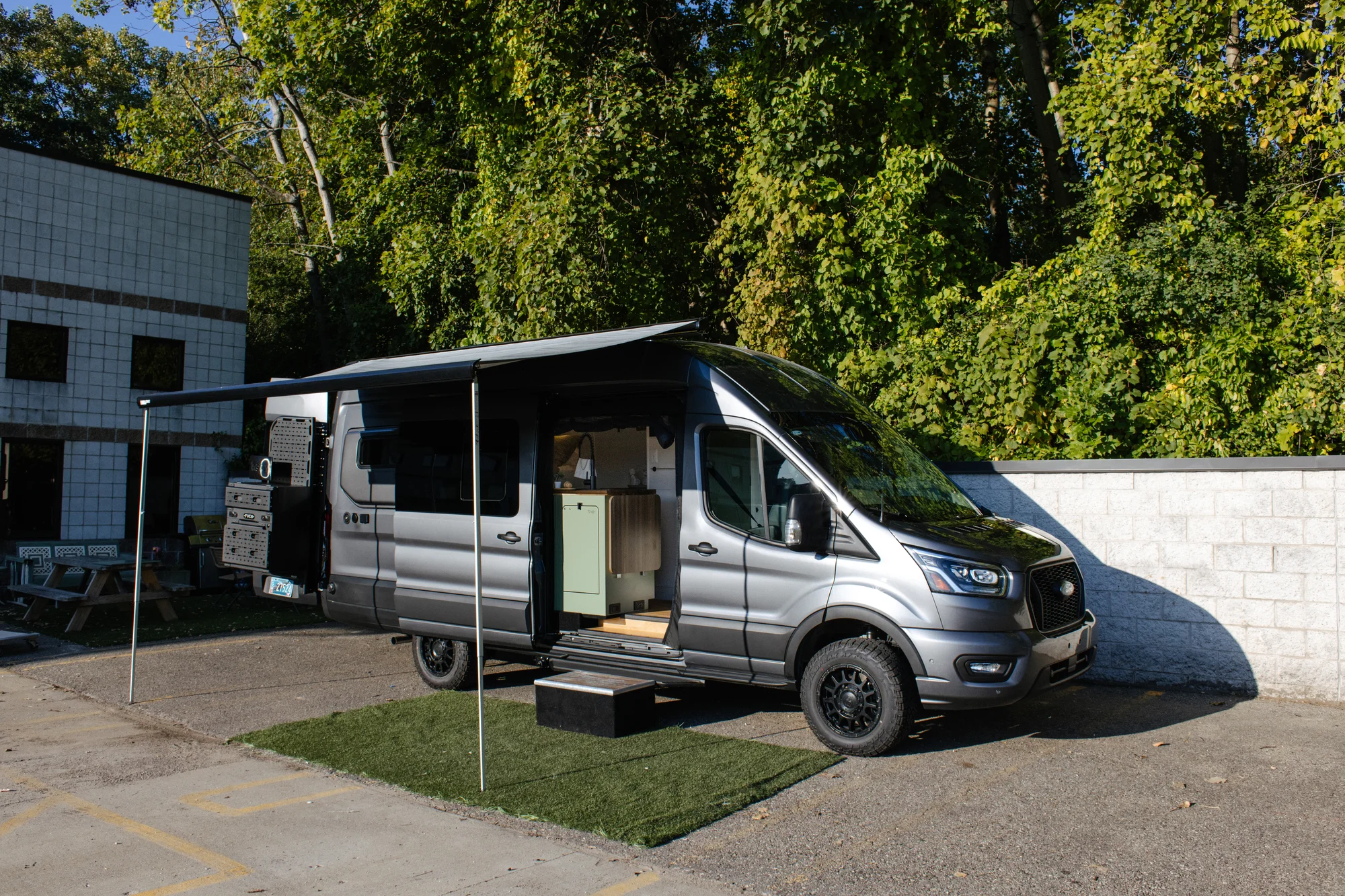
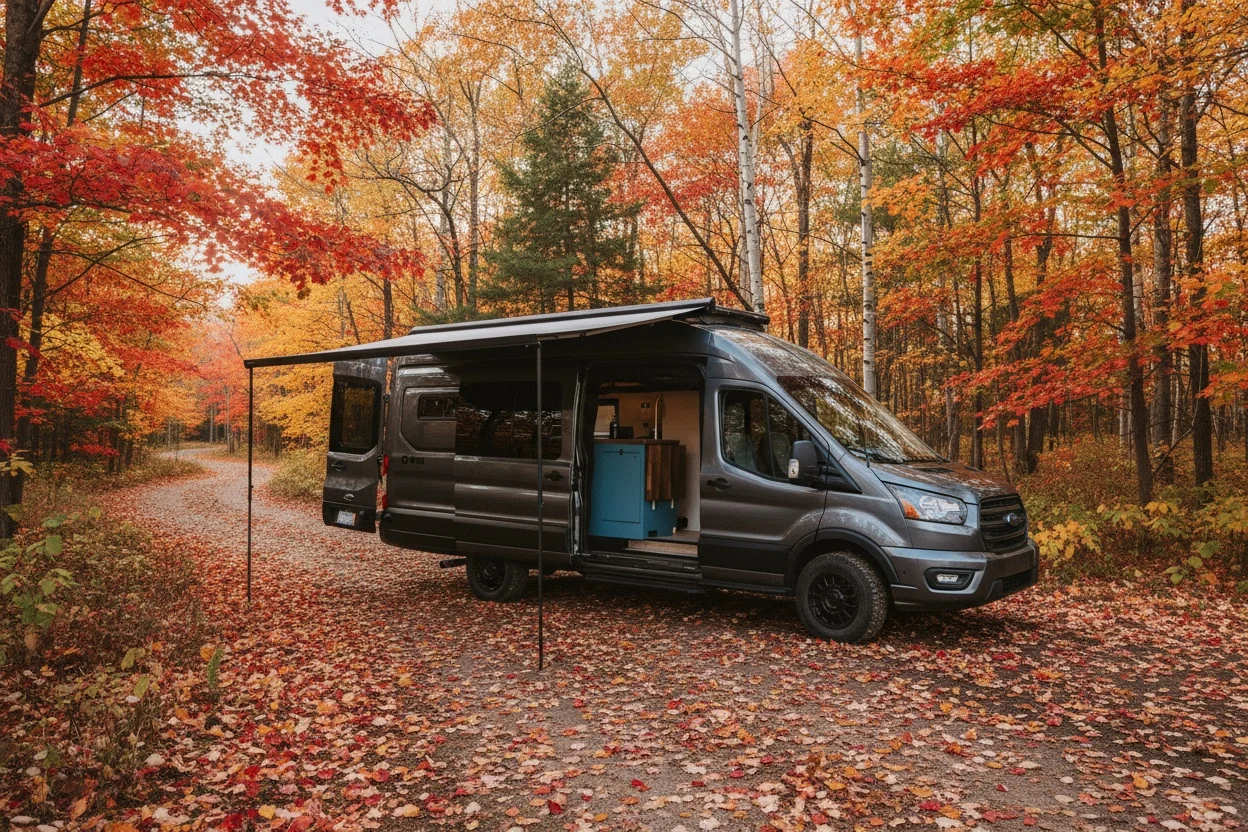
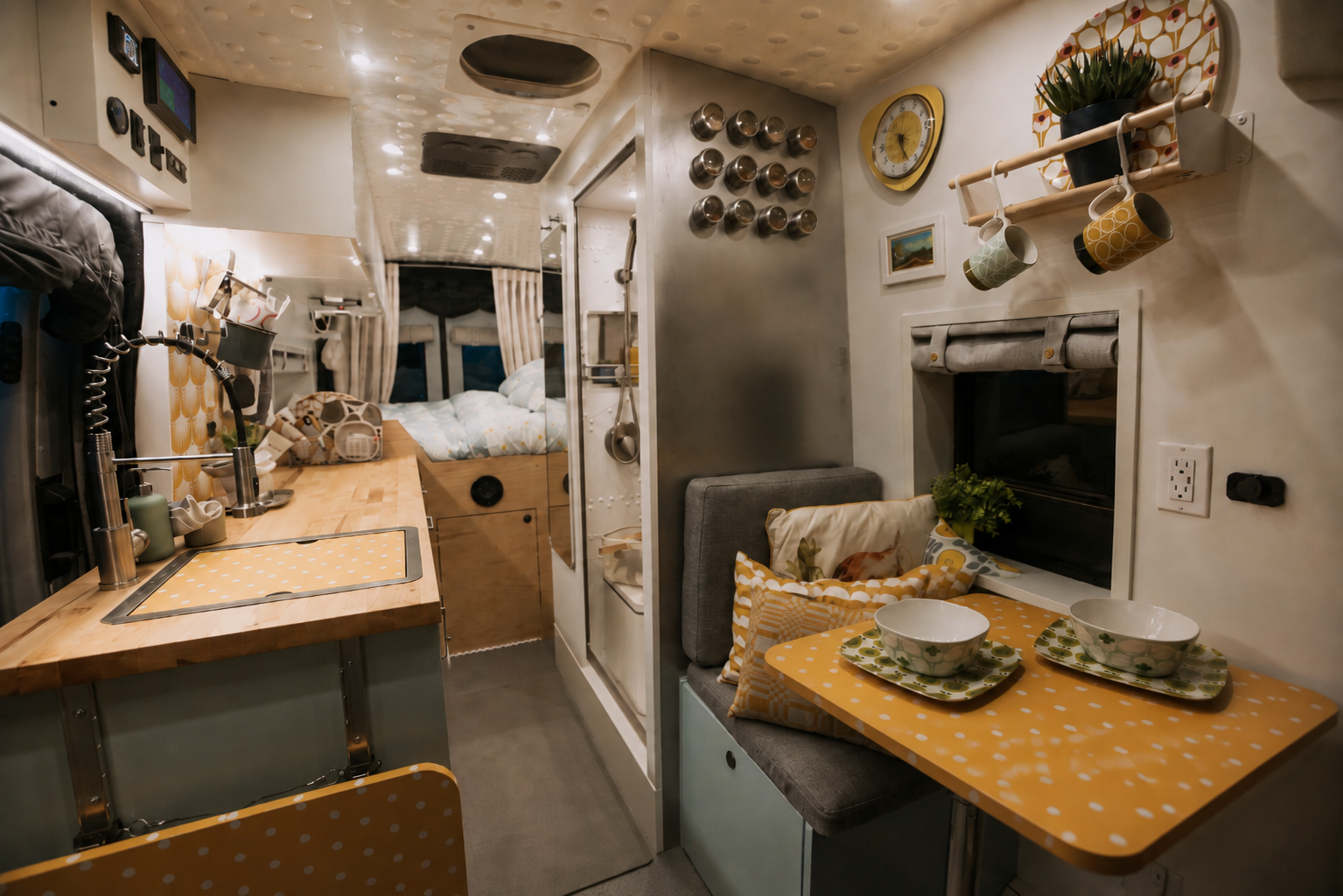
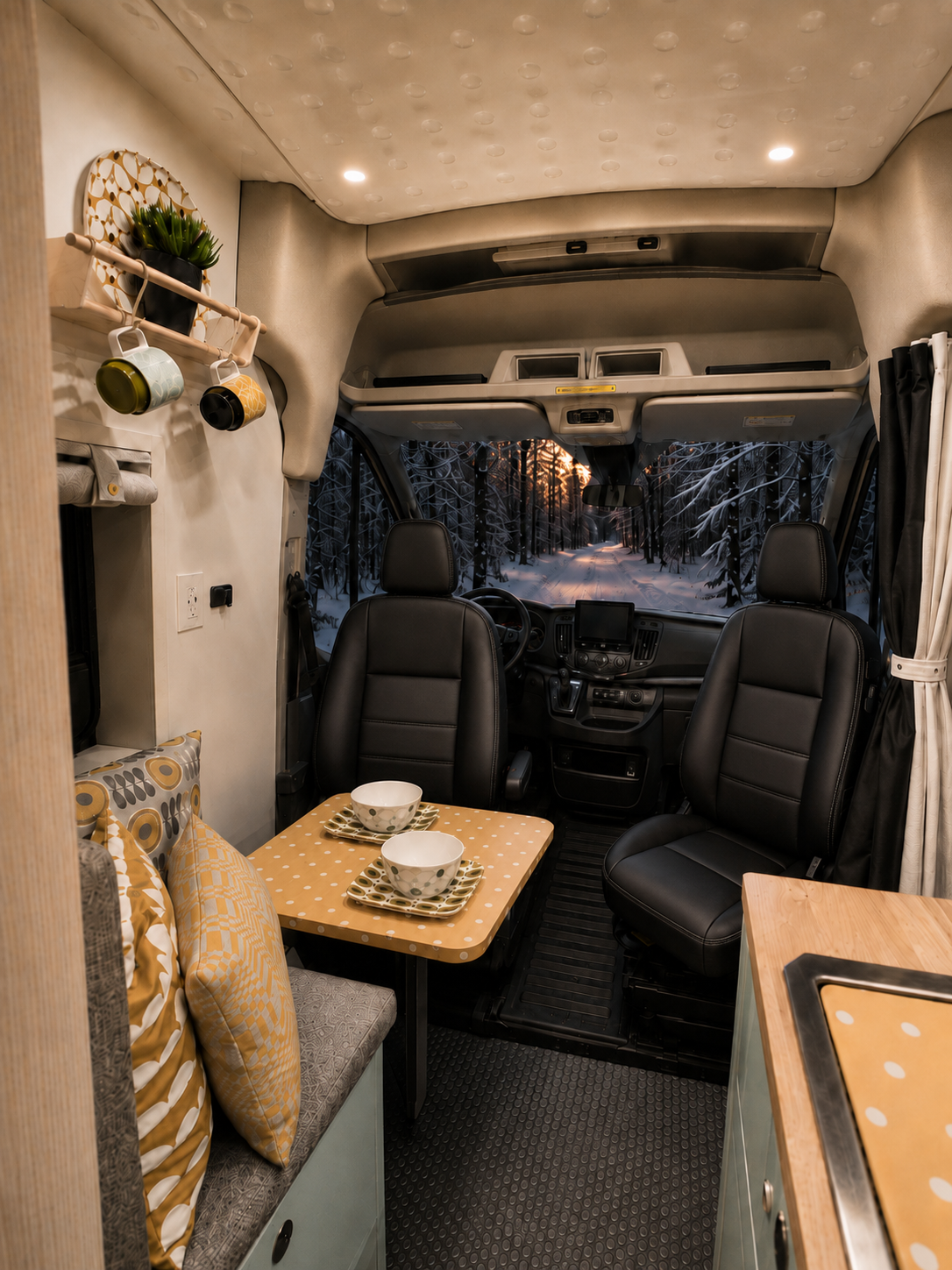
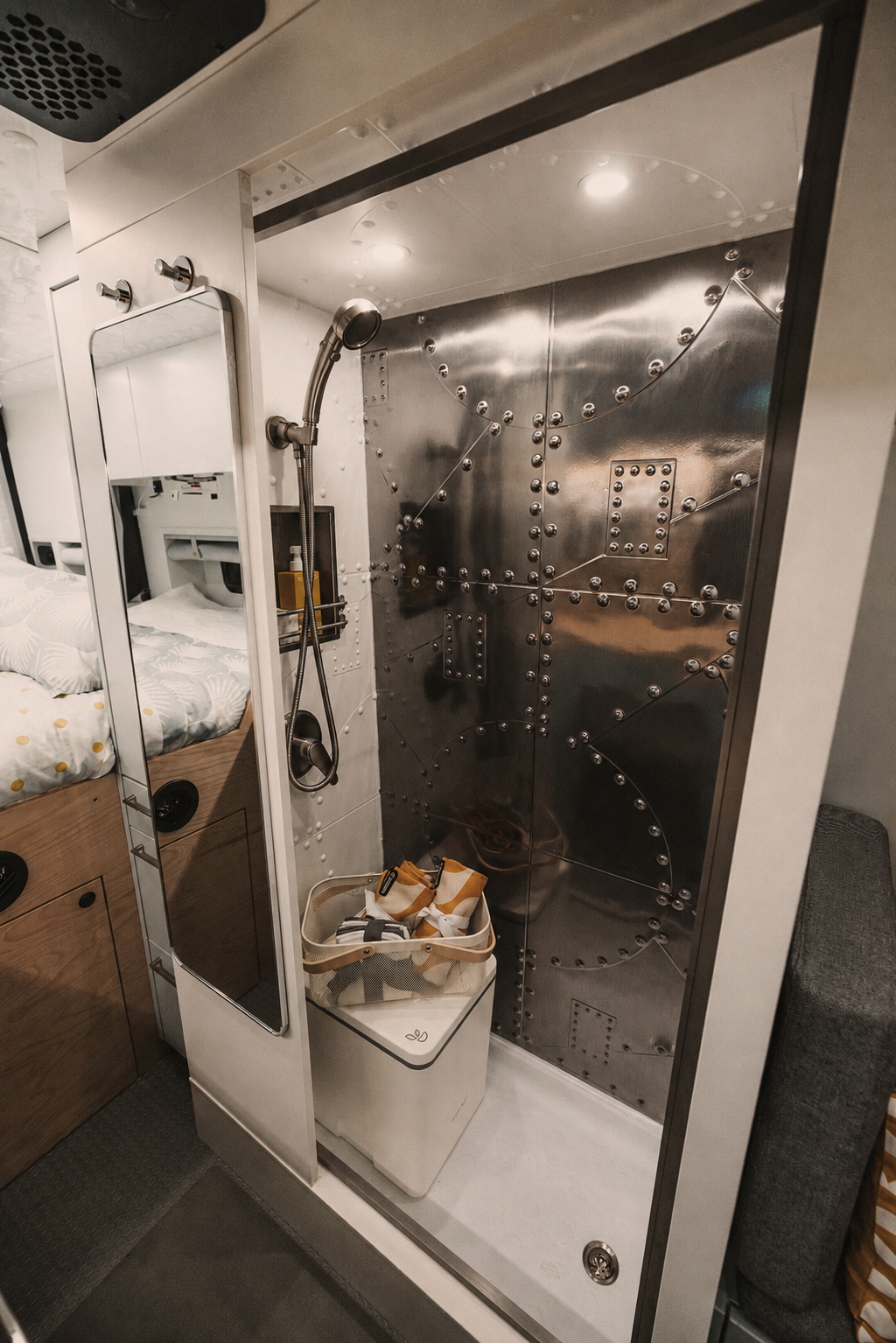
Ford Transit vs Sprinter Camper Van: Real-World Differences

By Paul Domish | The Drift
“What’s better for a campervan — Ford Transit or Mercedes Sprinter?”

If you spend any time researching the Ford Transit vs Sprinter camper van debate online, you’ll see that question everywhere — in forums comment sections, and builder walkthroughs.
After reading builder blogs, owner reviews, and spec sheets, a familiar pattern usually emerges:
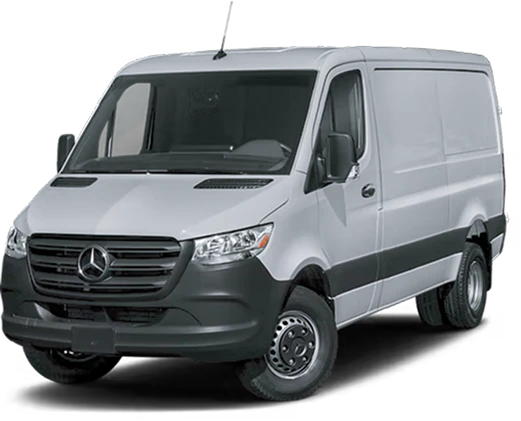
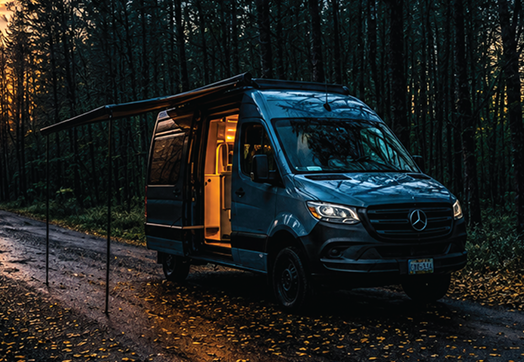
- The Sprinter is often viewed as the premium, diesel touring platform with strong resale value.
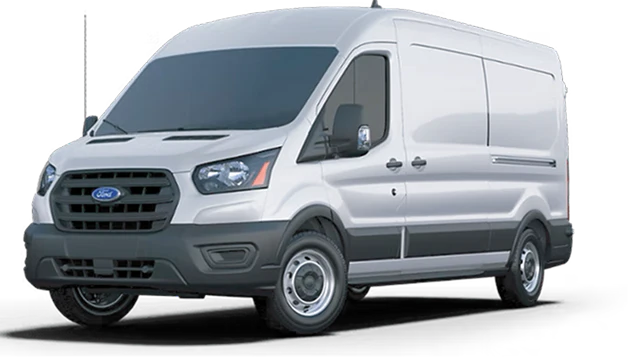
- The Transit is praised for its SUV-like driving feel, widespread service network, gas-engine simplicity, and slightly roomier interior dimensions.
So instead of asking which van is better, the more useful question is:
Which van is better for how I actually want to live and travel?
First: You’re Not Choosing Between “Good” and “Bad”
Many people come into this decision carrying a lot of tension — like one wrong choice could derail the entire plan. We try to remove that pressure right away.
From our perspective:
- Both vans are well-engineered
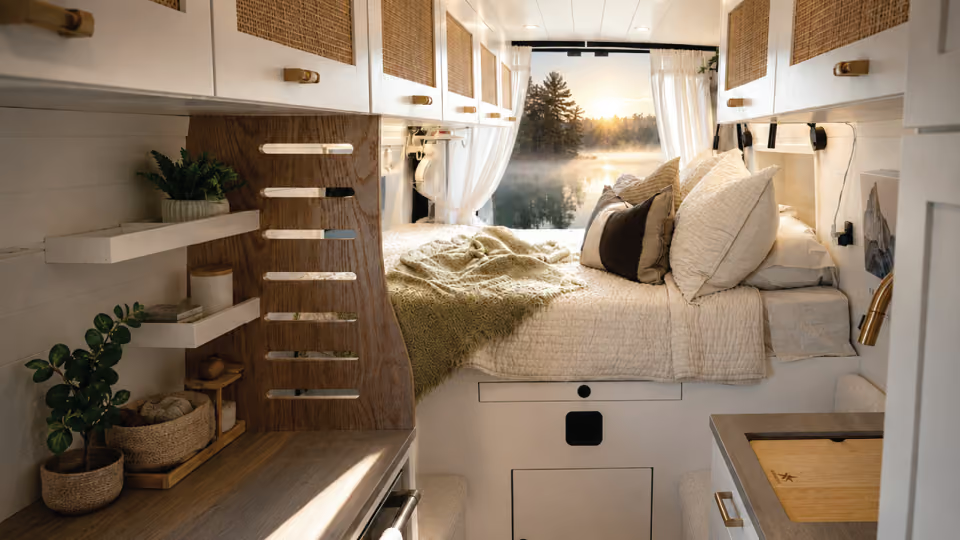
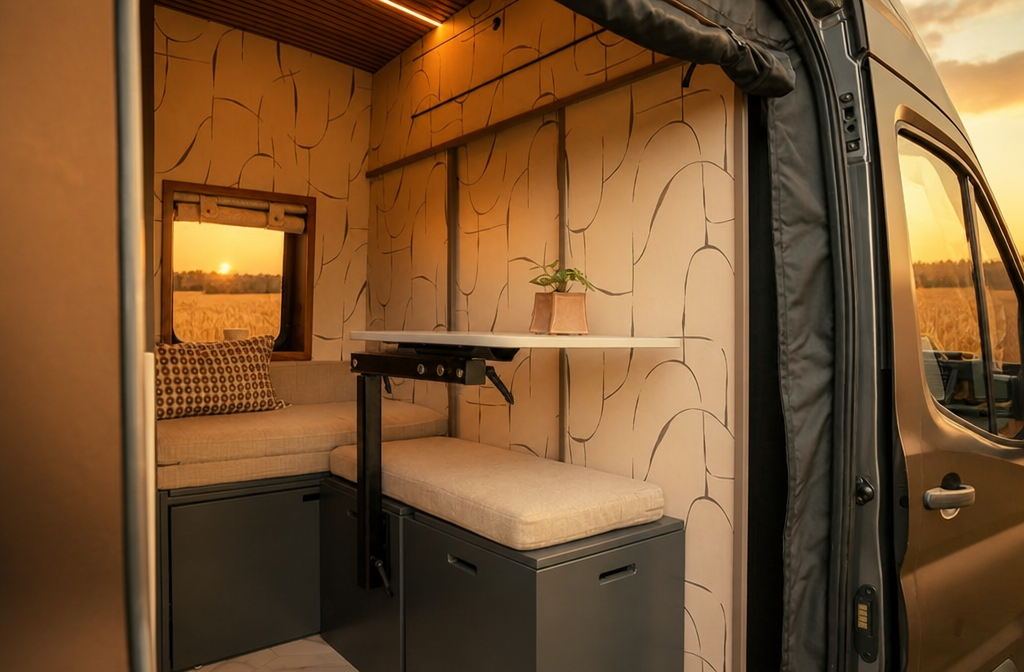
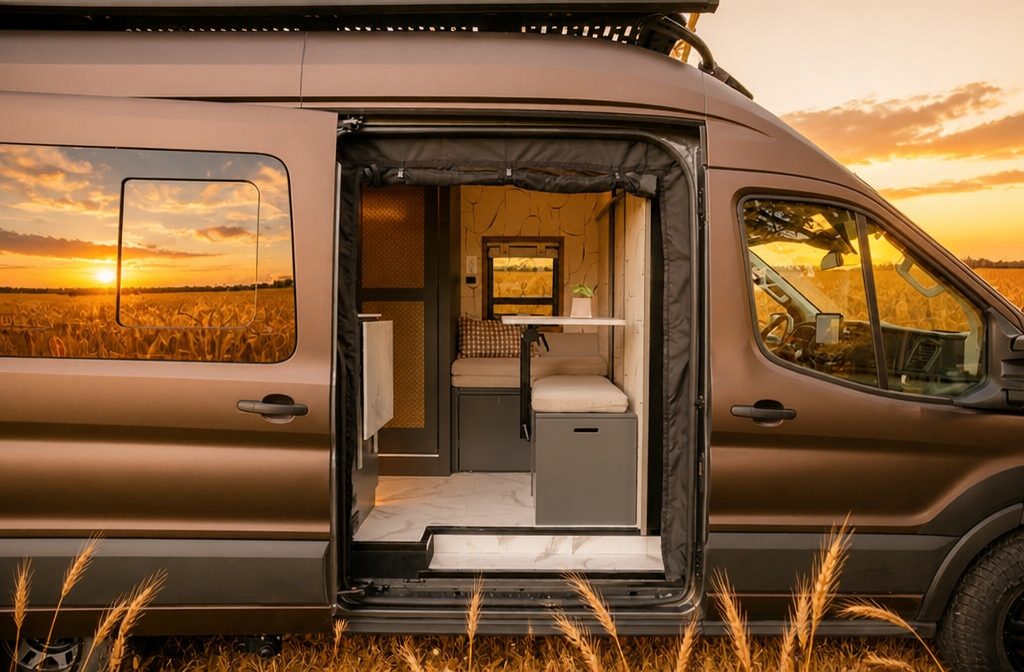
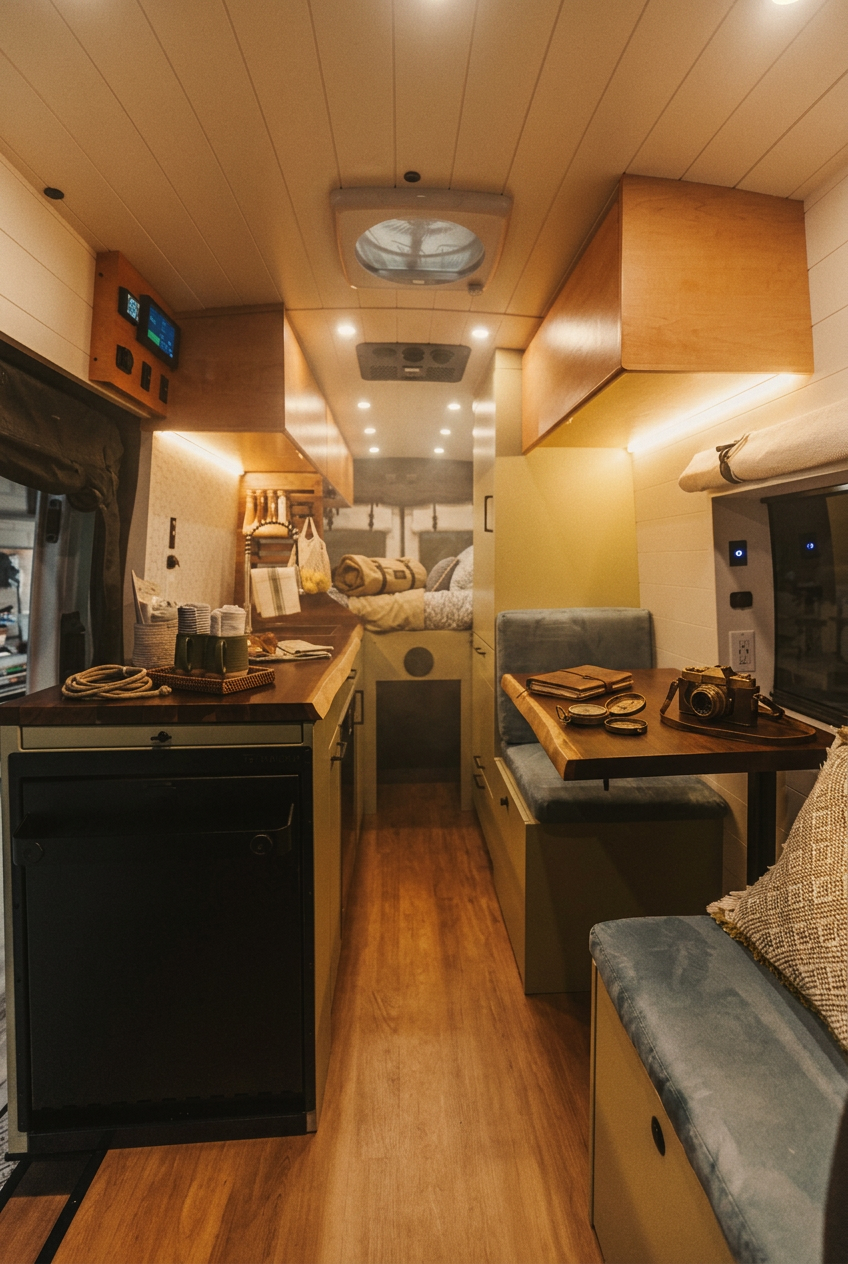
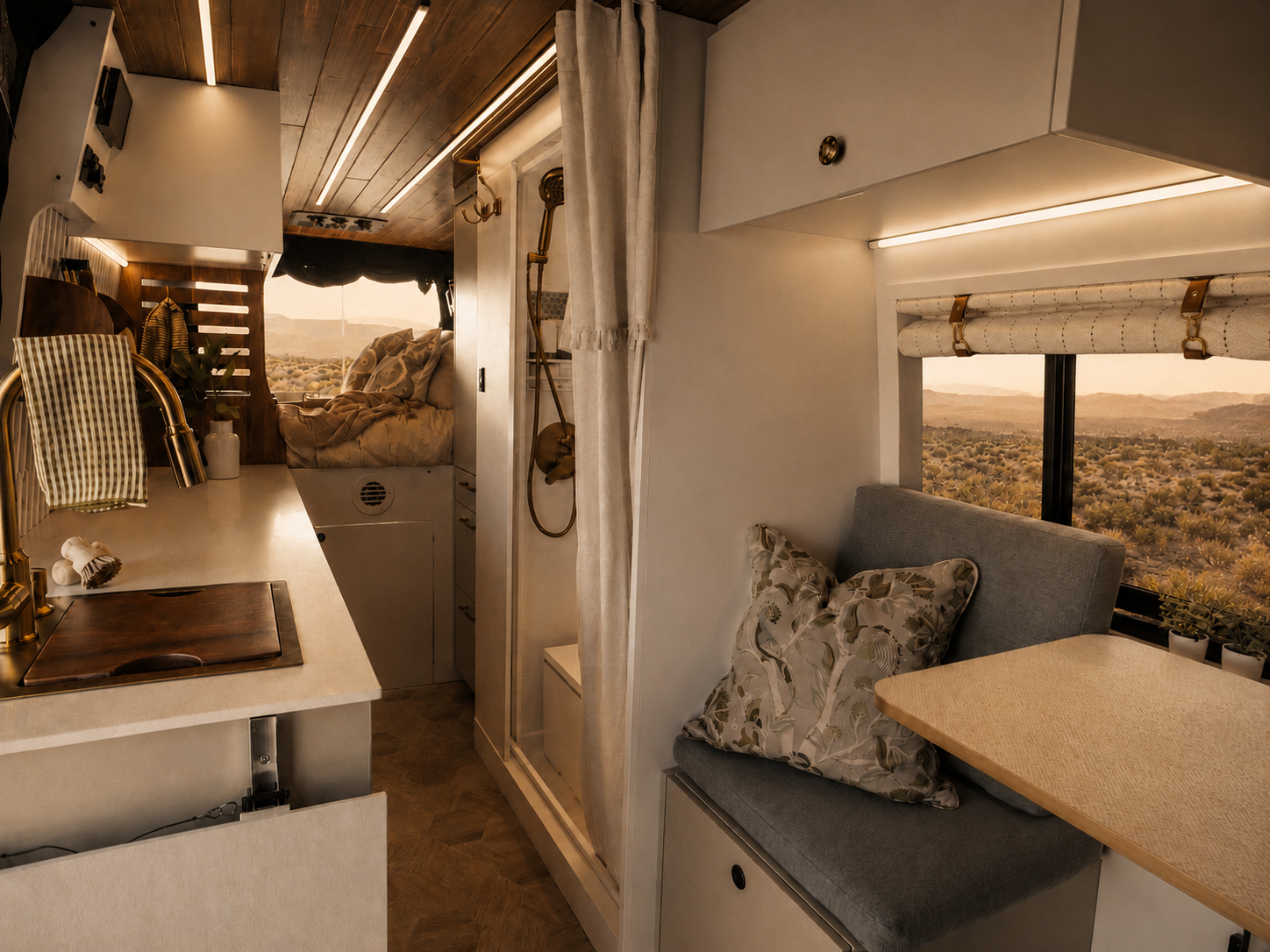
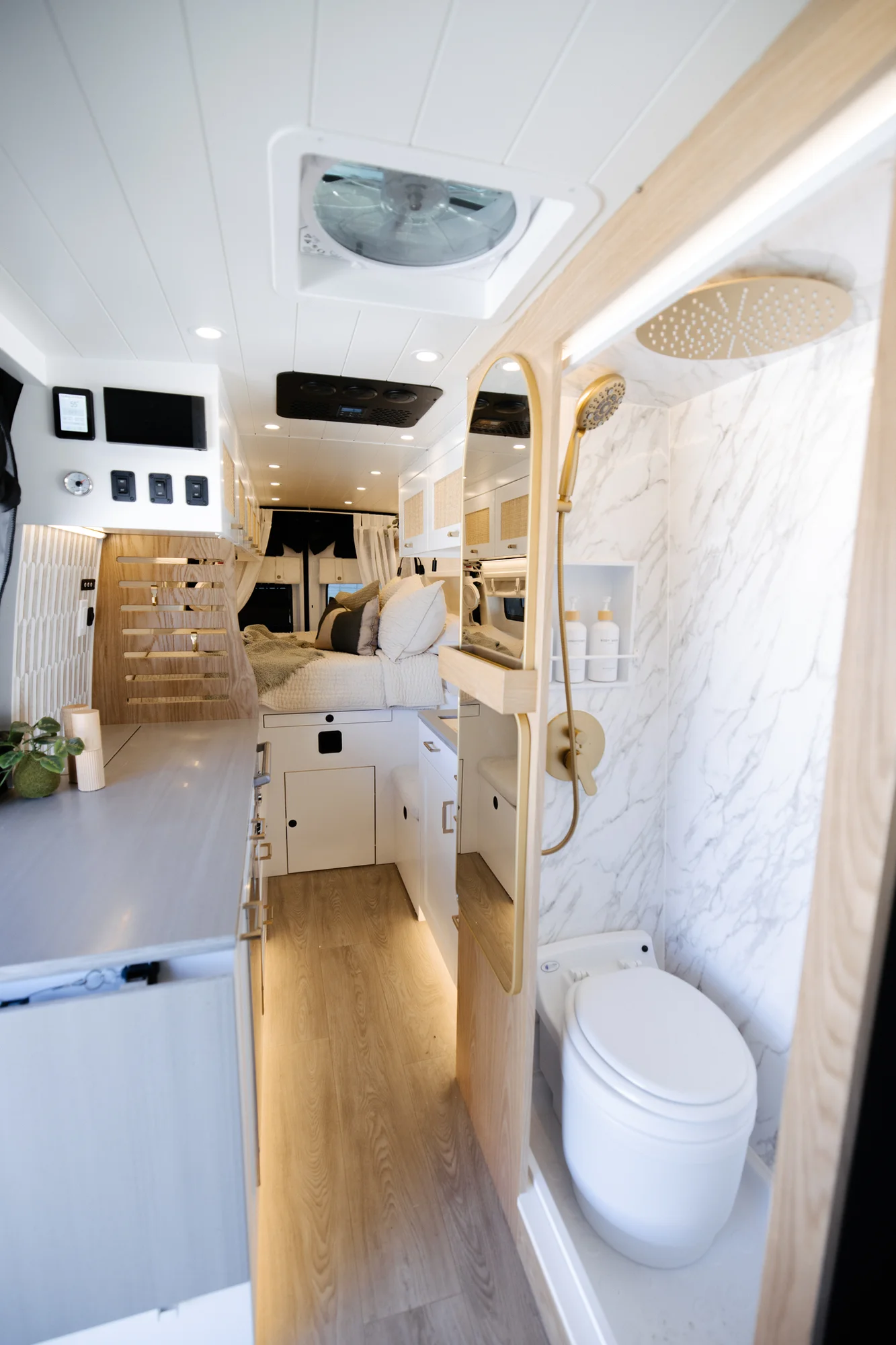
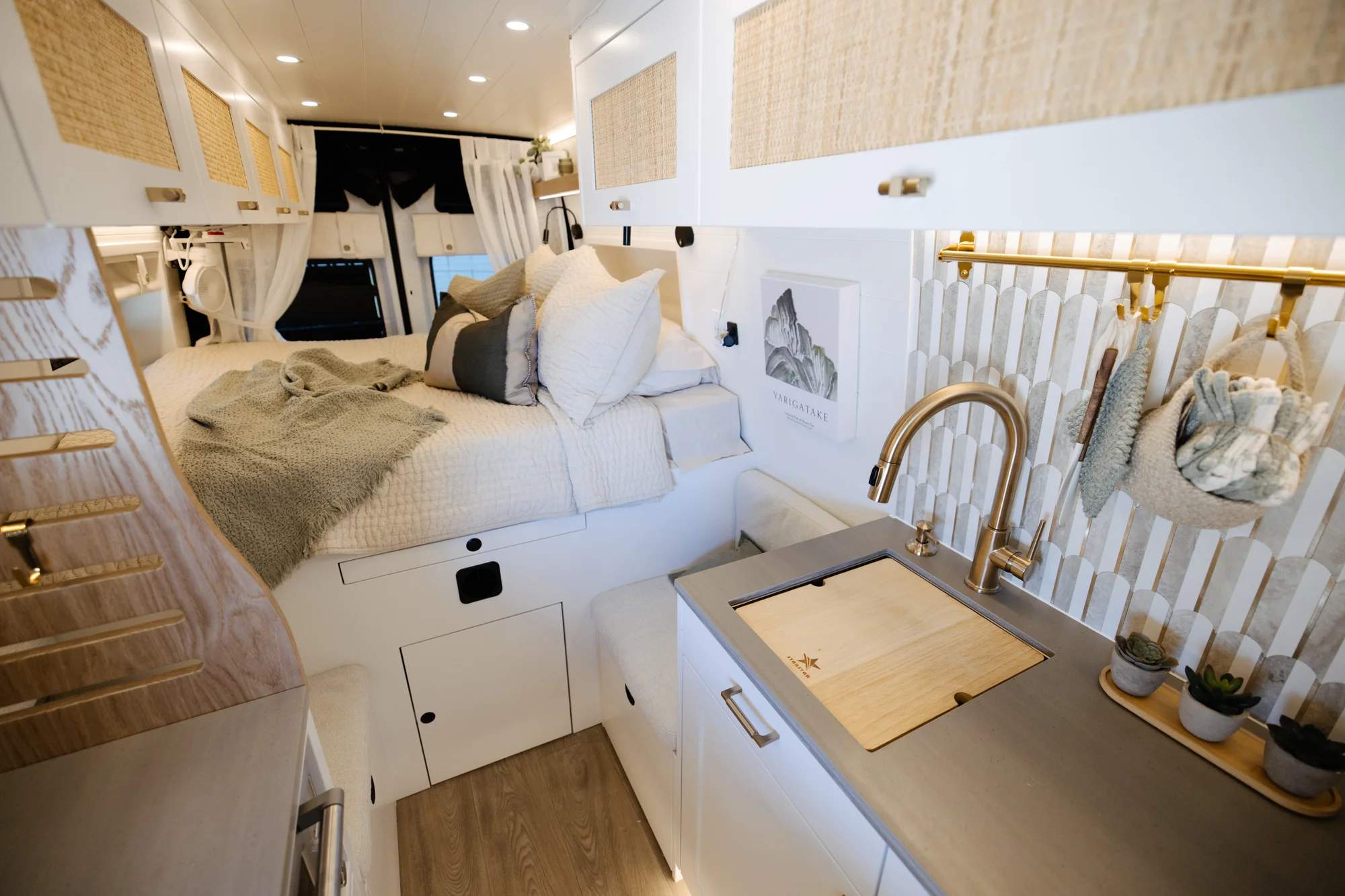
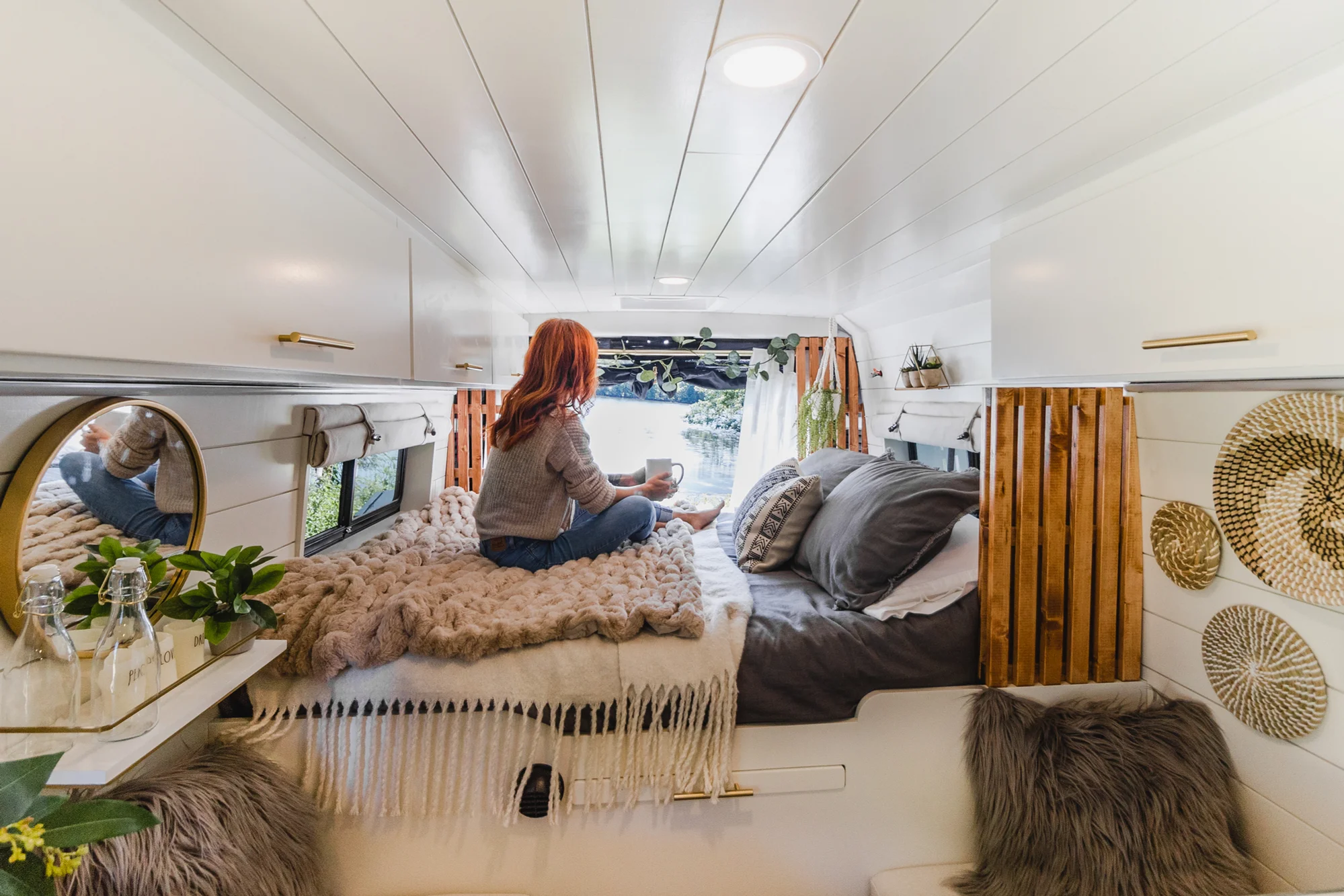
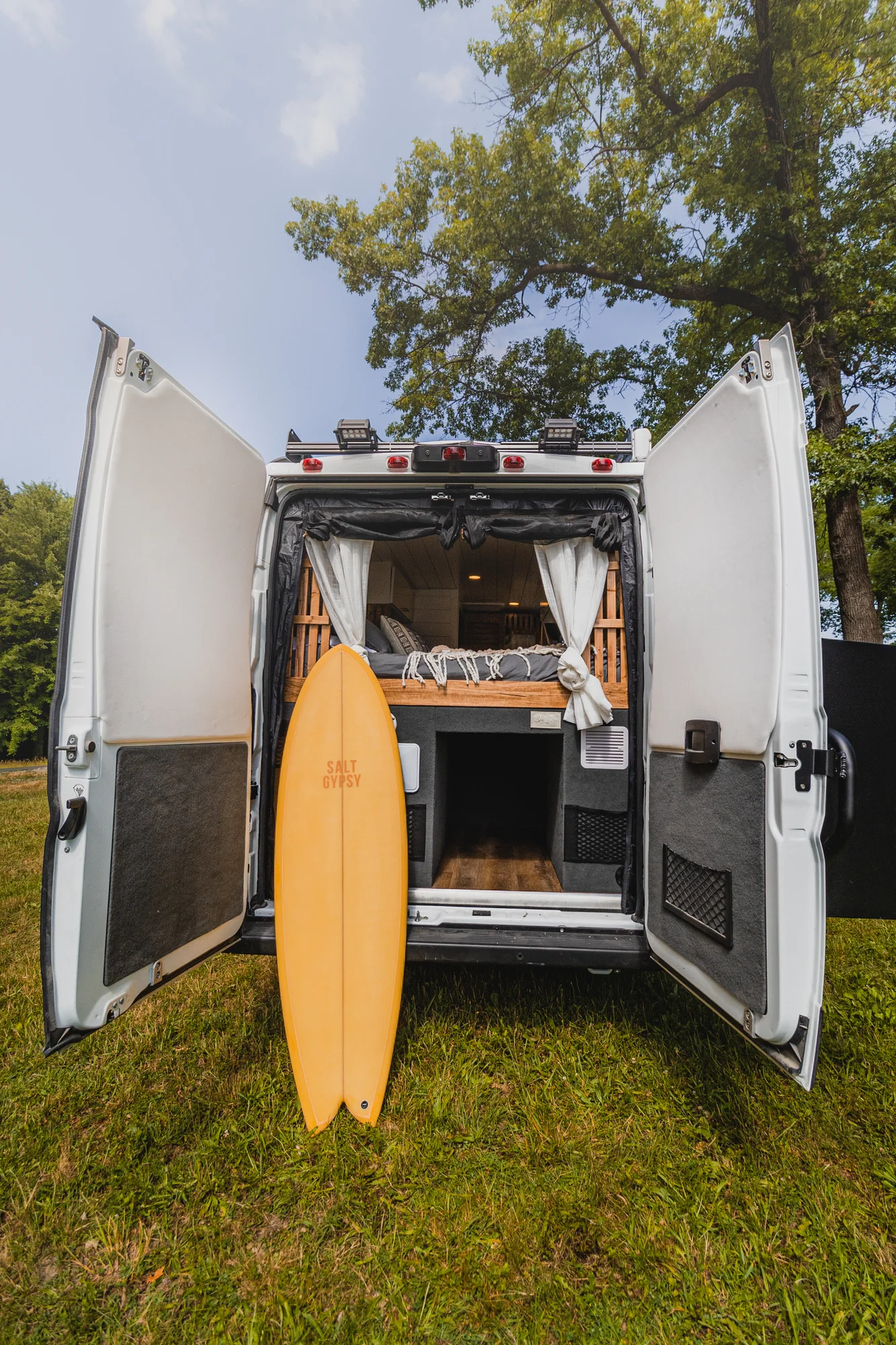
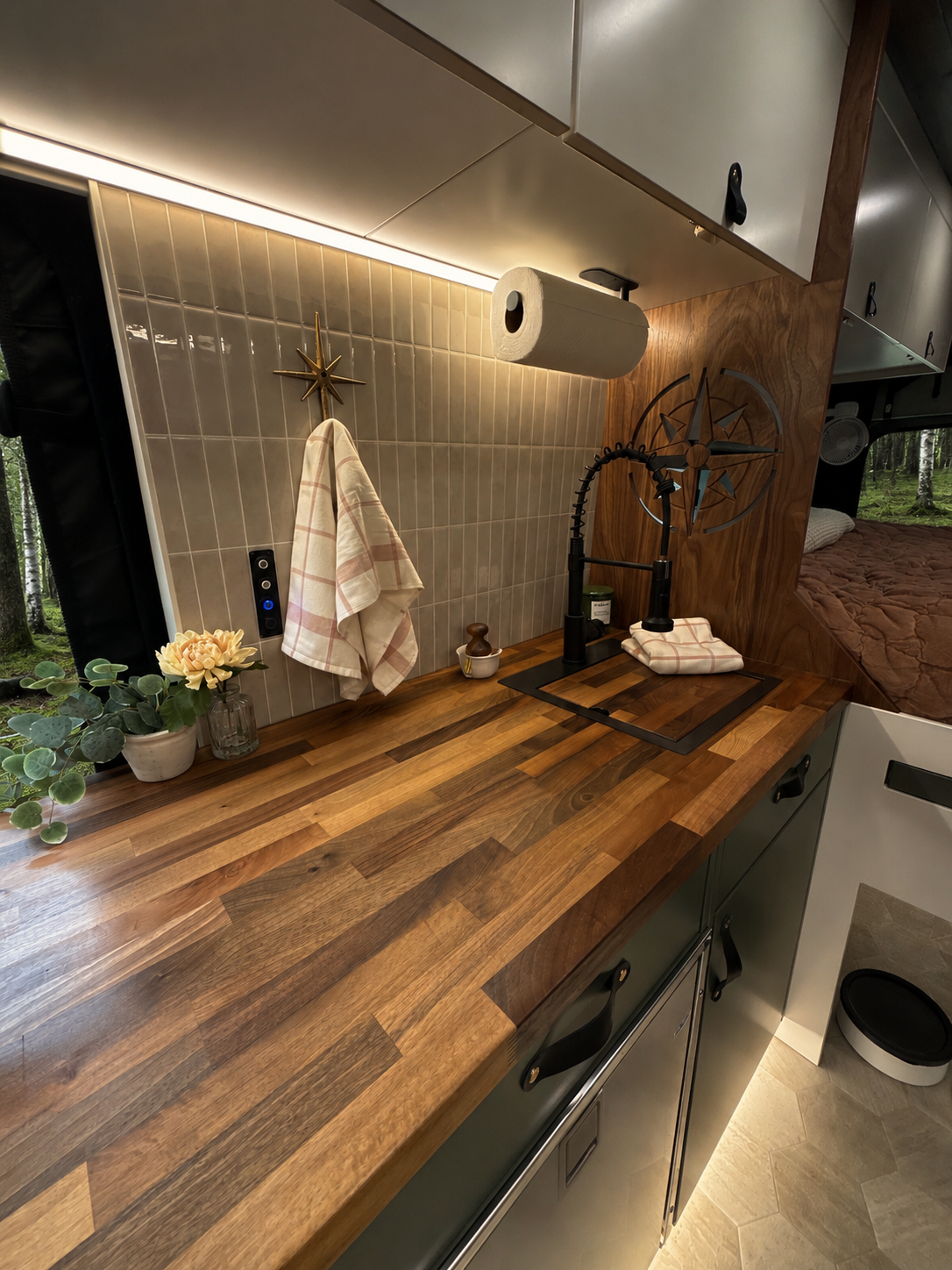
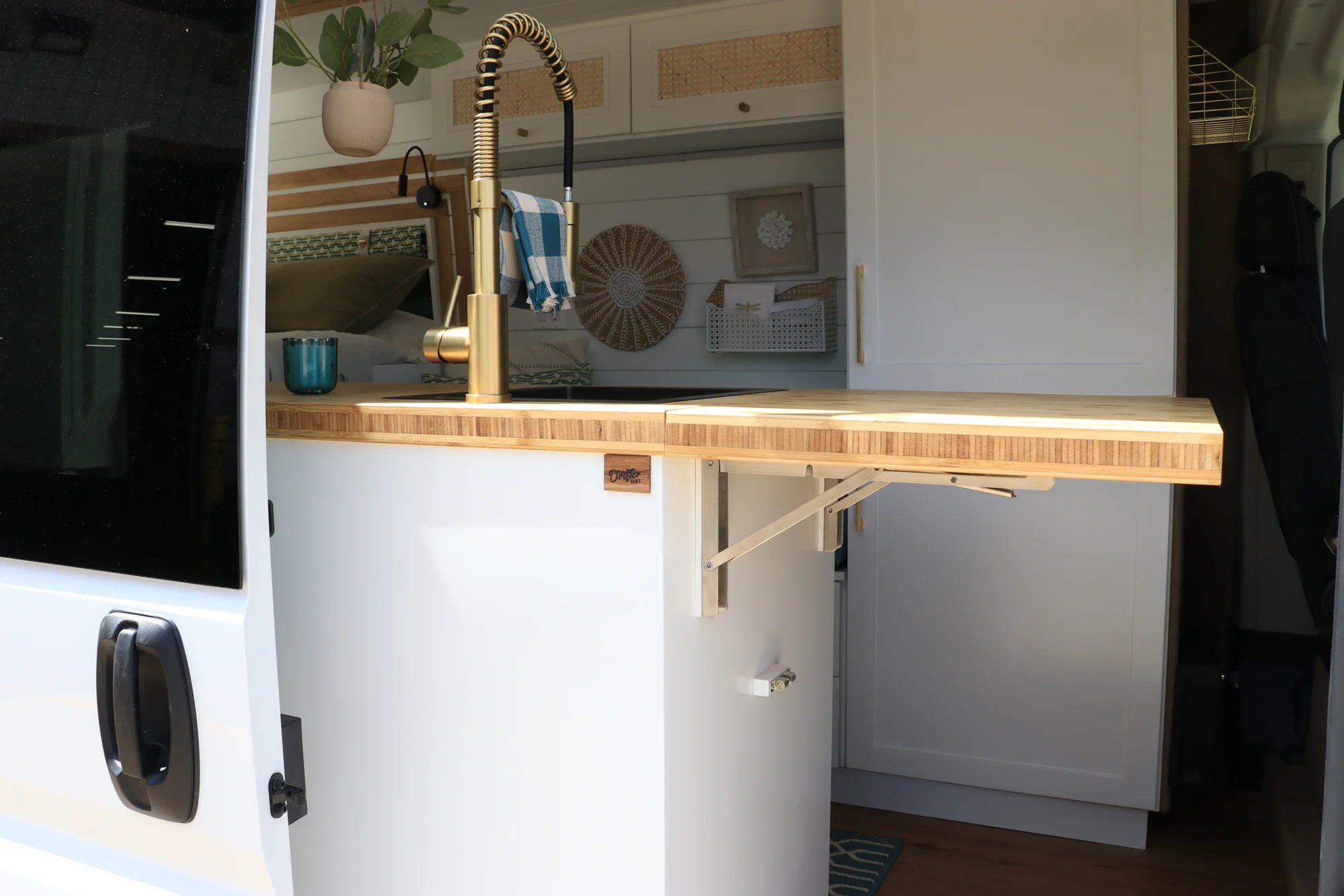
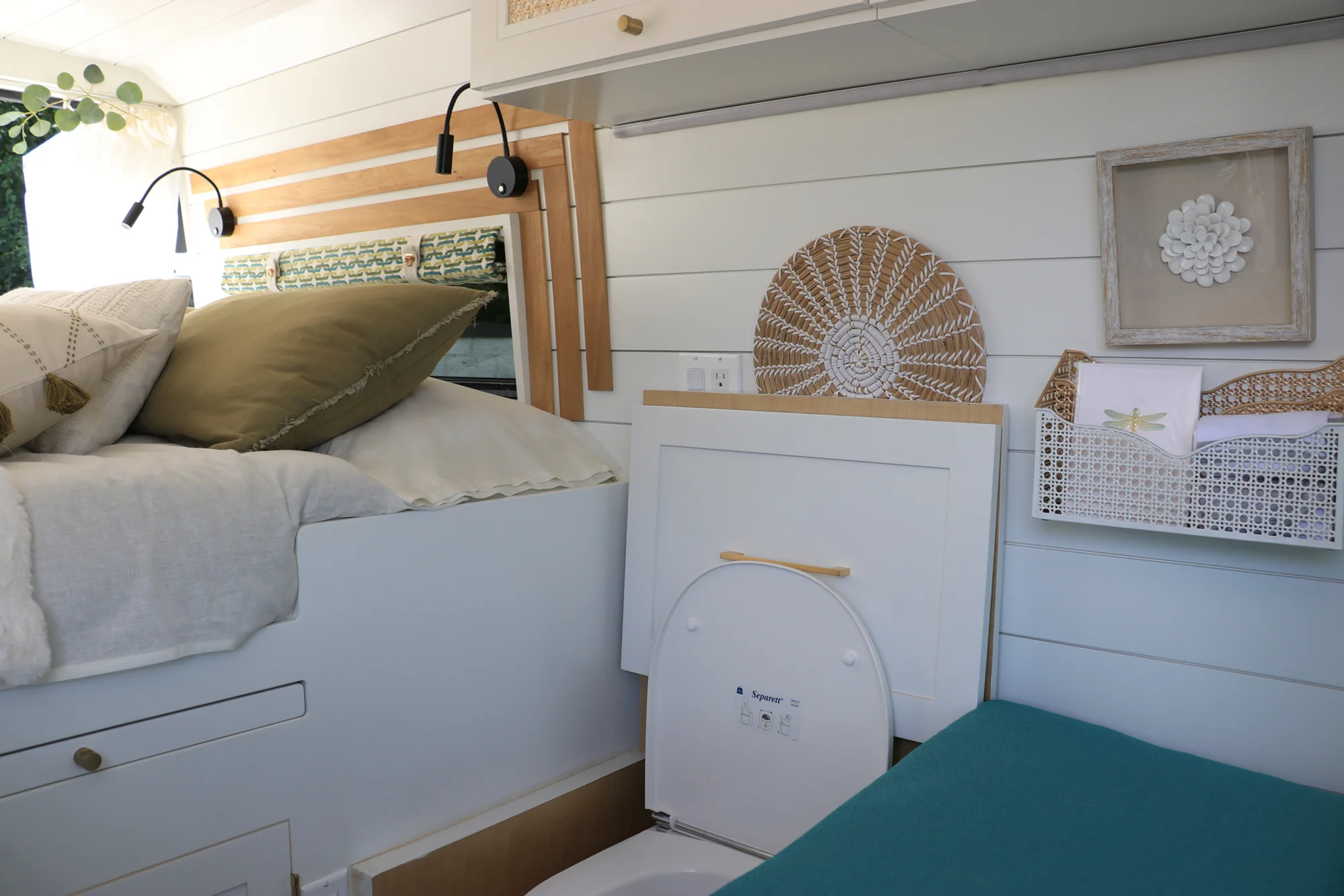
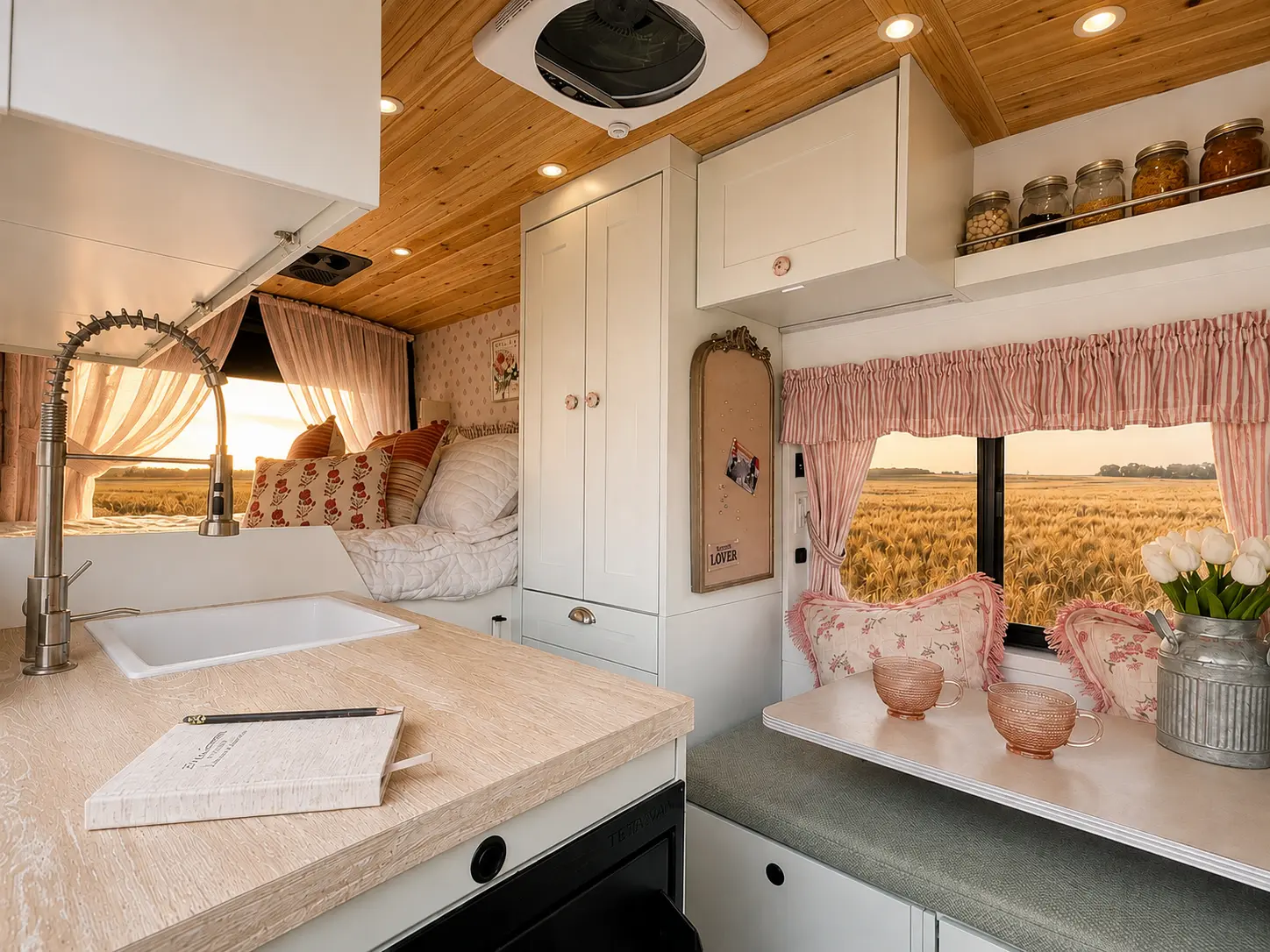
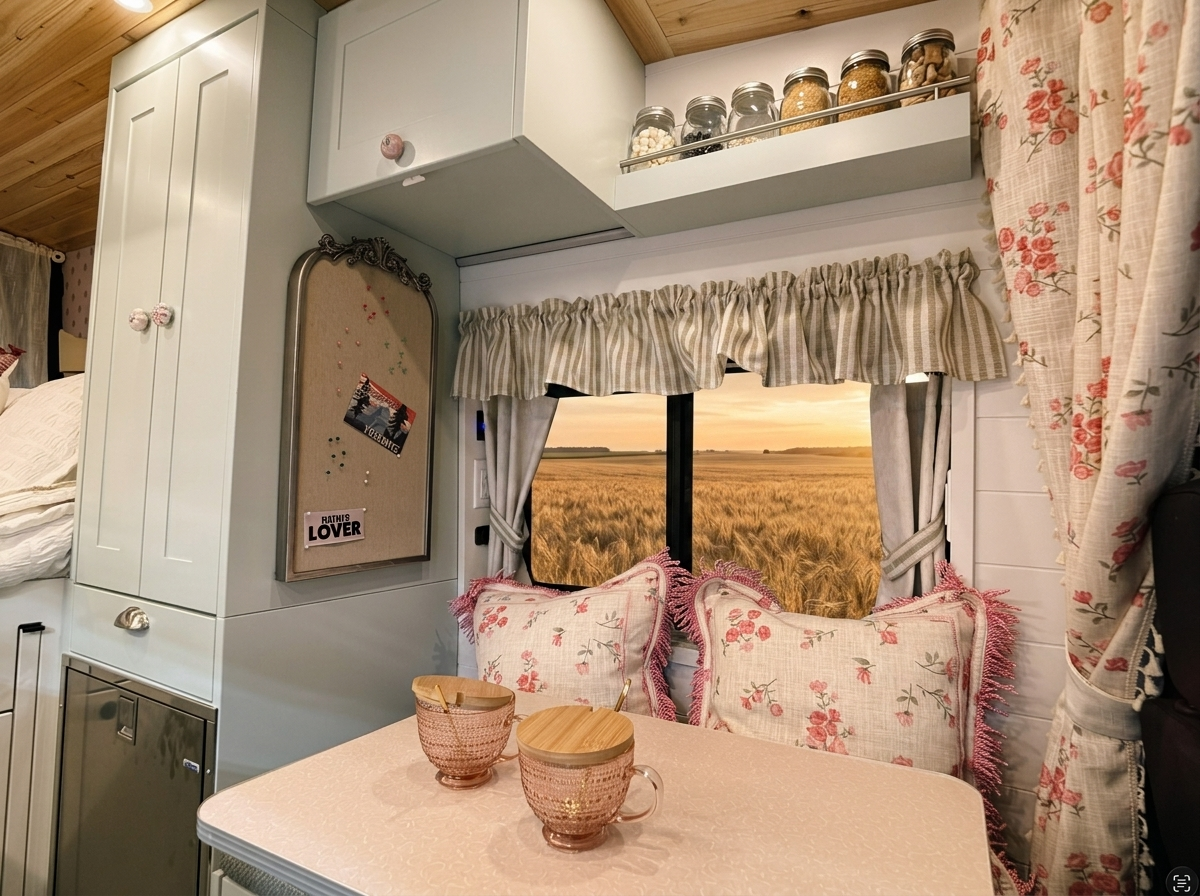
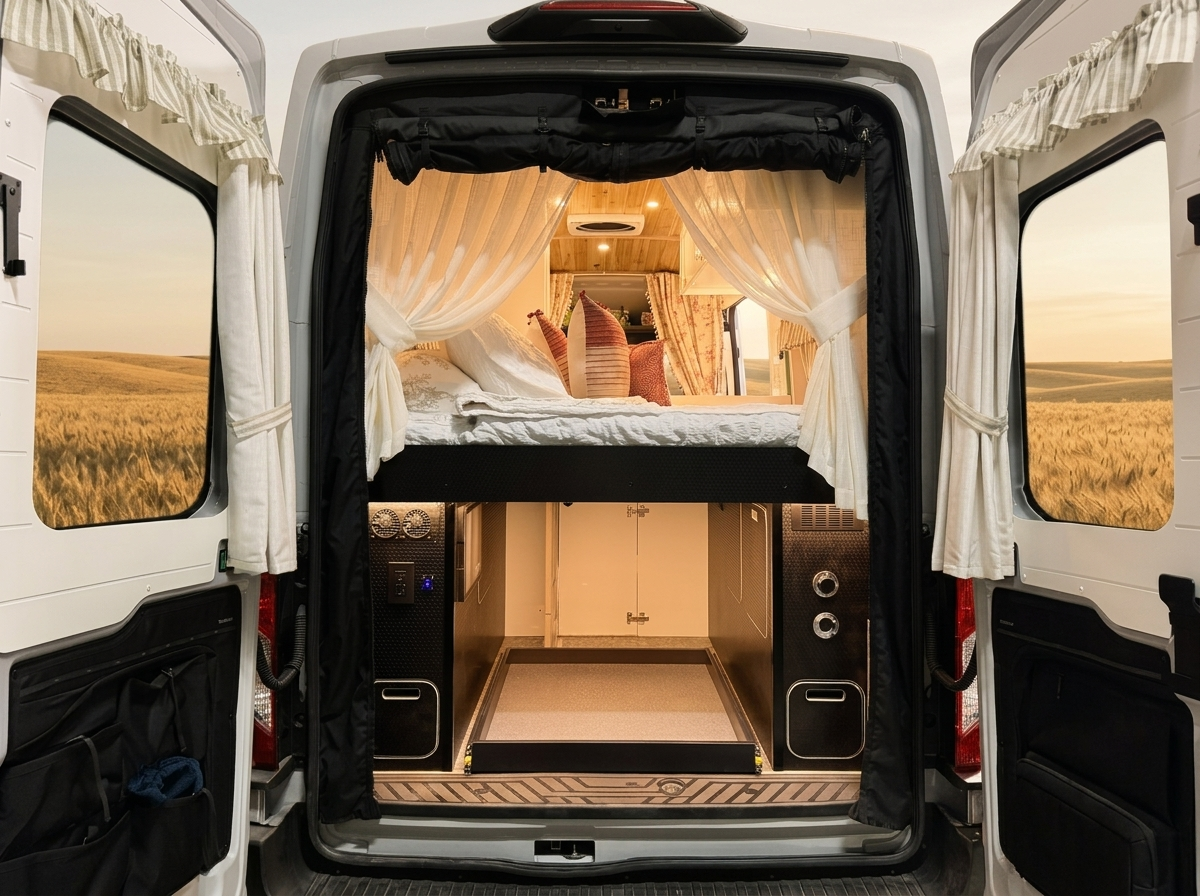
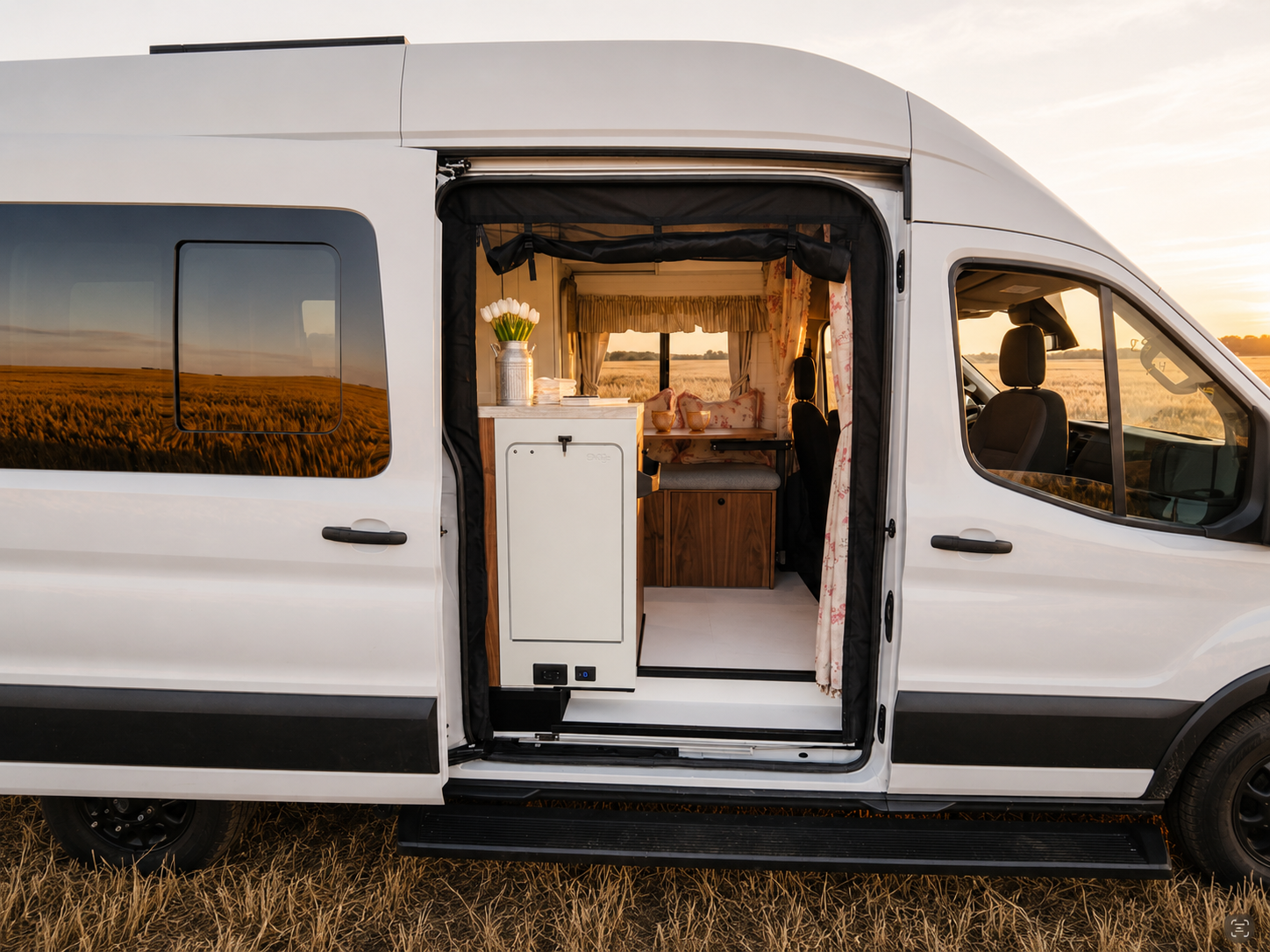
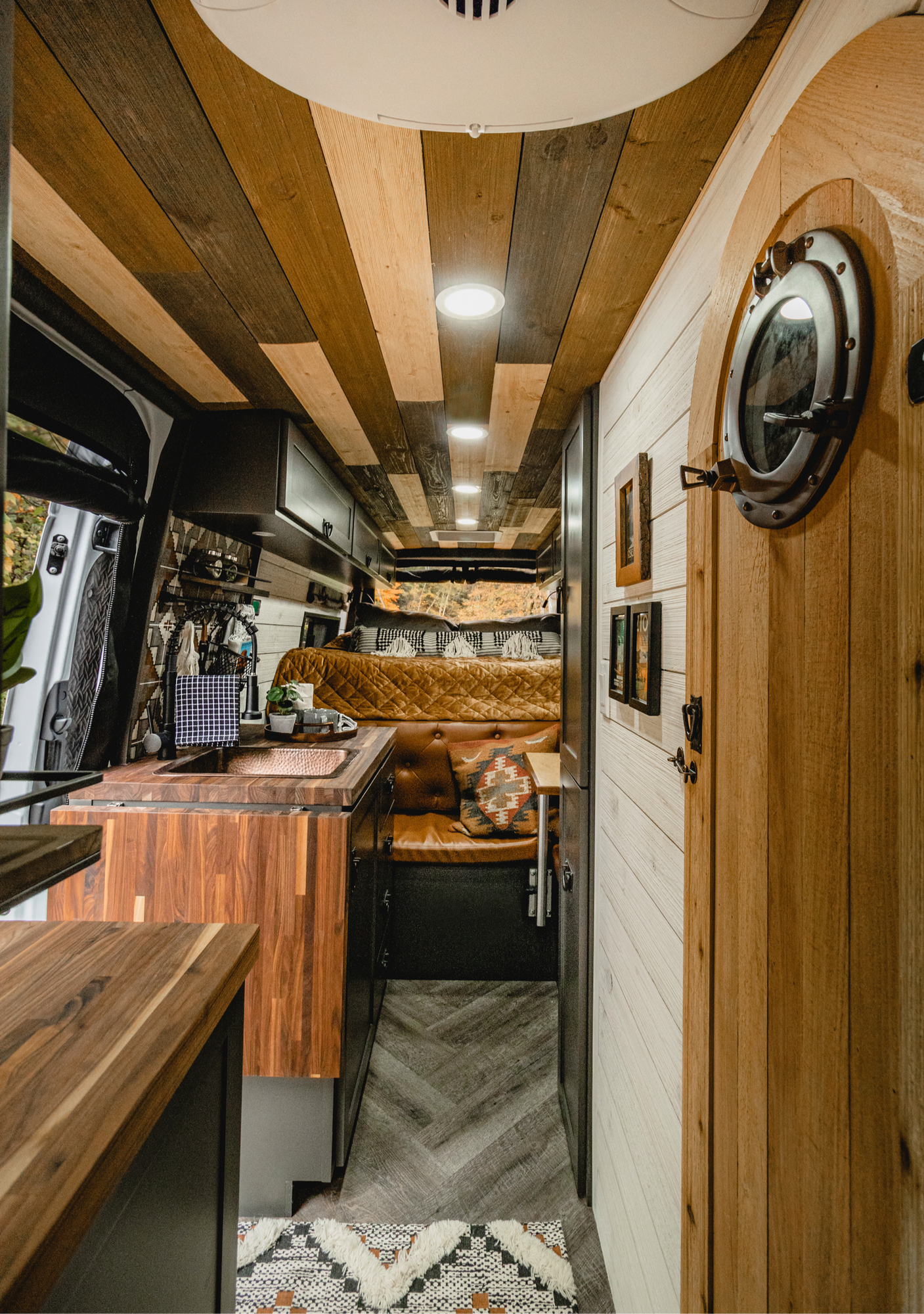
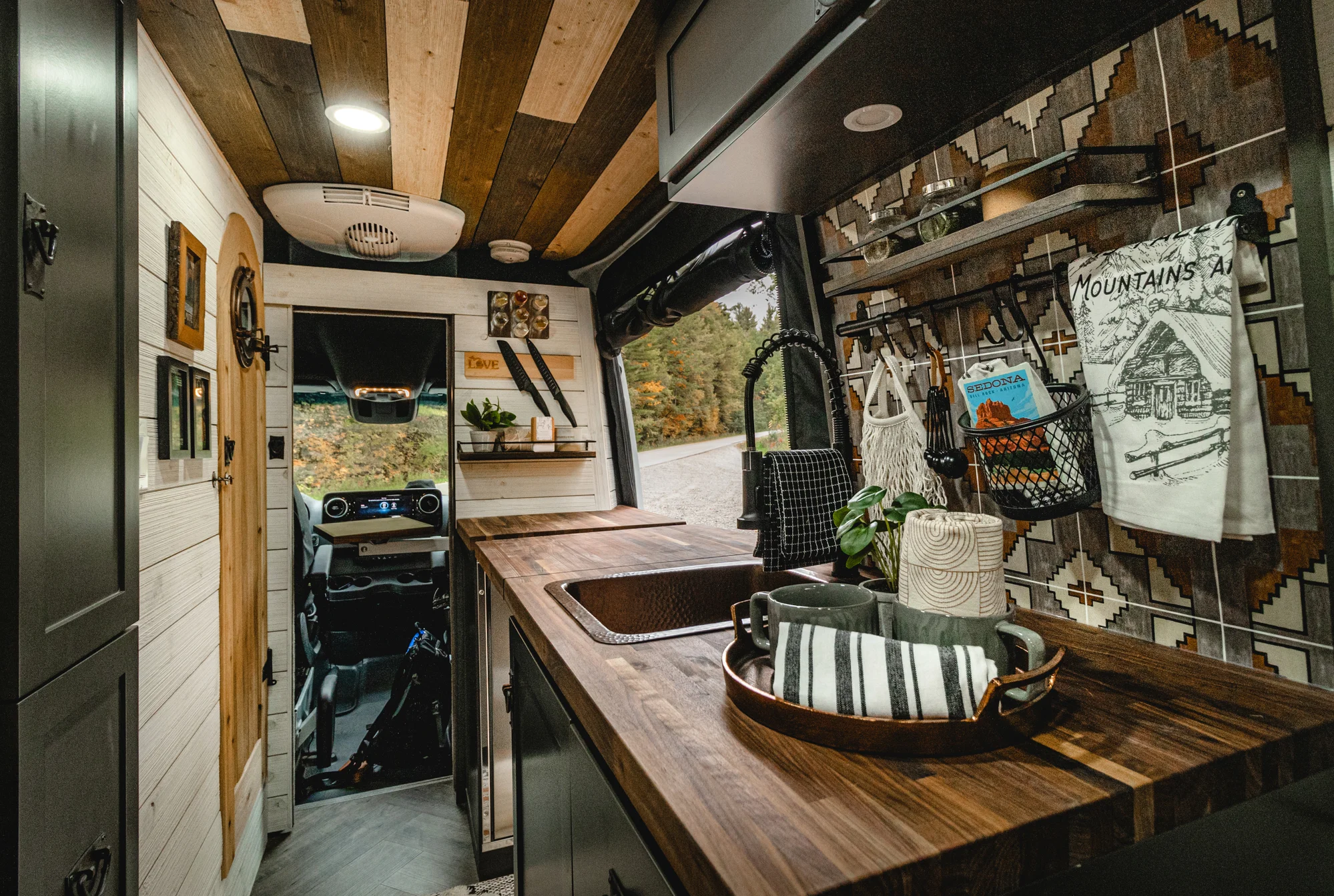
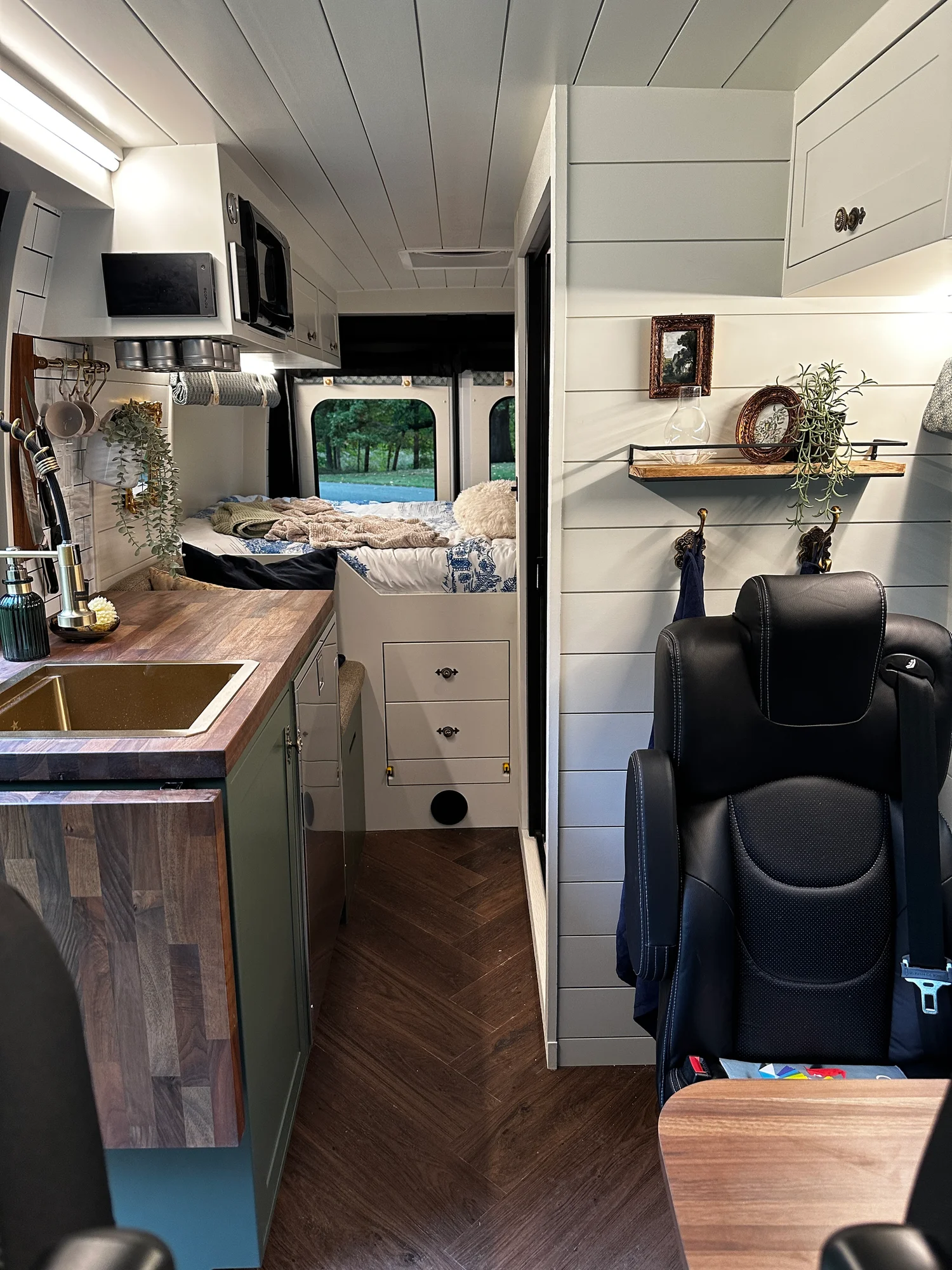
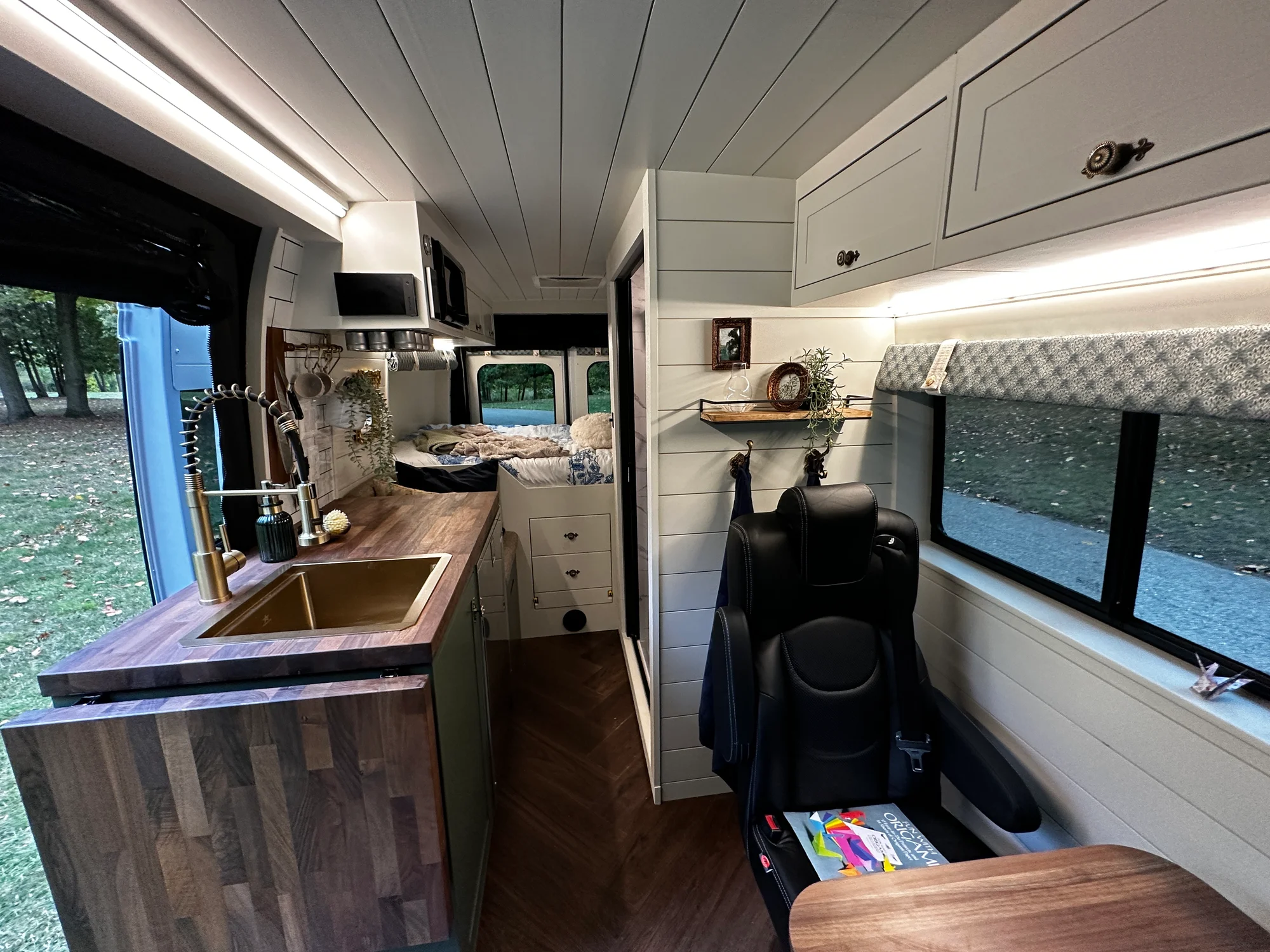
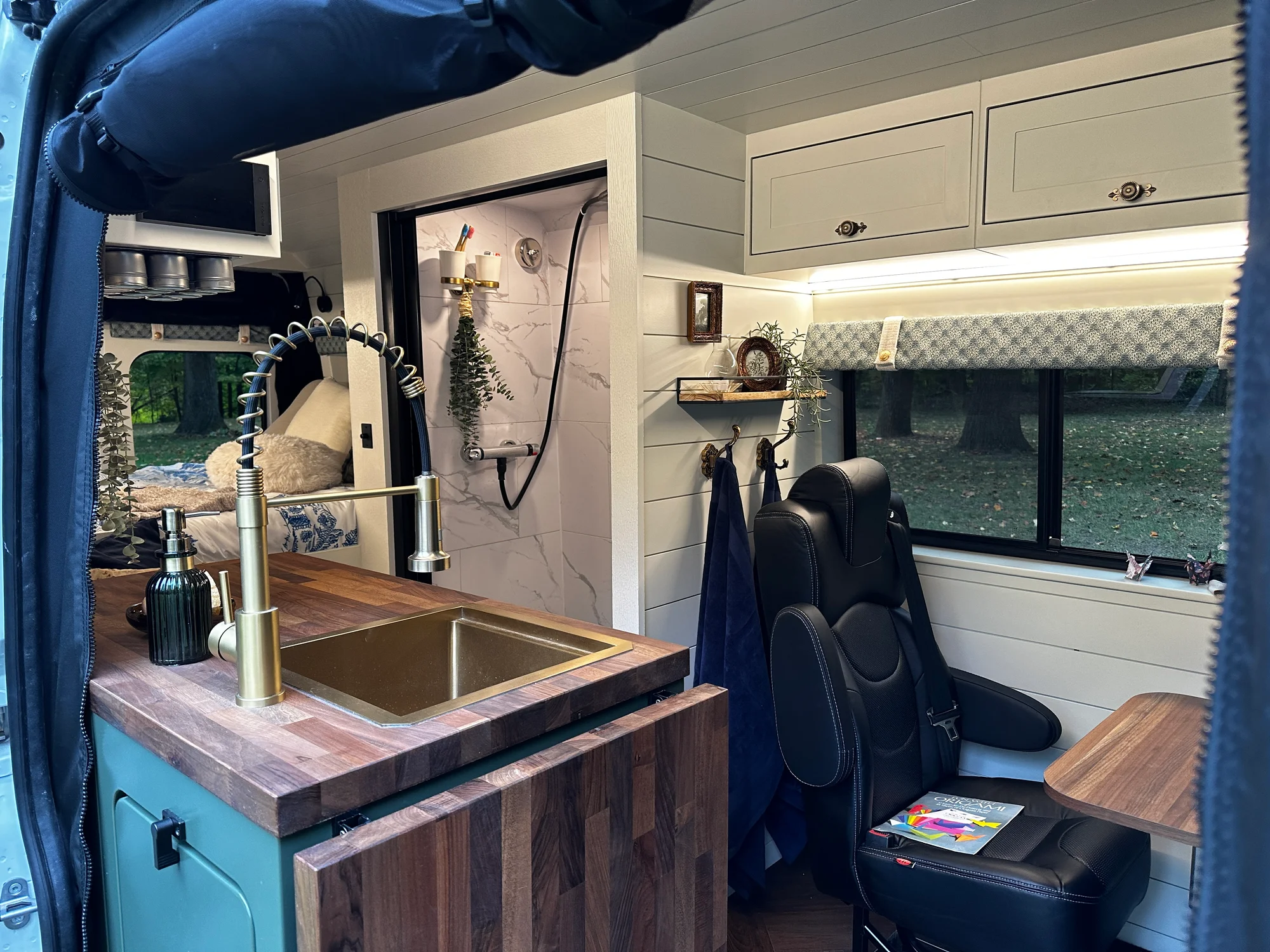
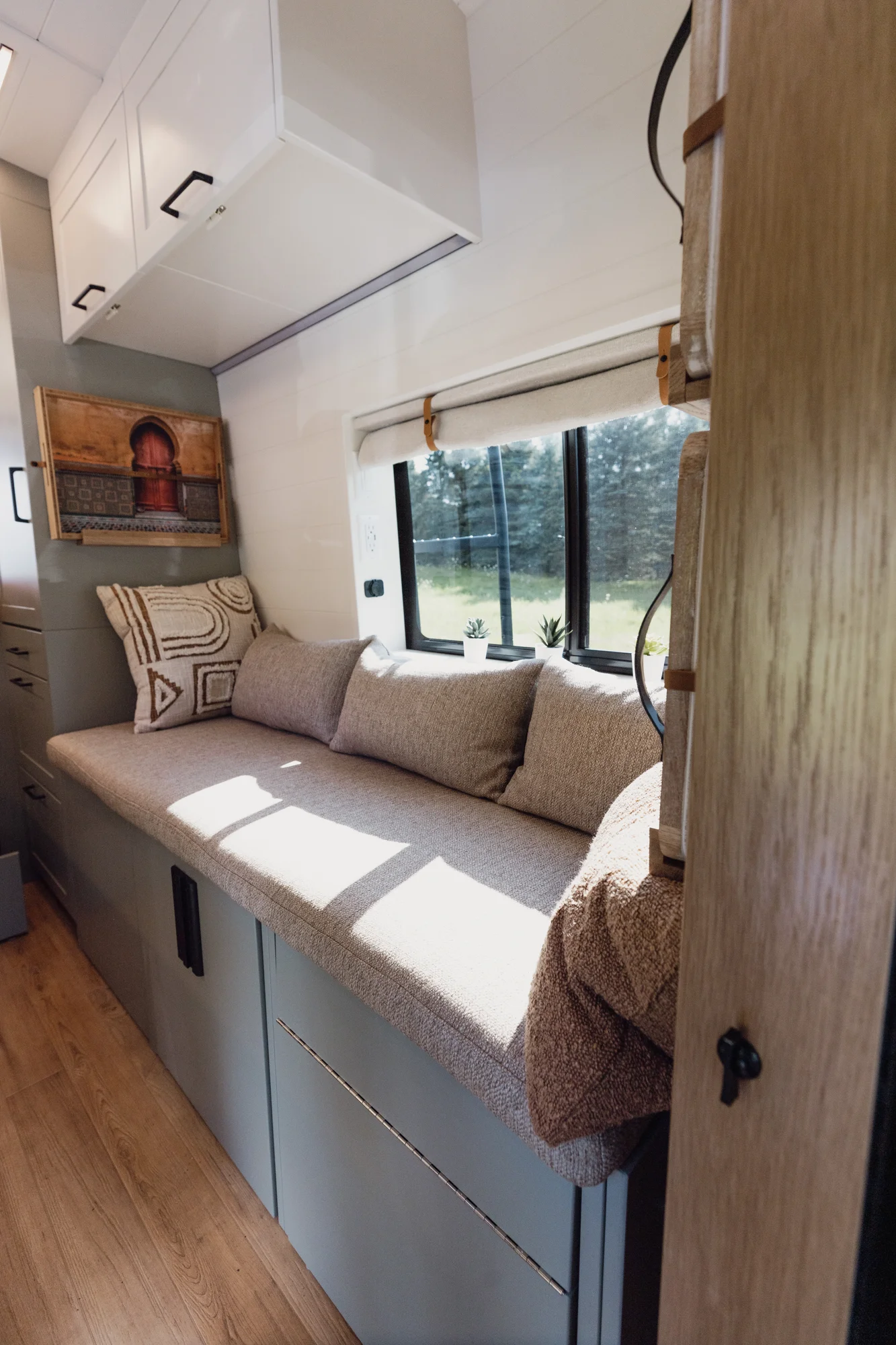
- Both can support a luxury custom campervan
- Both can become a warm, dependable home on wheels
You’re not about to ruin your future by picking the “wrong” one. You’re choosing between two solid platforms, each with its own strengths and personality.
Engines & Fuel: Living With Gas vs Diesel
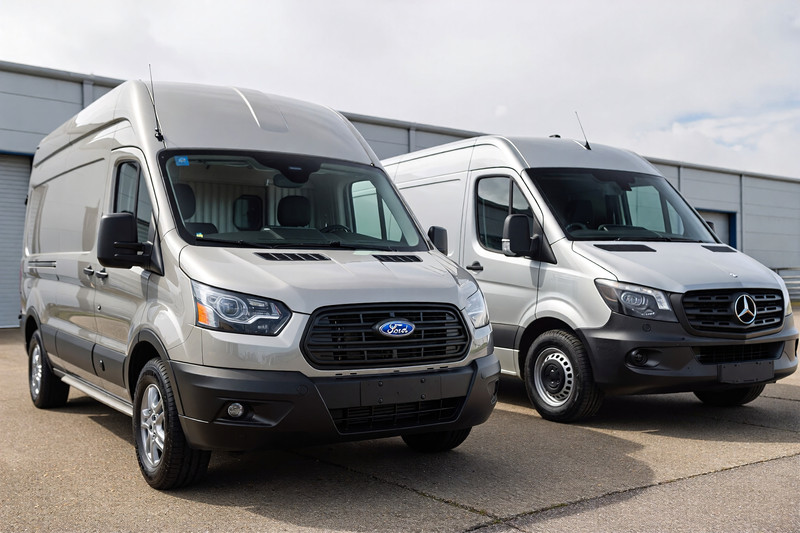
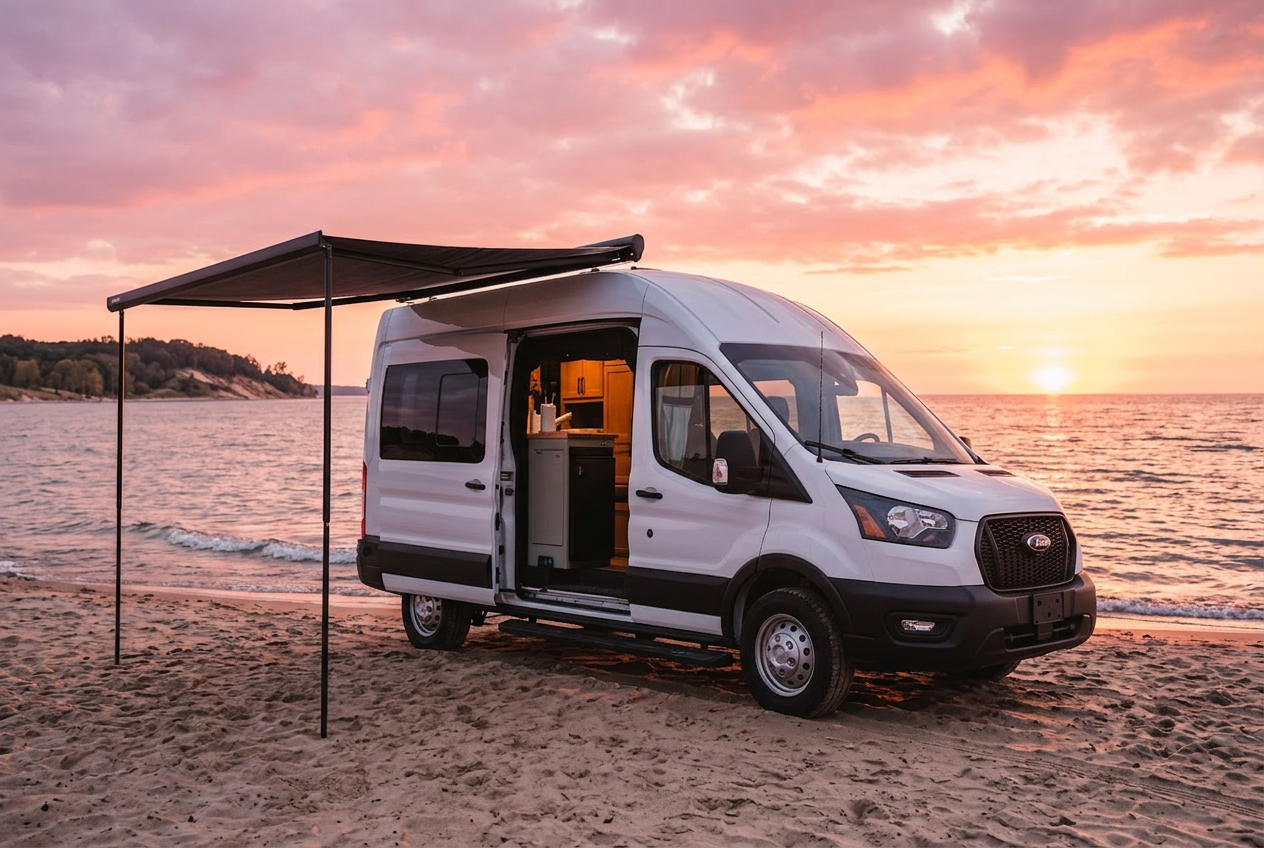
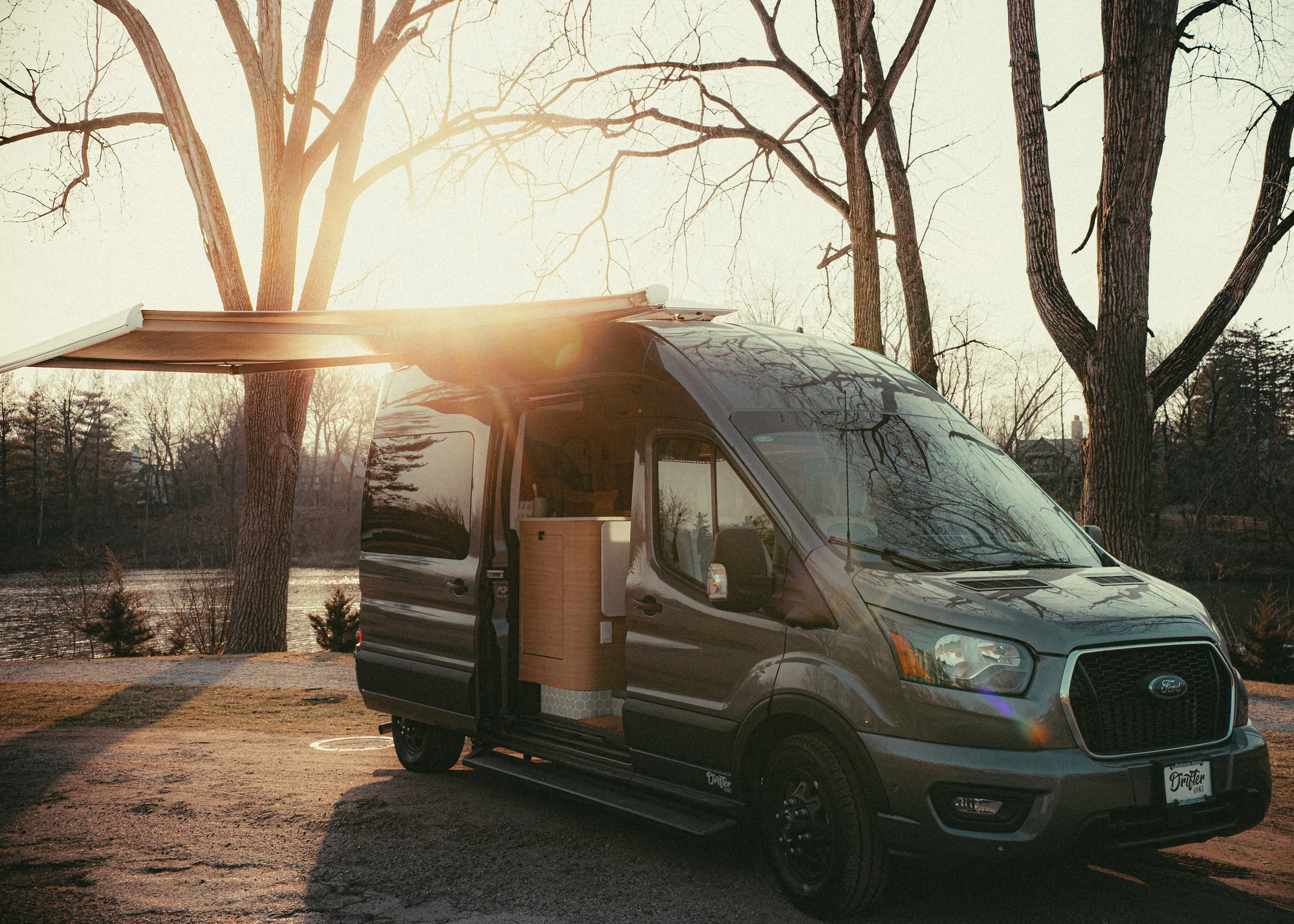
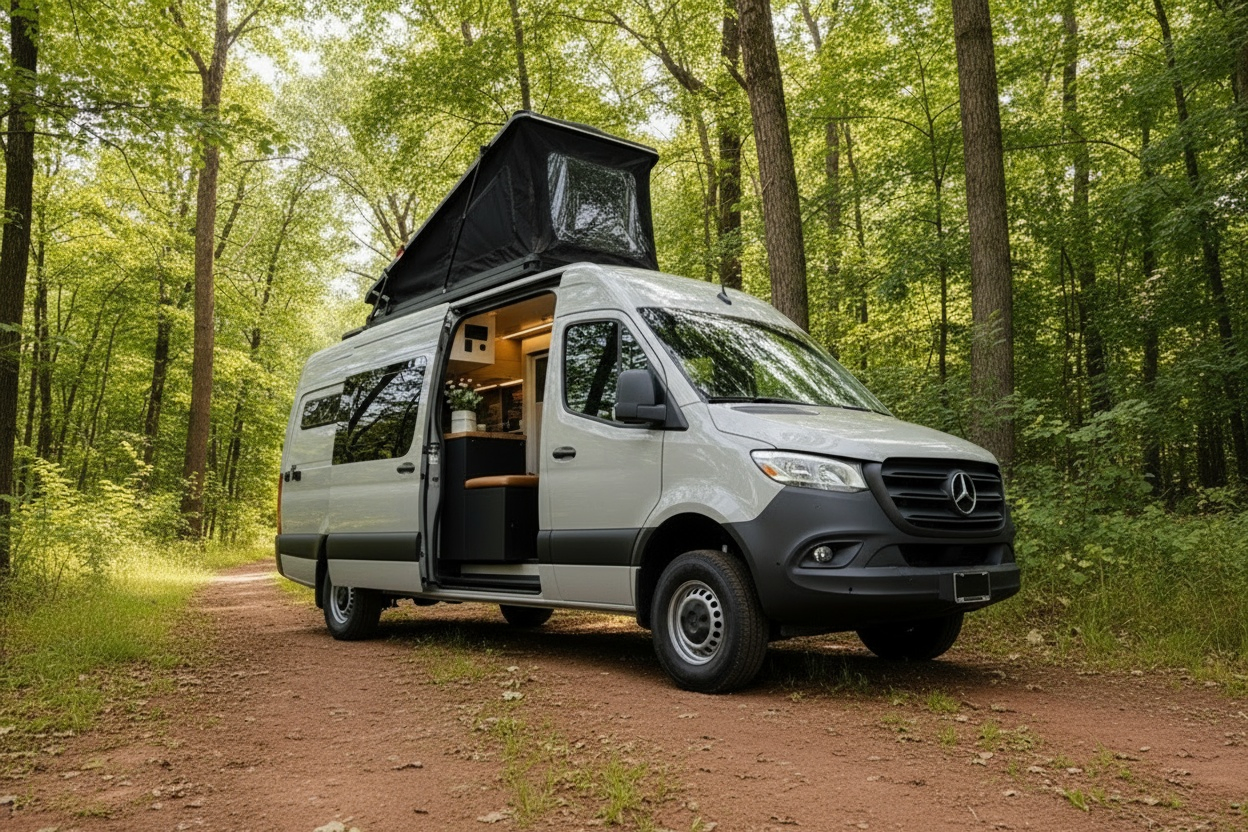
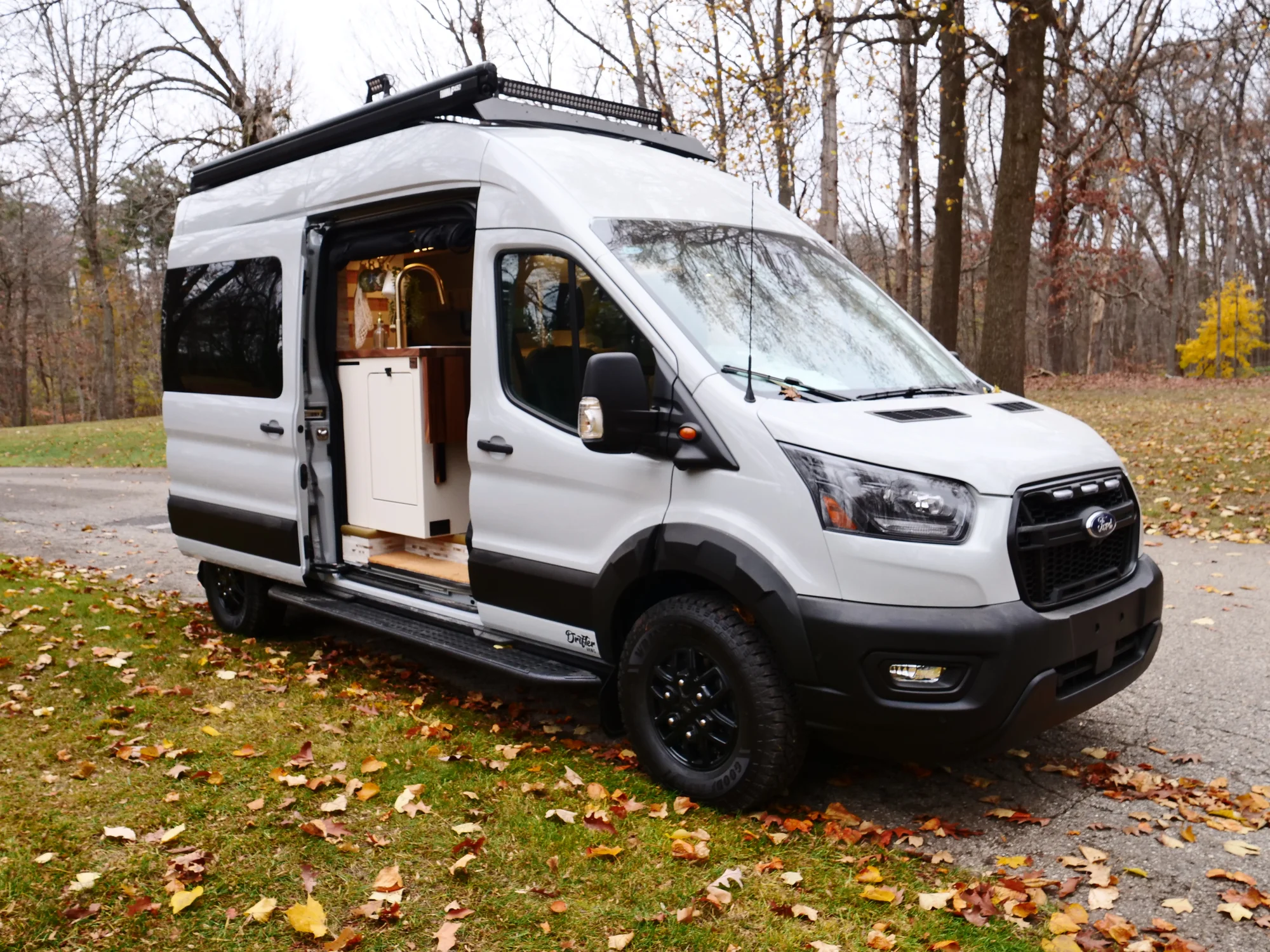
At Drifter, we build the Ford Transit with a gas EcoBoost engine and the Mercedes Sprinter with diesel. That difference matters in daily life.
Ford Transit (Gas EcoBoost)
What we consistently see and hear from clients:
- Strong, responsive power once fully built and loaded
- Easy gas fill-ups almost anywhere in the U.S.
- Many shops and mechanics are comfortable working on Ford gas engines
- No DEF (diesel exhaust fluid) to manage
Trade-off: fuel economy is slightly lower than a diesel Sprinter on long highway runs. Many clients accept that for the simplicity of gas — especially when traveling through rural areas or small towns.
Mercedes Sprinter (Diesel)
What stands out in real-world use:
- Better fuel economy over long highway distances
- Diesel engines known for longevity with proper maintenance
- Strong low-end torque under a heavy, fully built campervan
Trade-off: modern diesel emissions systems are more complex. DEF is part of ownership, and emissions-related repairs outside warranty can be costly. Some clients are fine with that; others prefer fewer variables.
Space & Dimensions: Where Inches Start to Matter
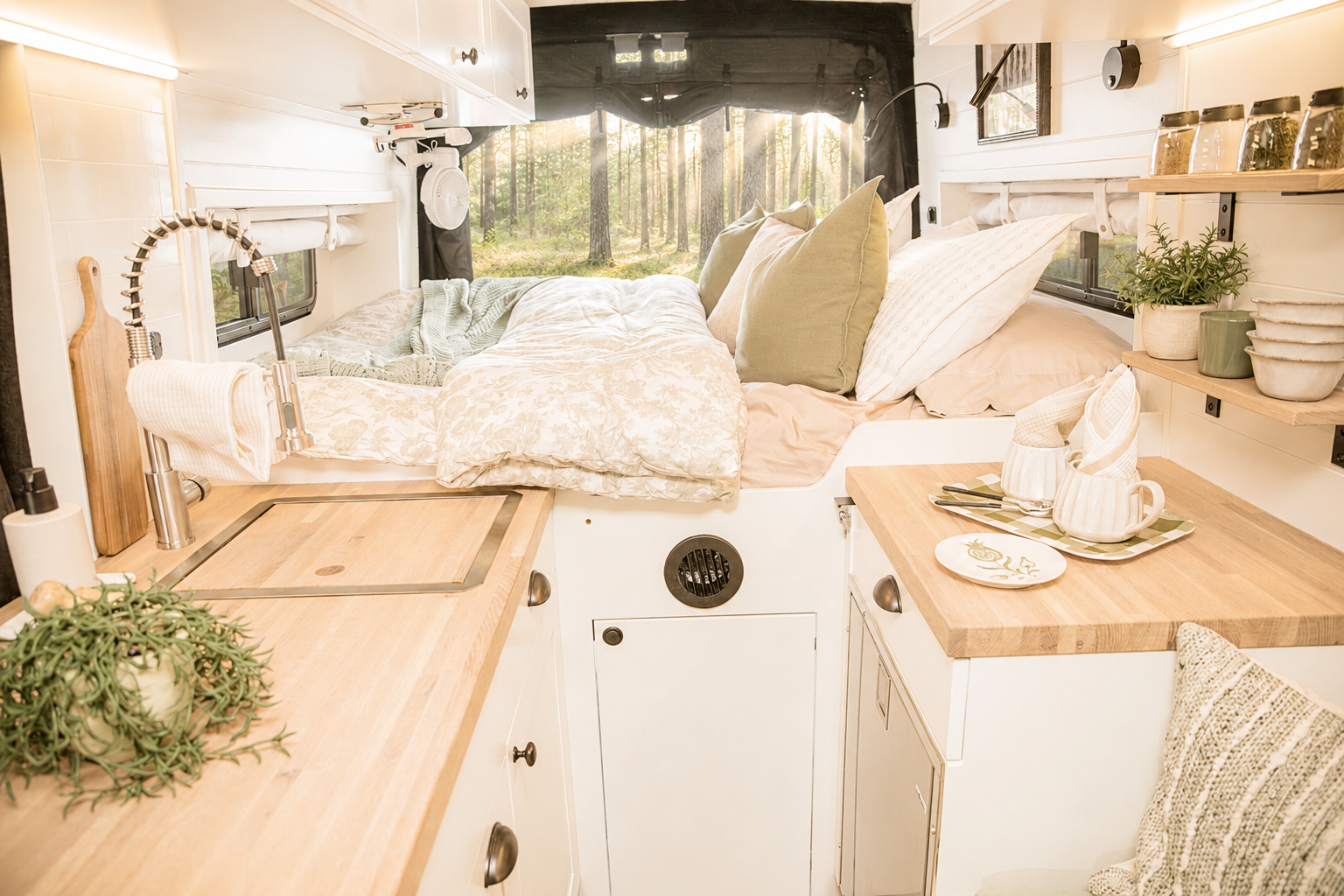
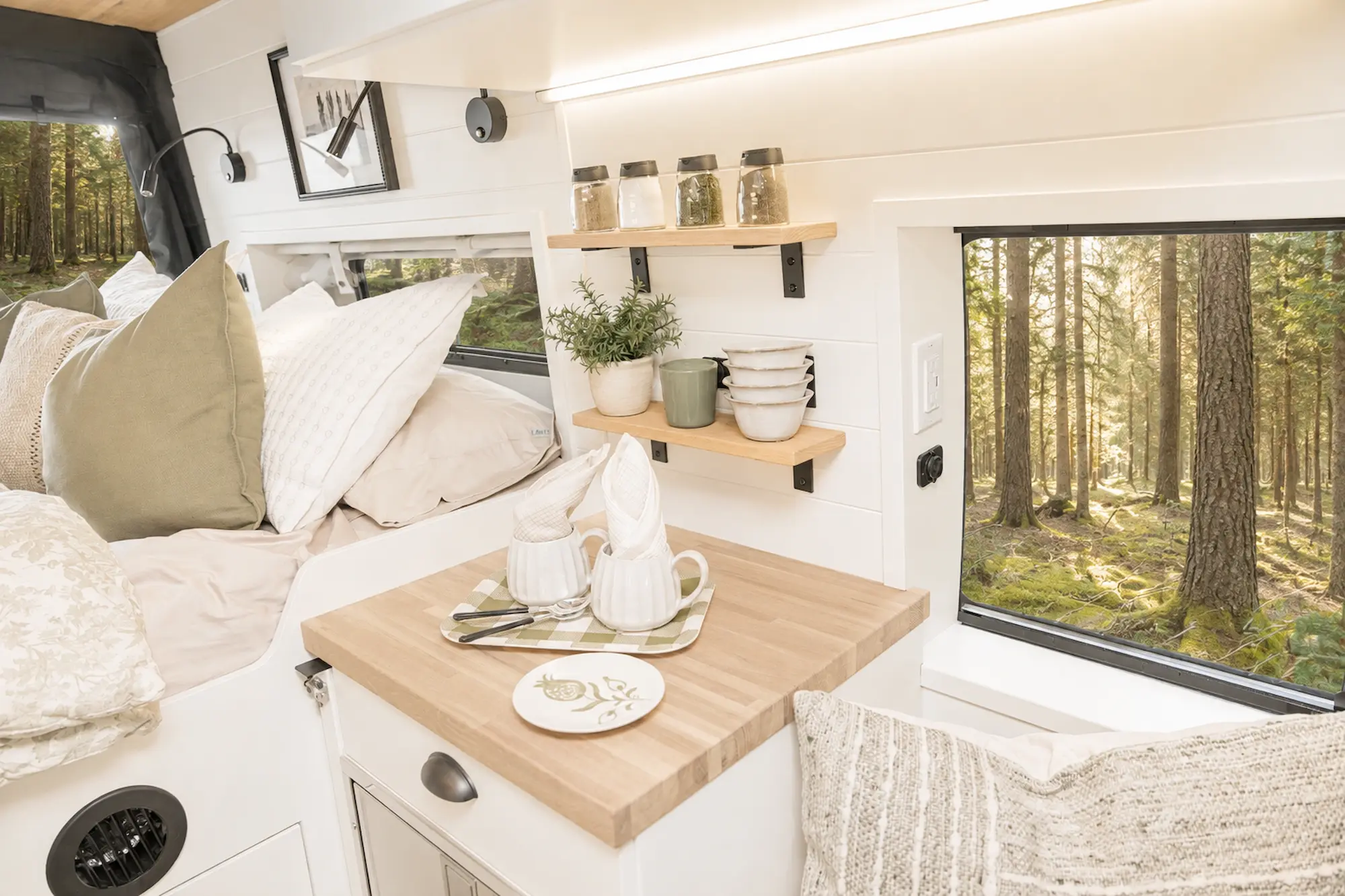
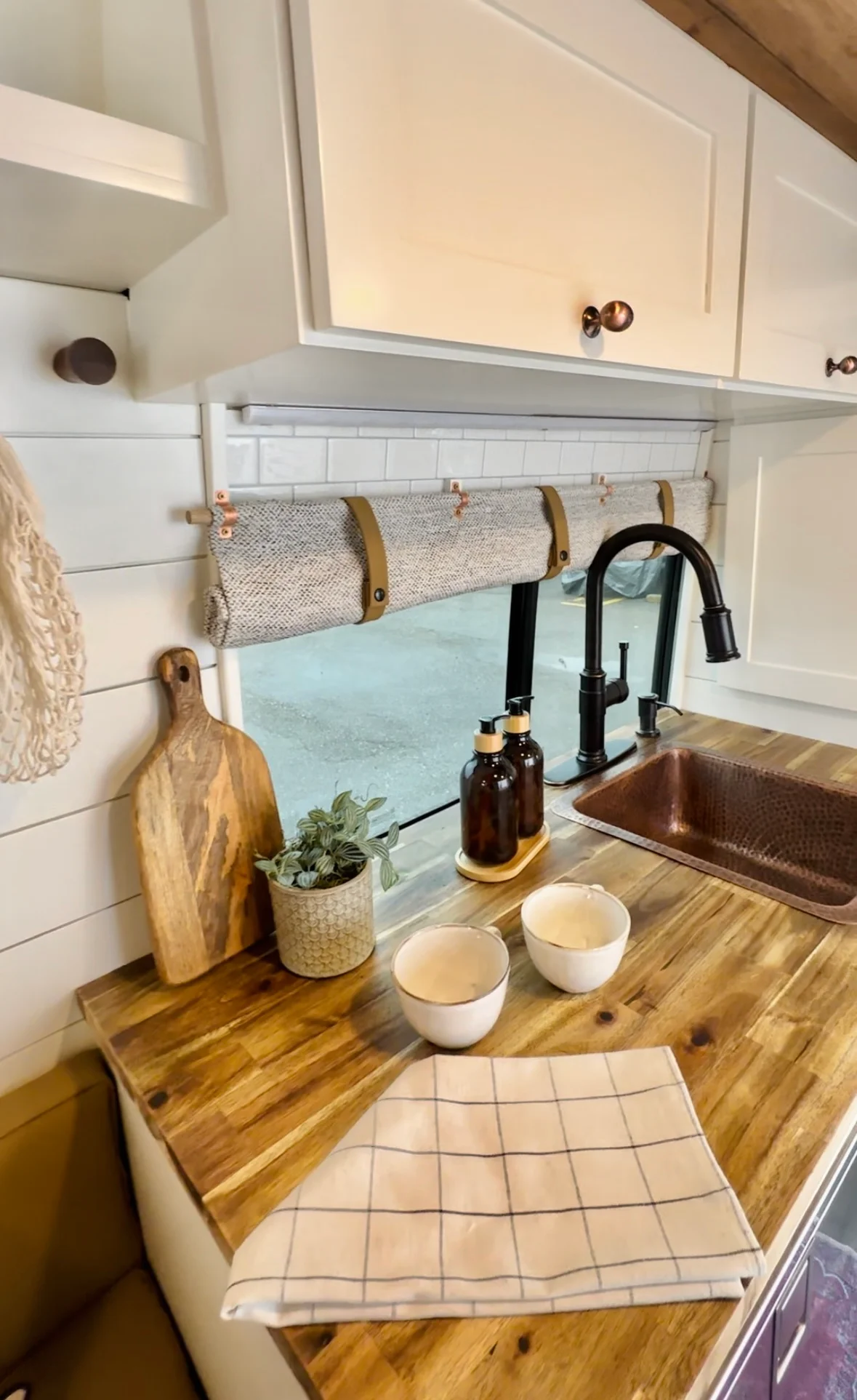
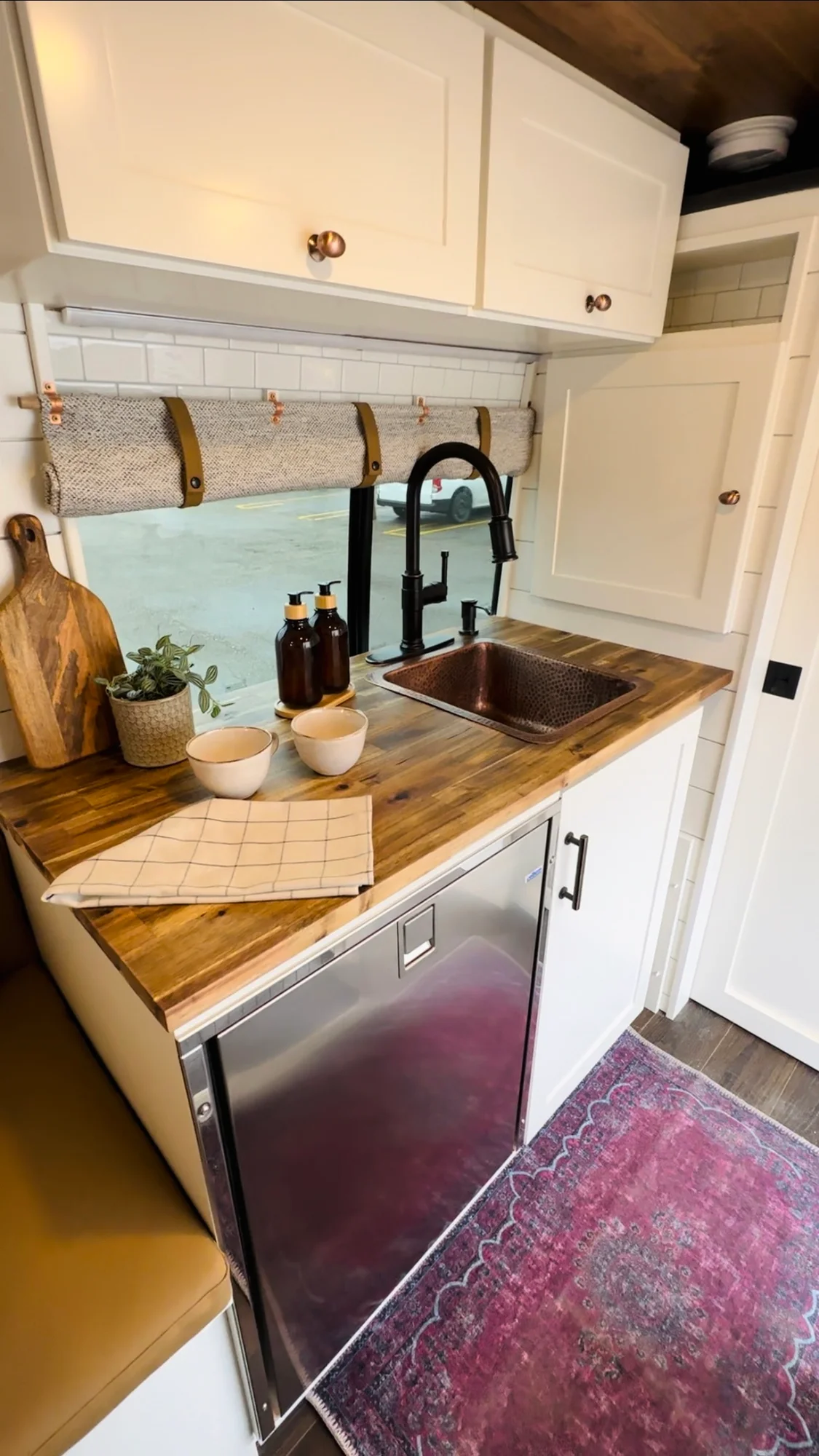
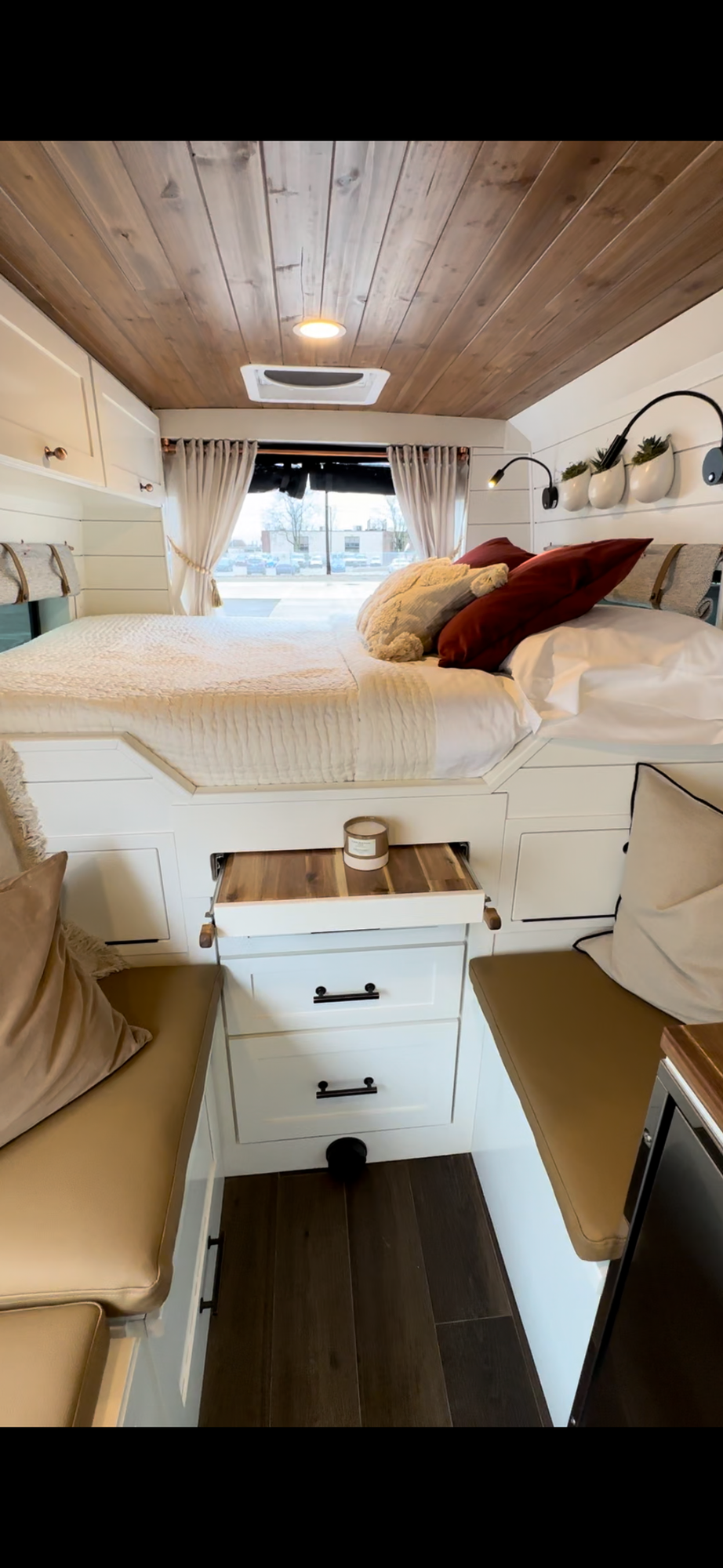
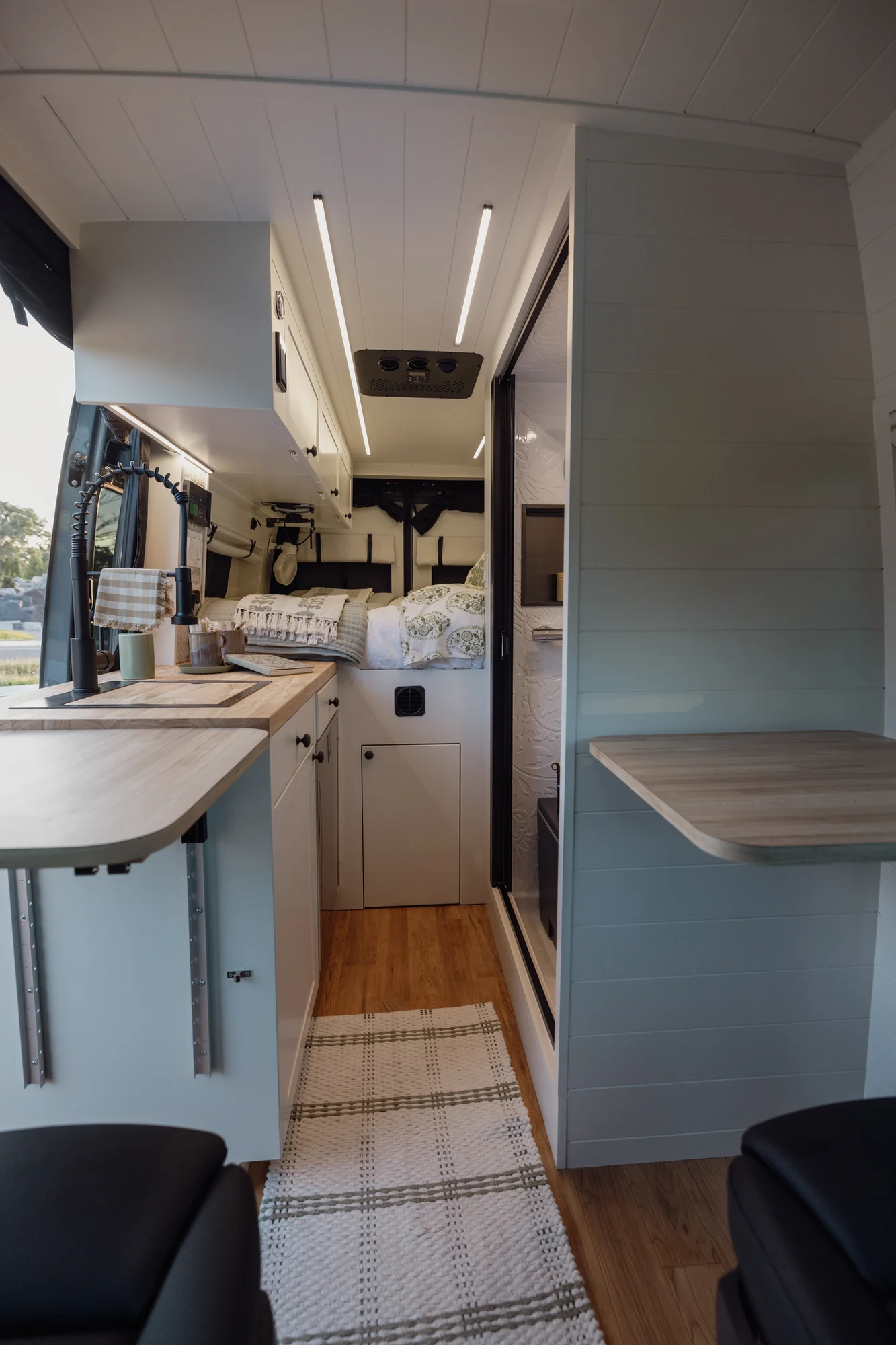
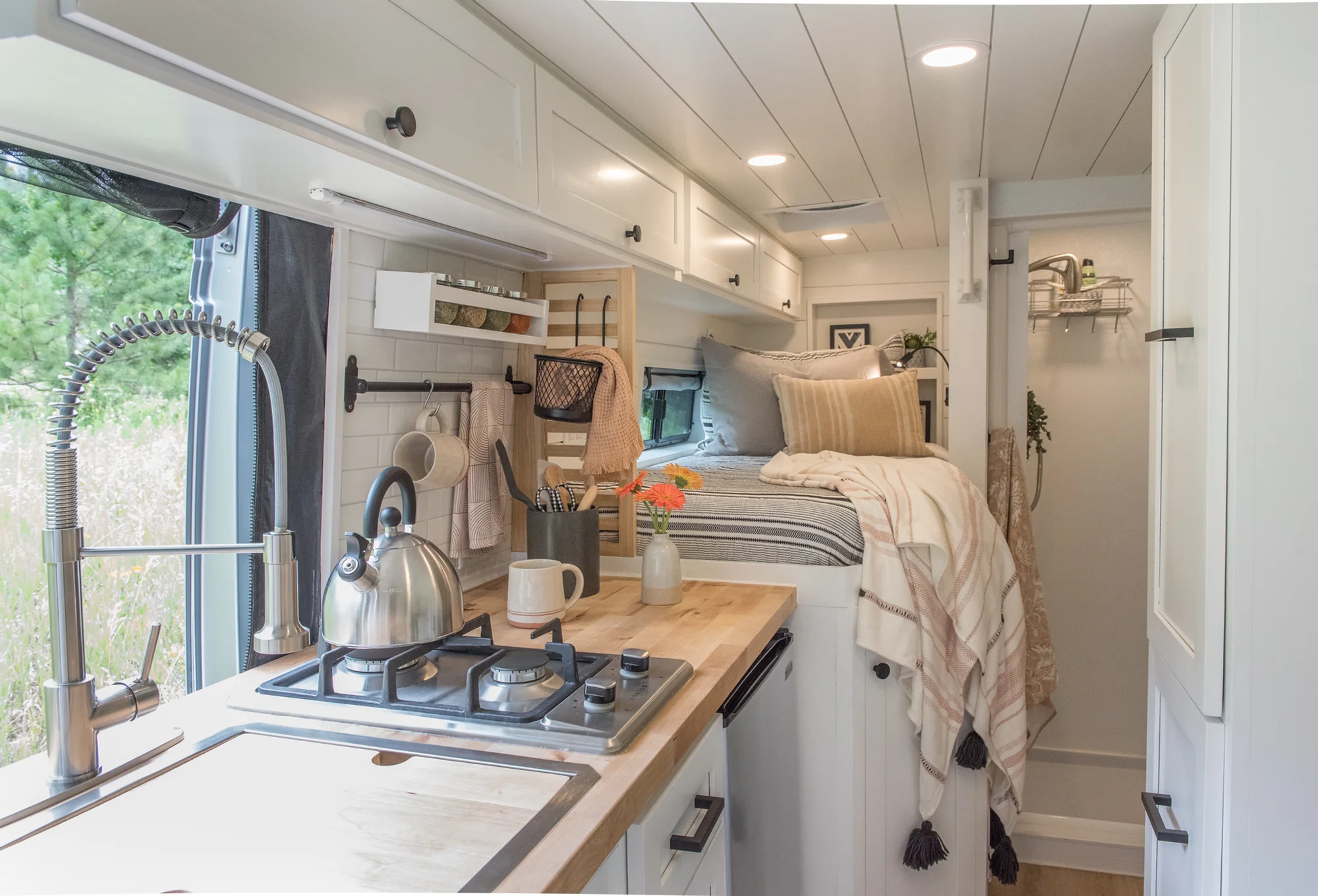
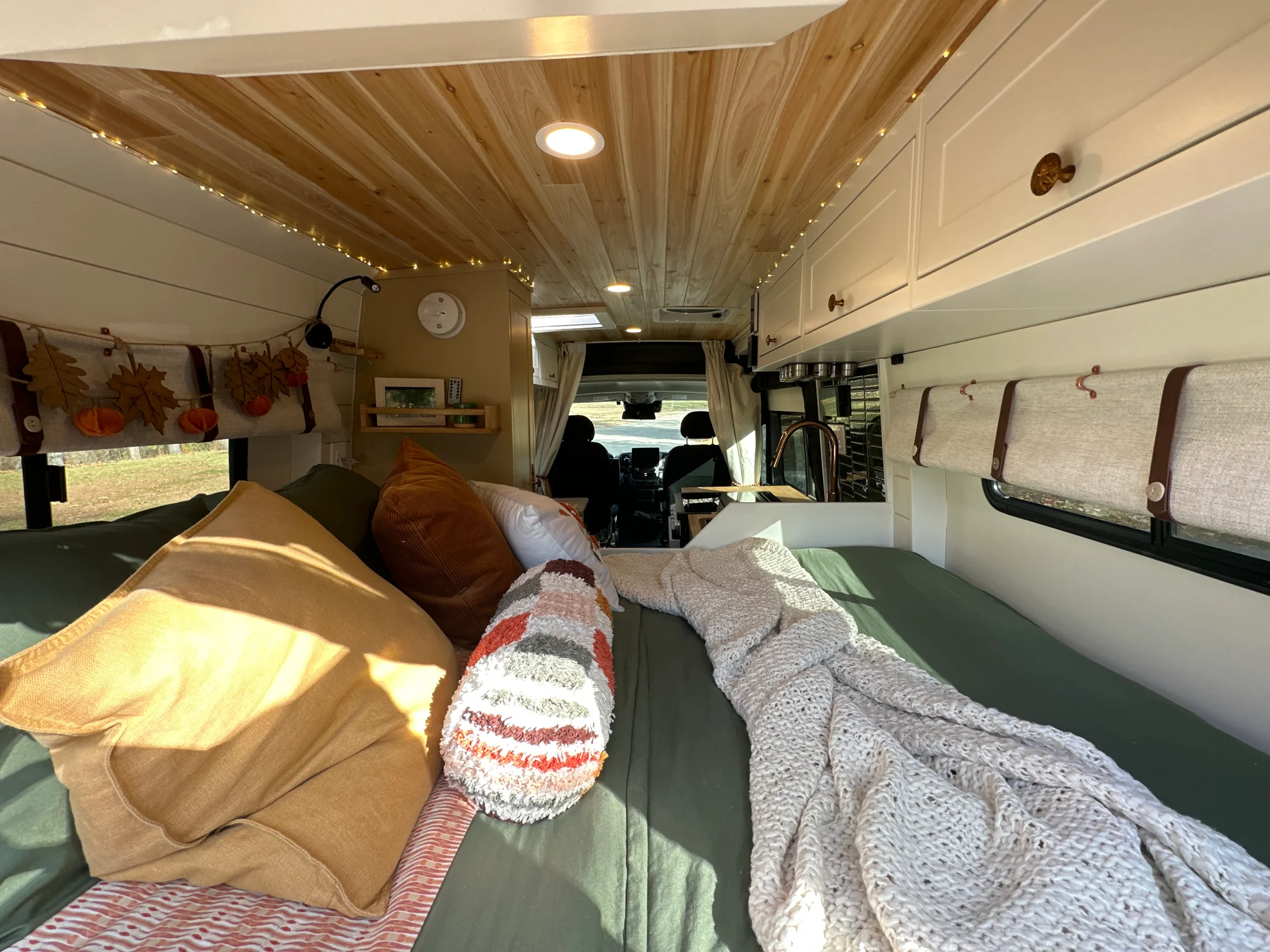
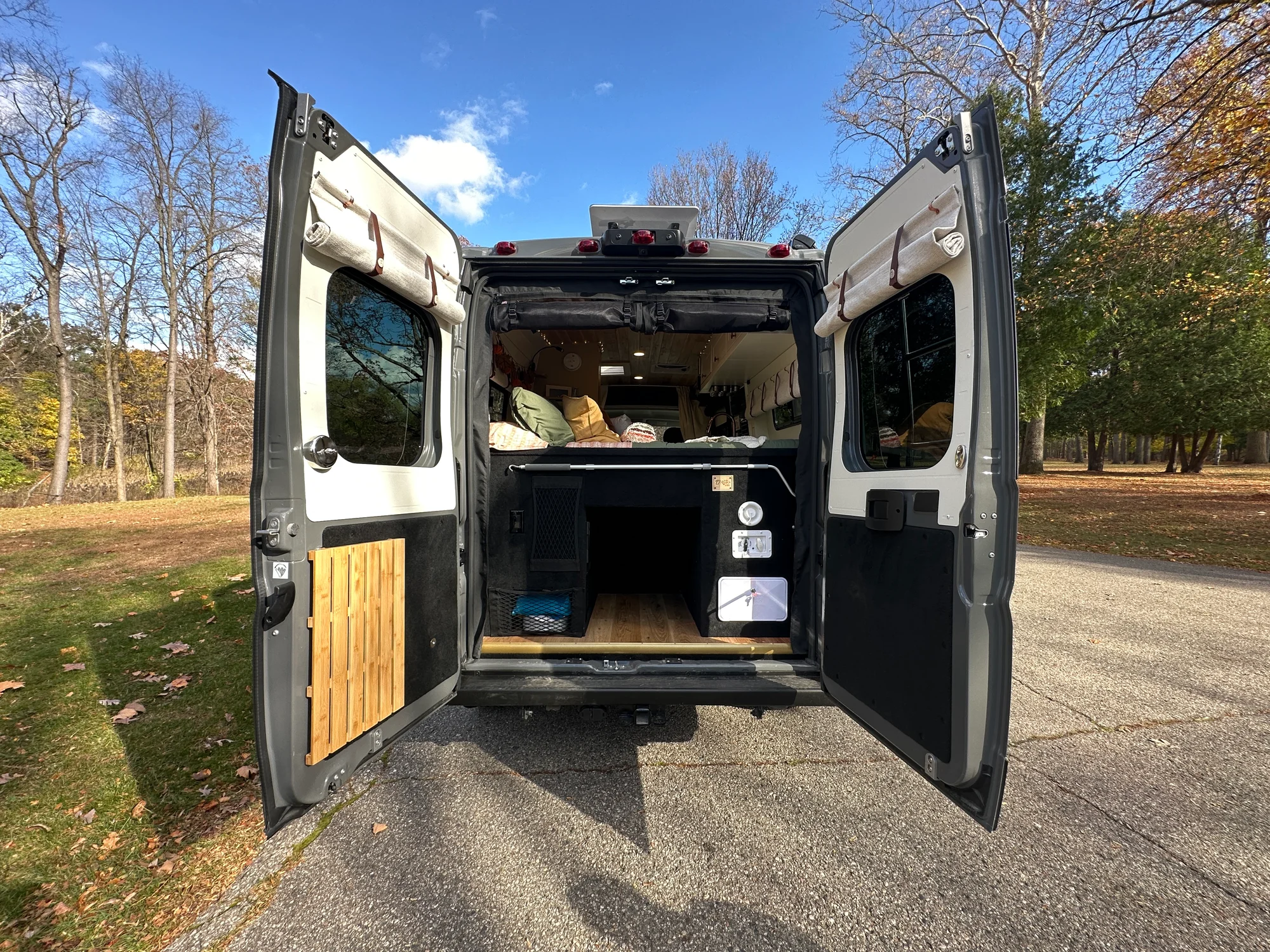
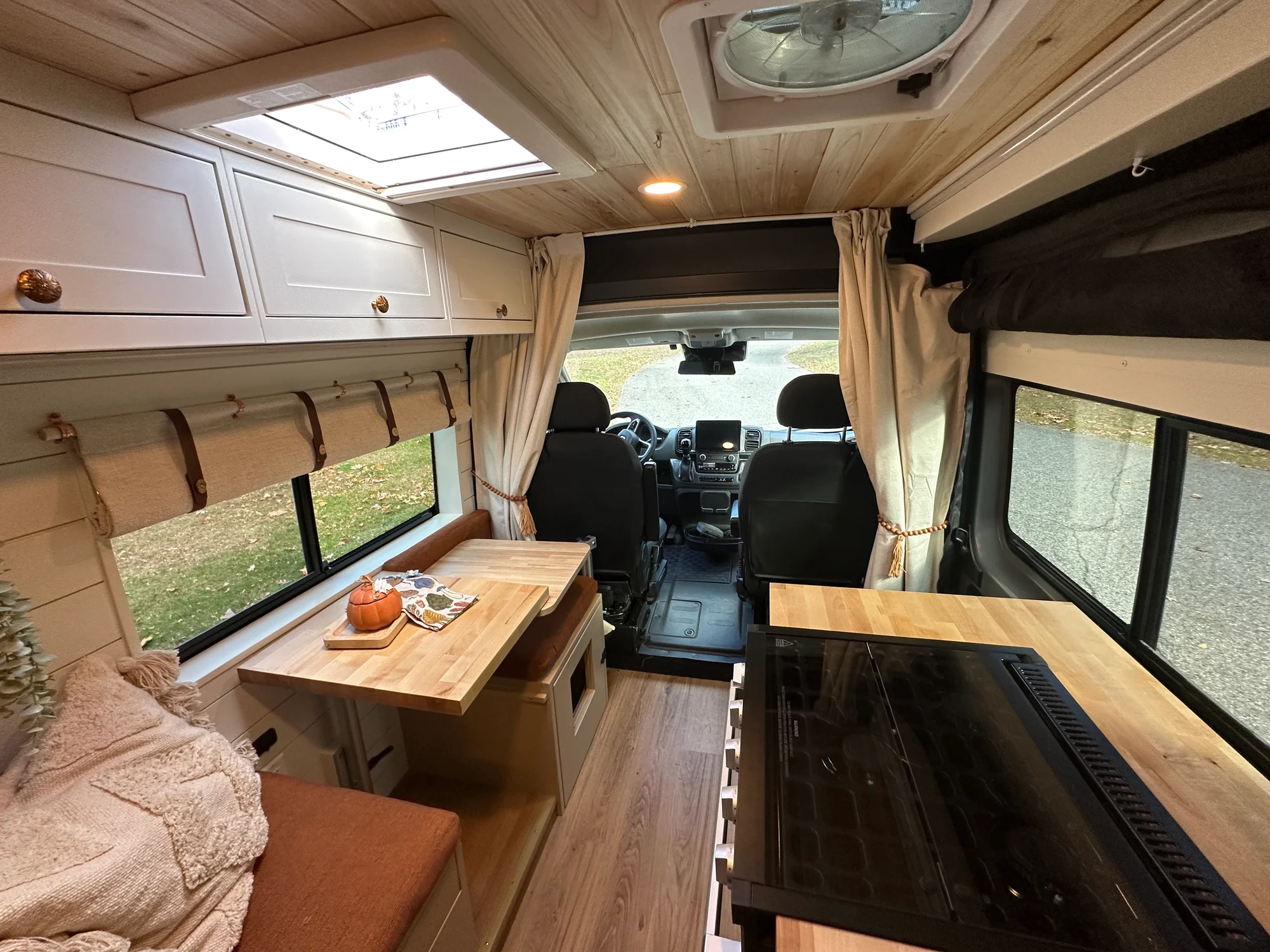
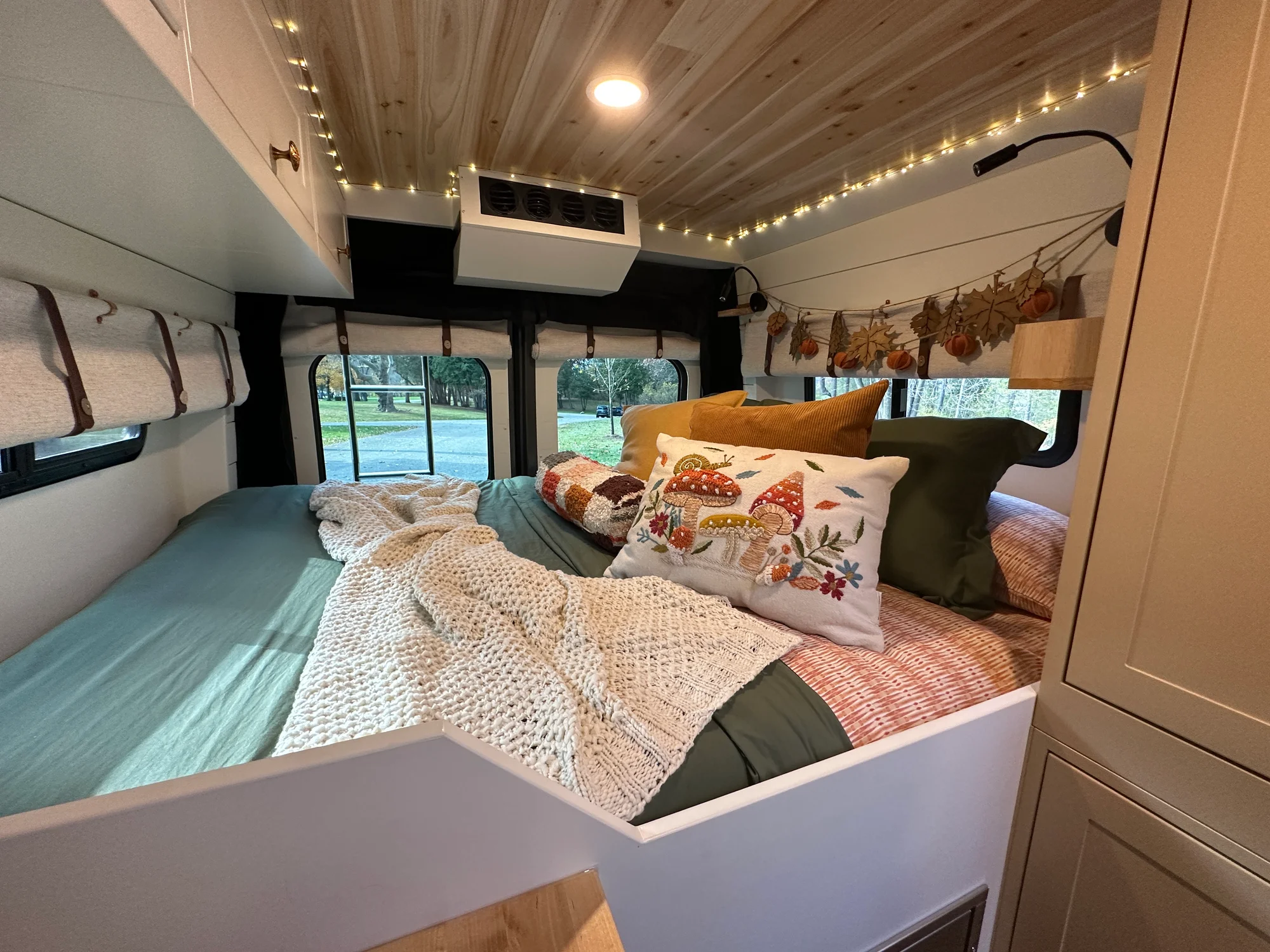
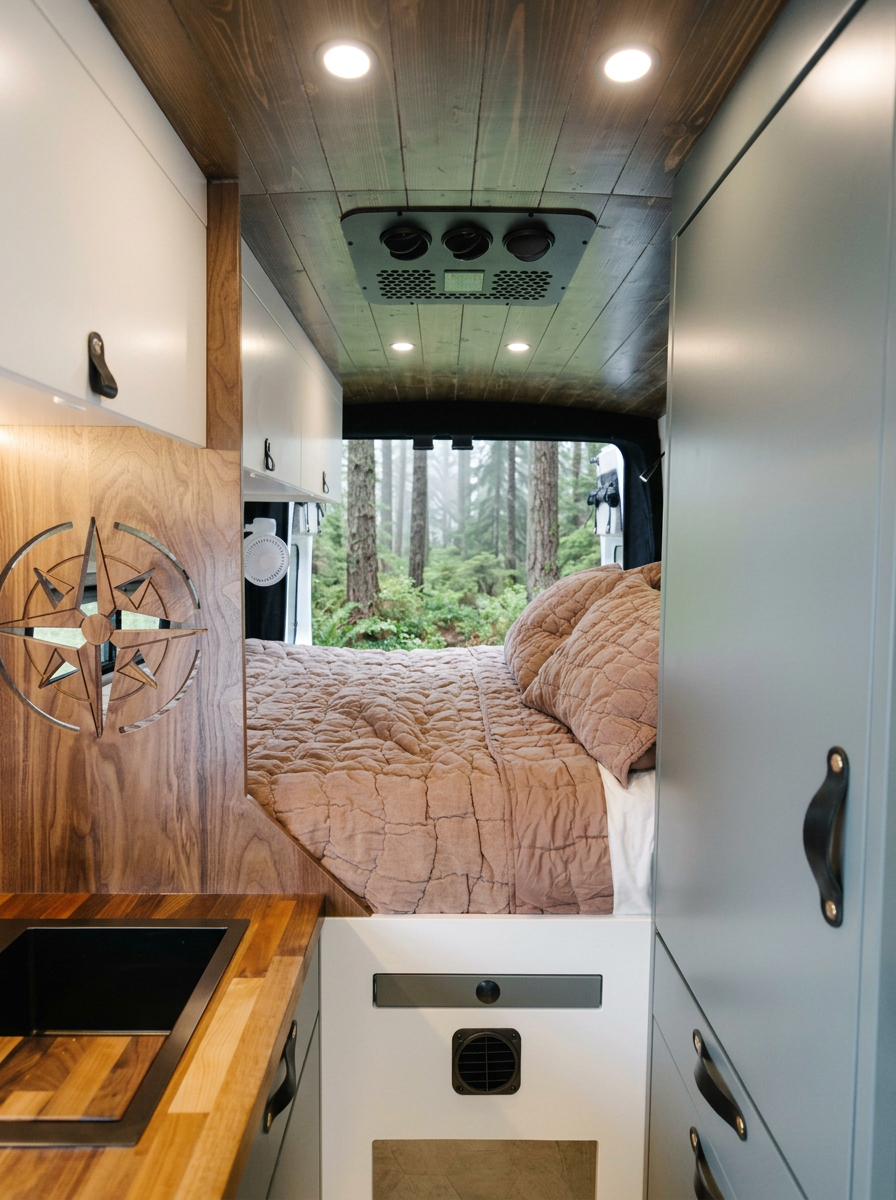
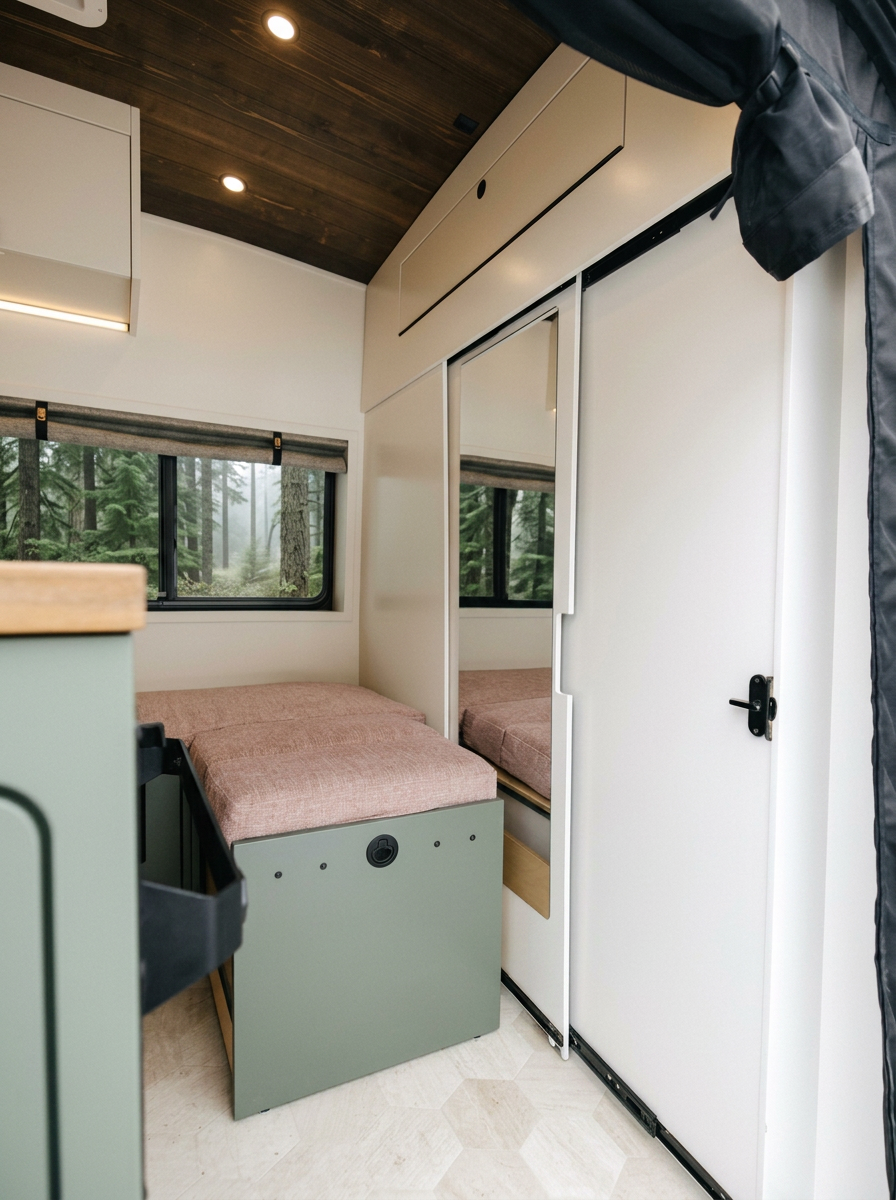
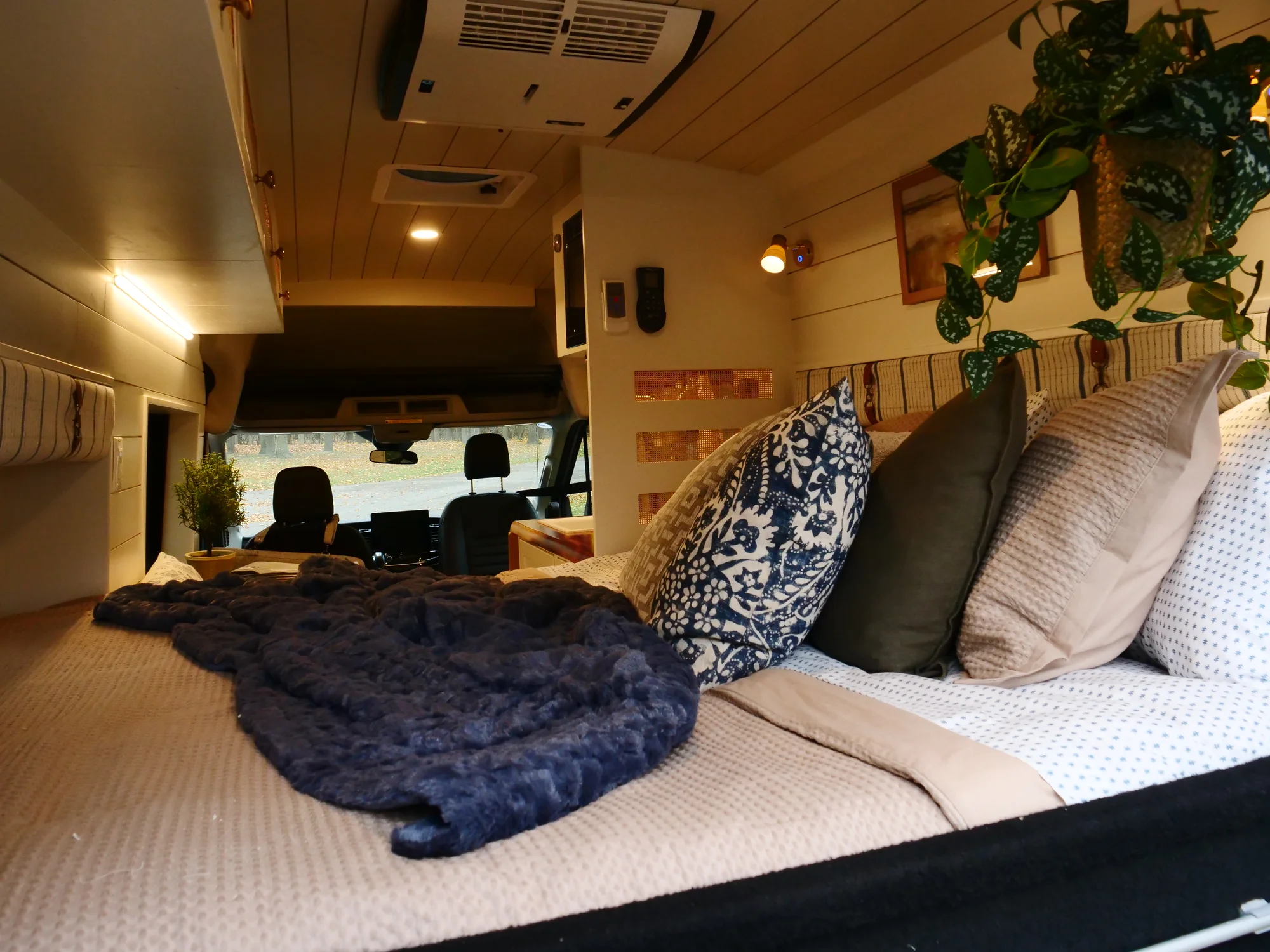
Once cabinetry, beds, and systems are installed, small differences become noticeable — and a few inches can change how the whole coach feels.
What we’ve observed building on both platforms:
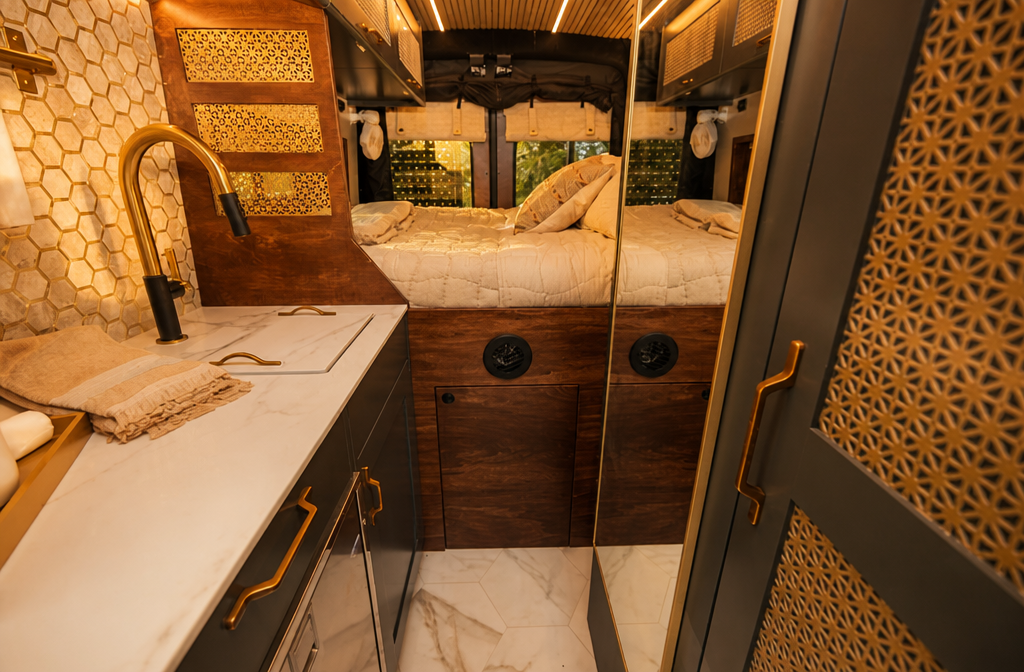
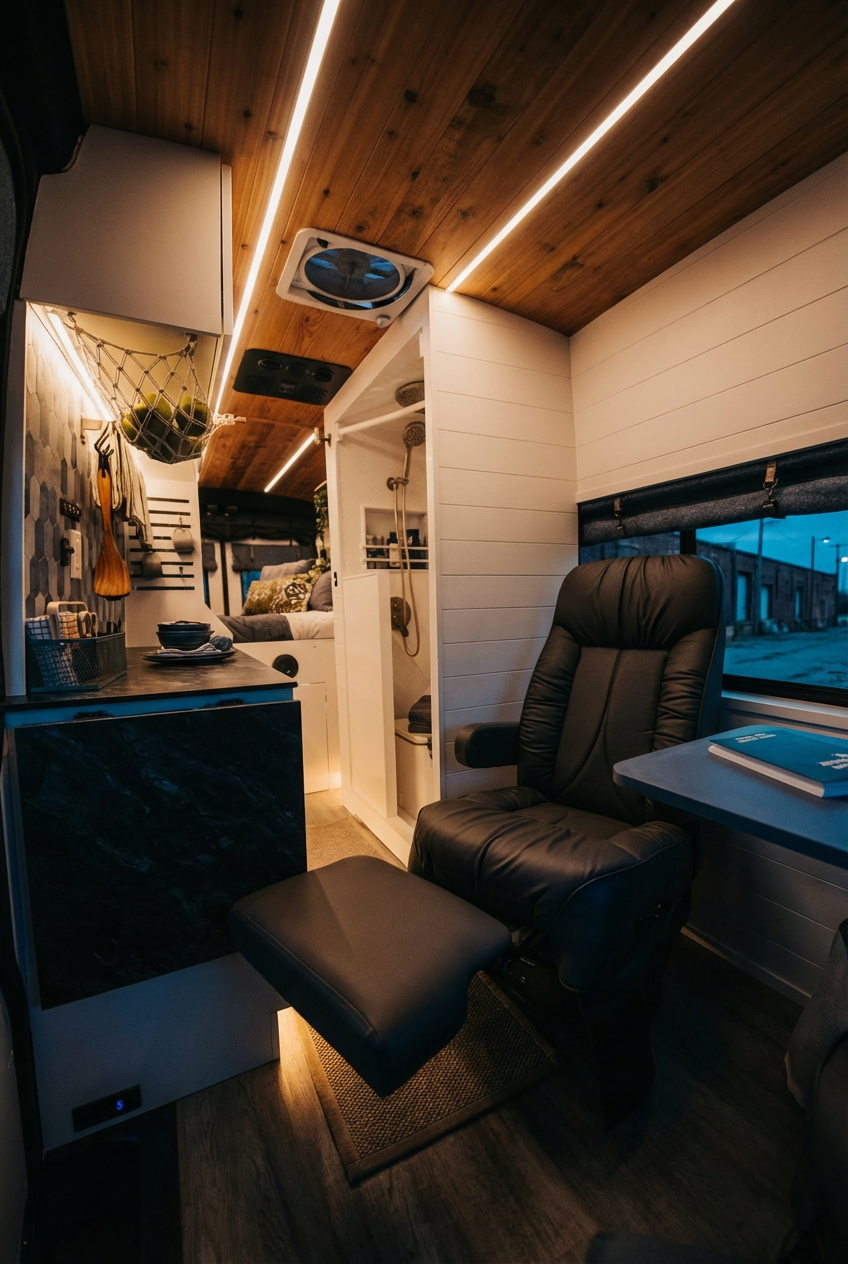
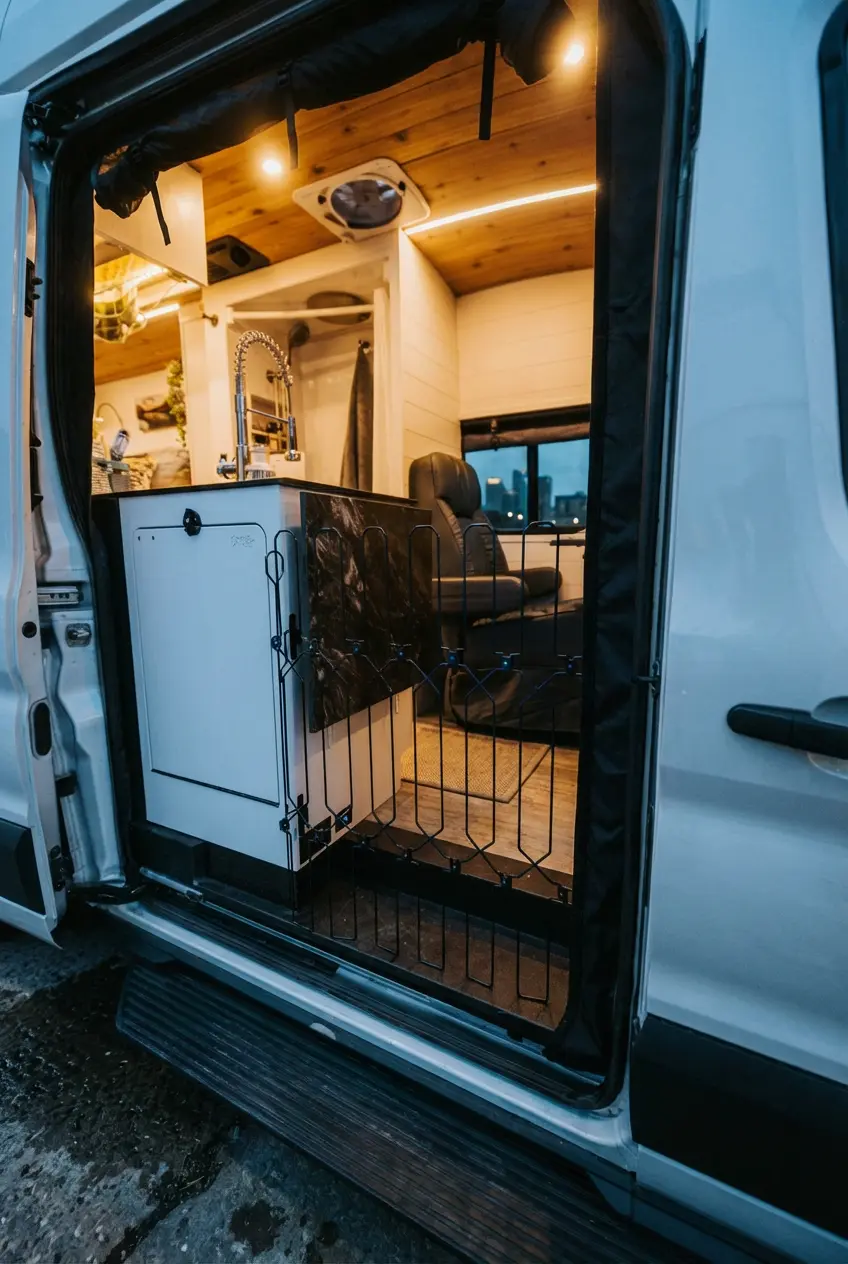
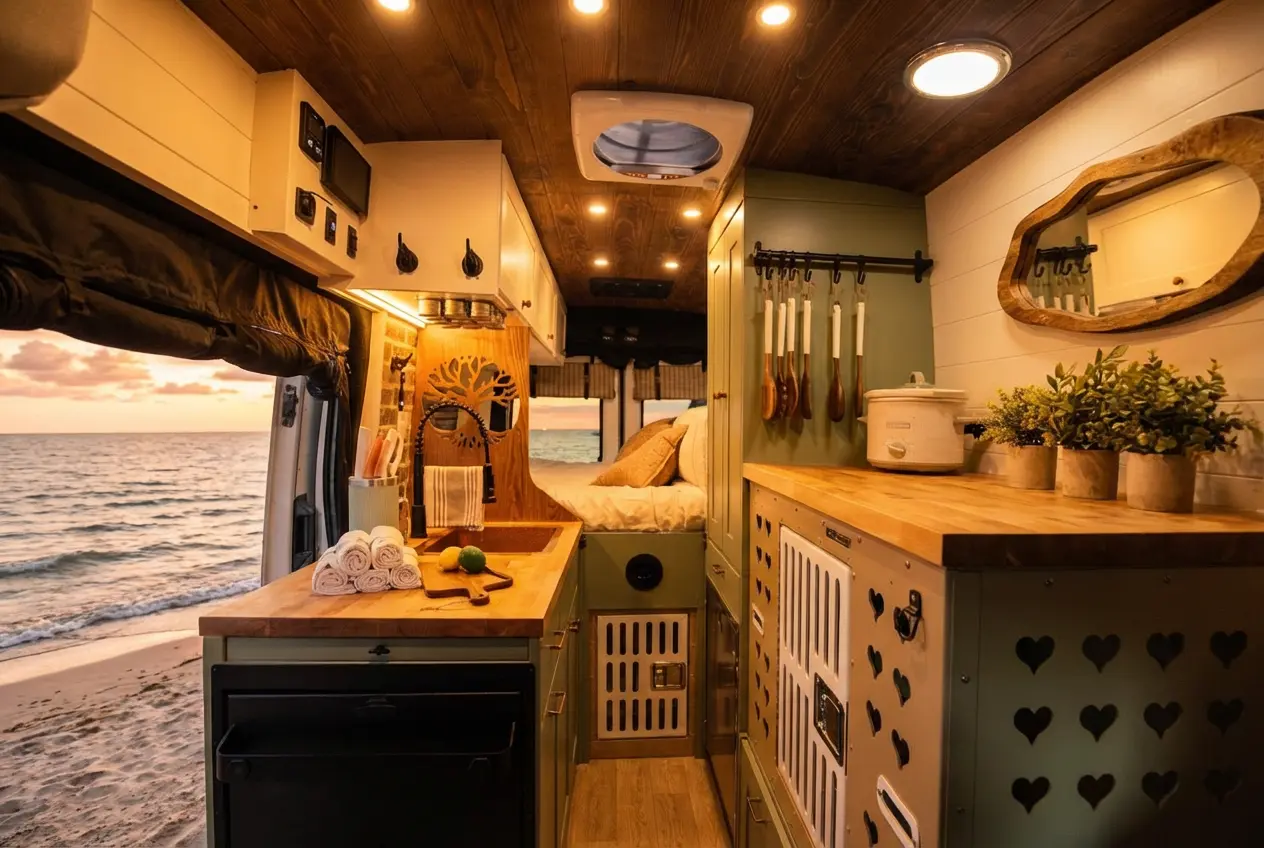
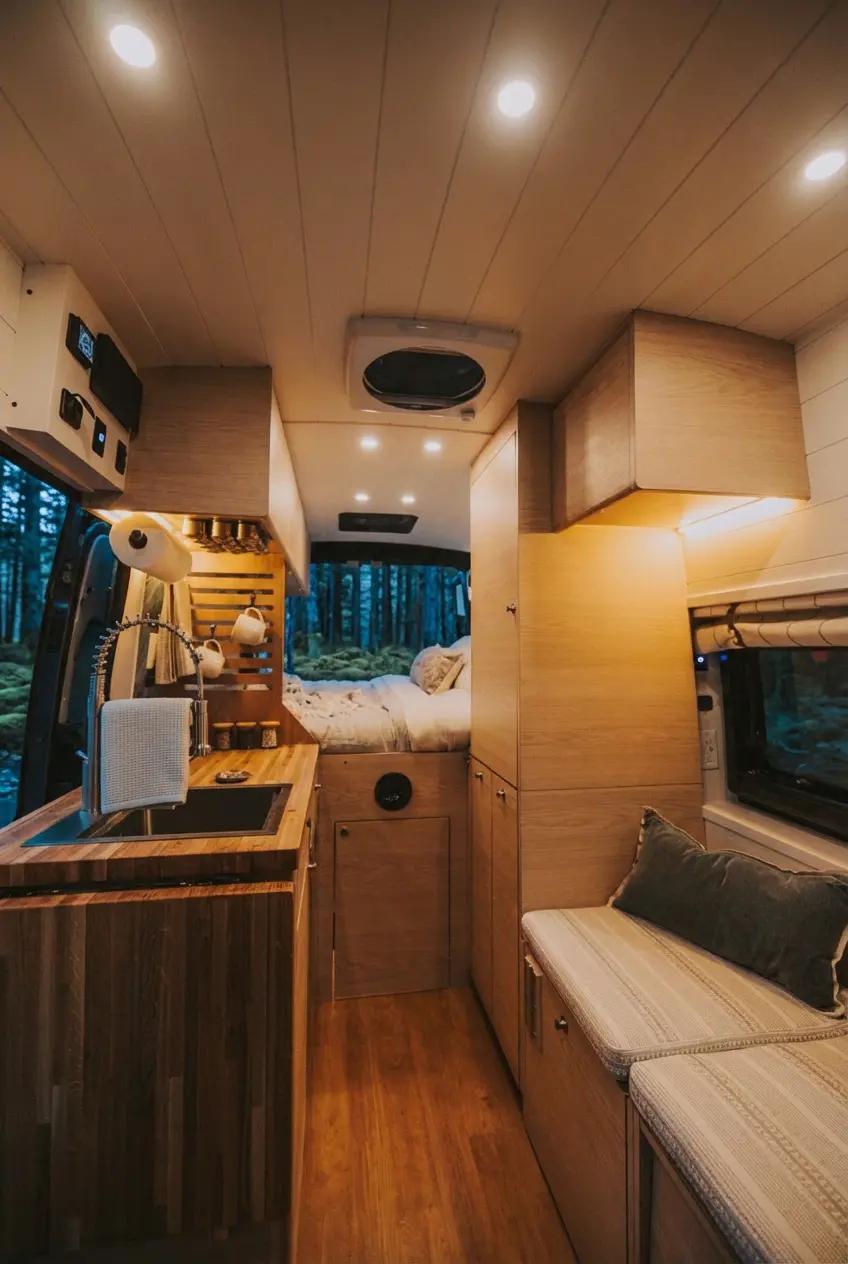
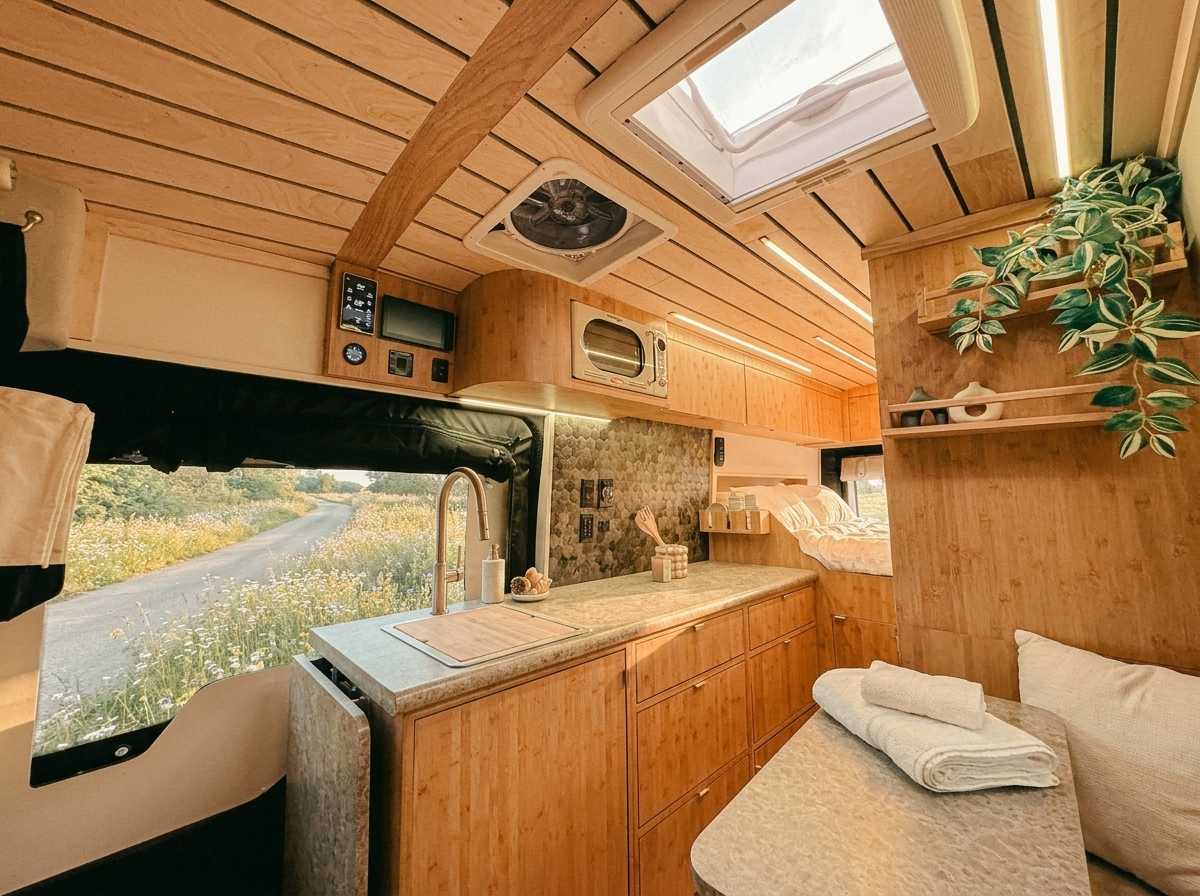
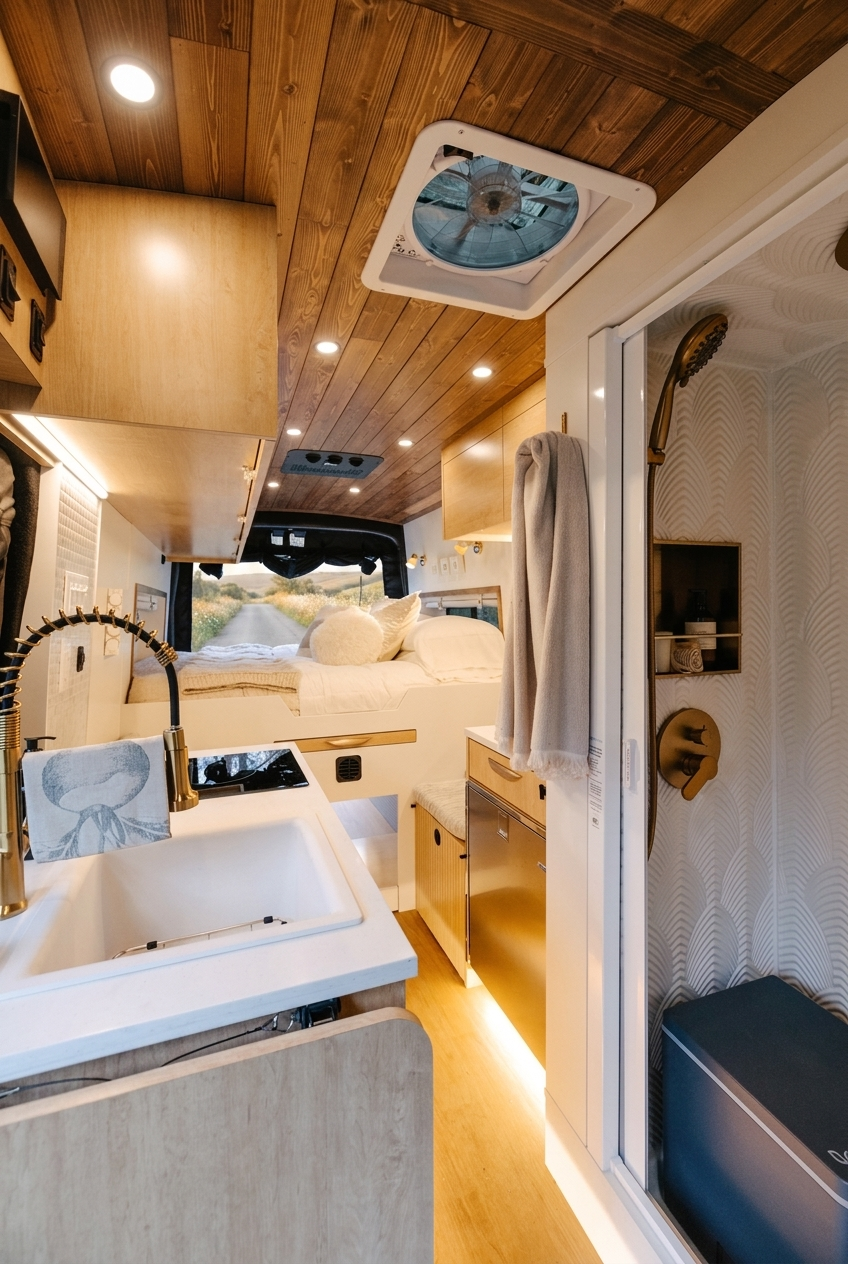
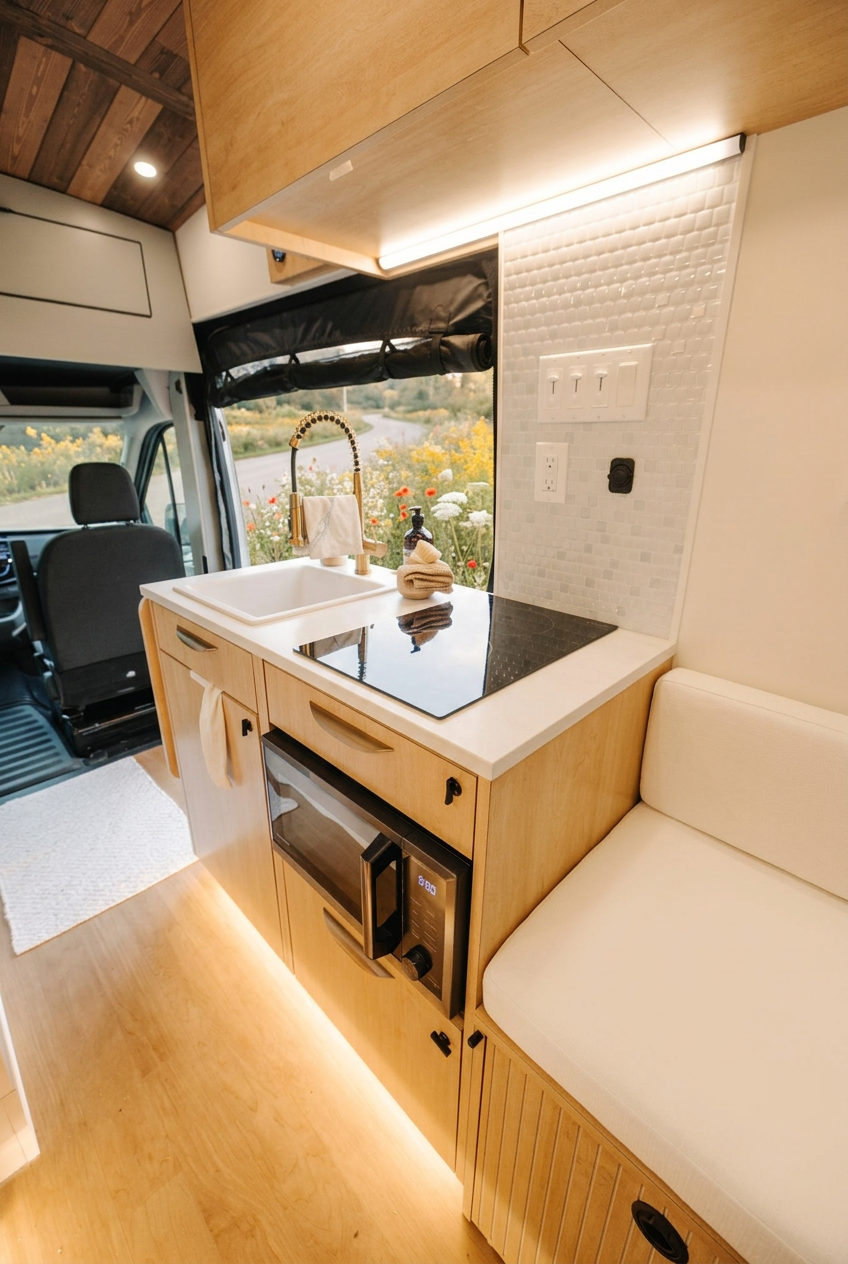
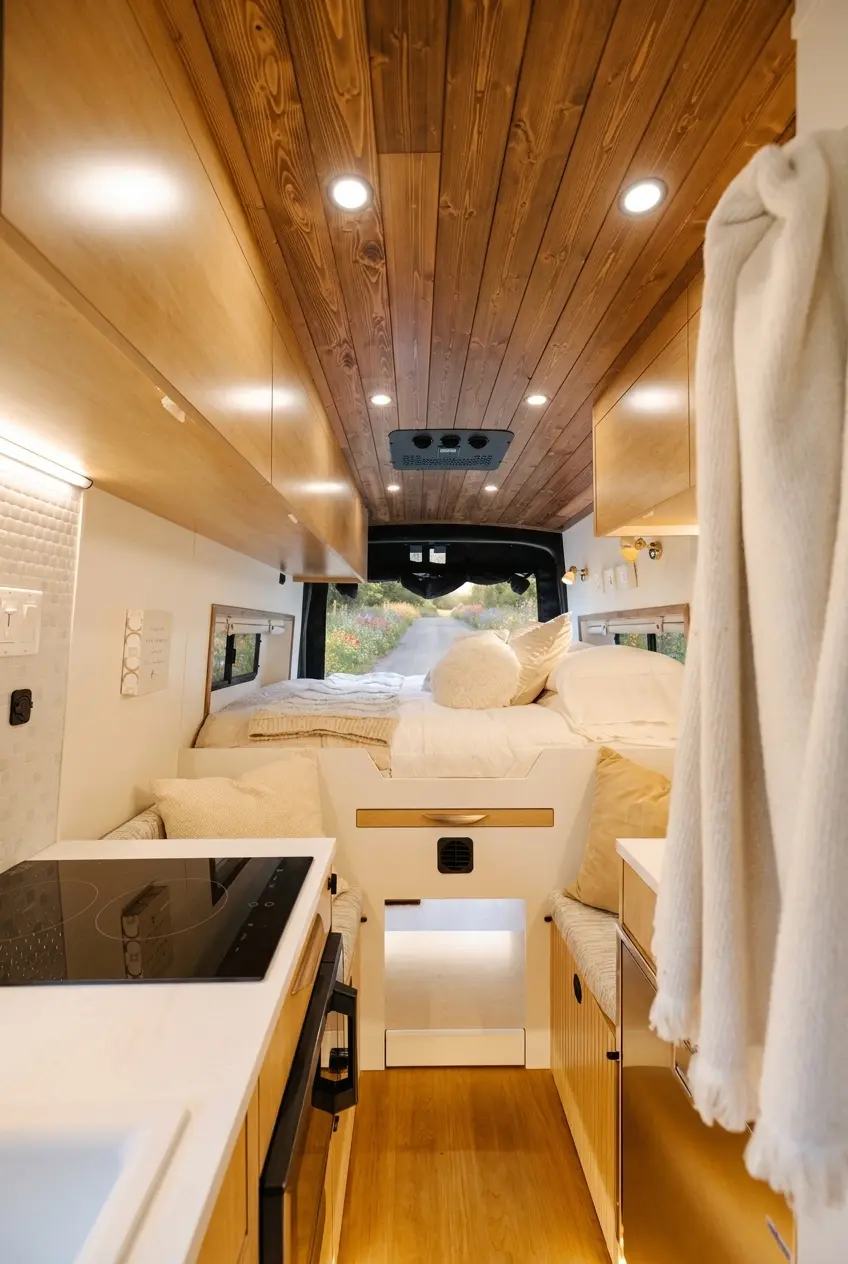
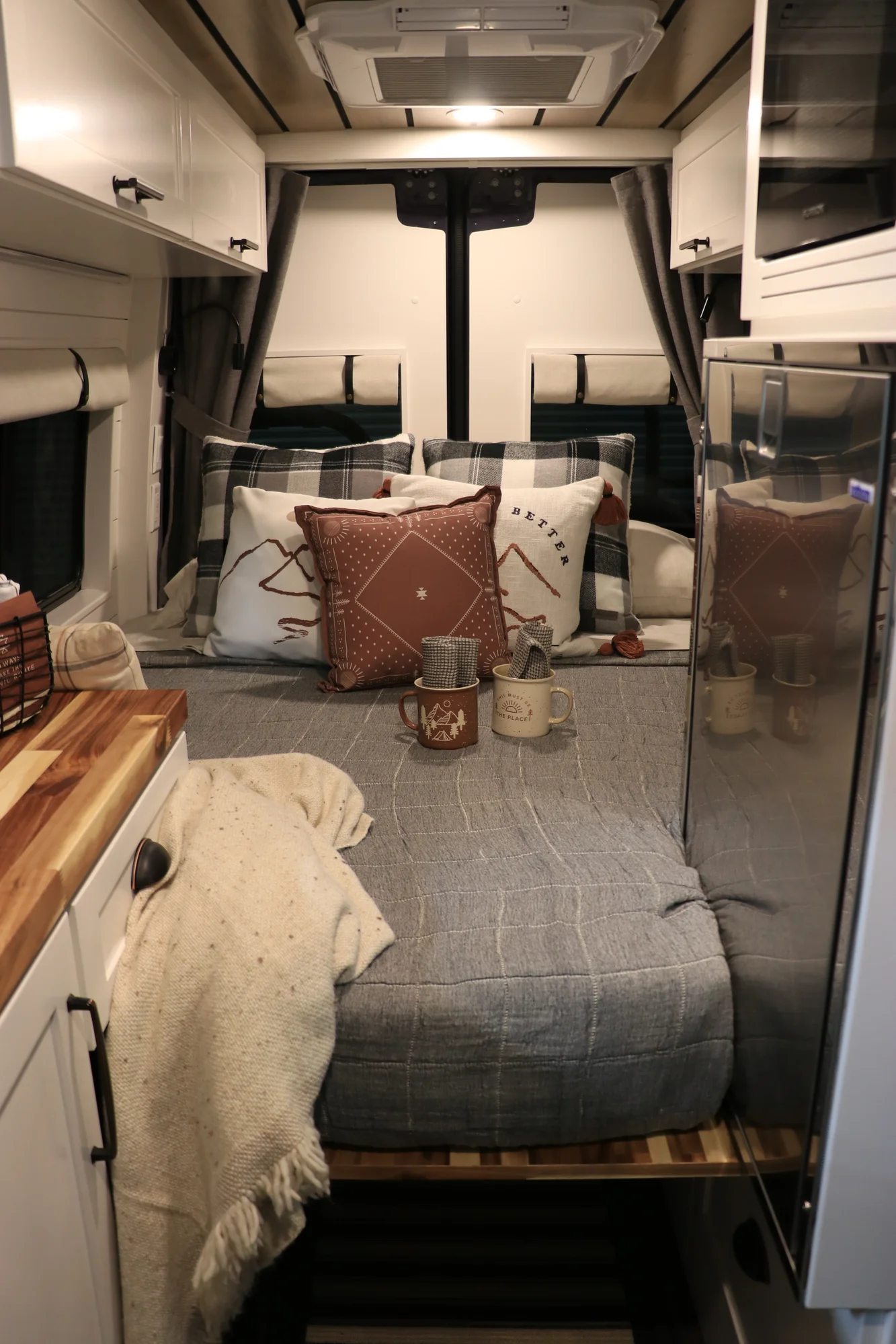
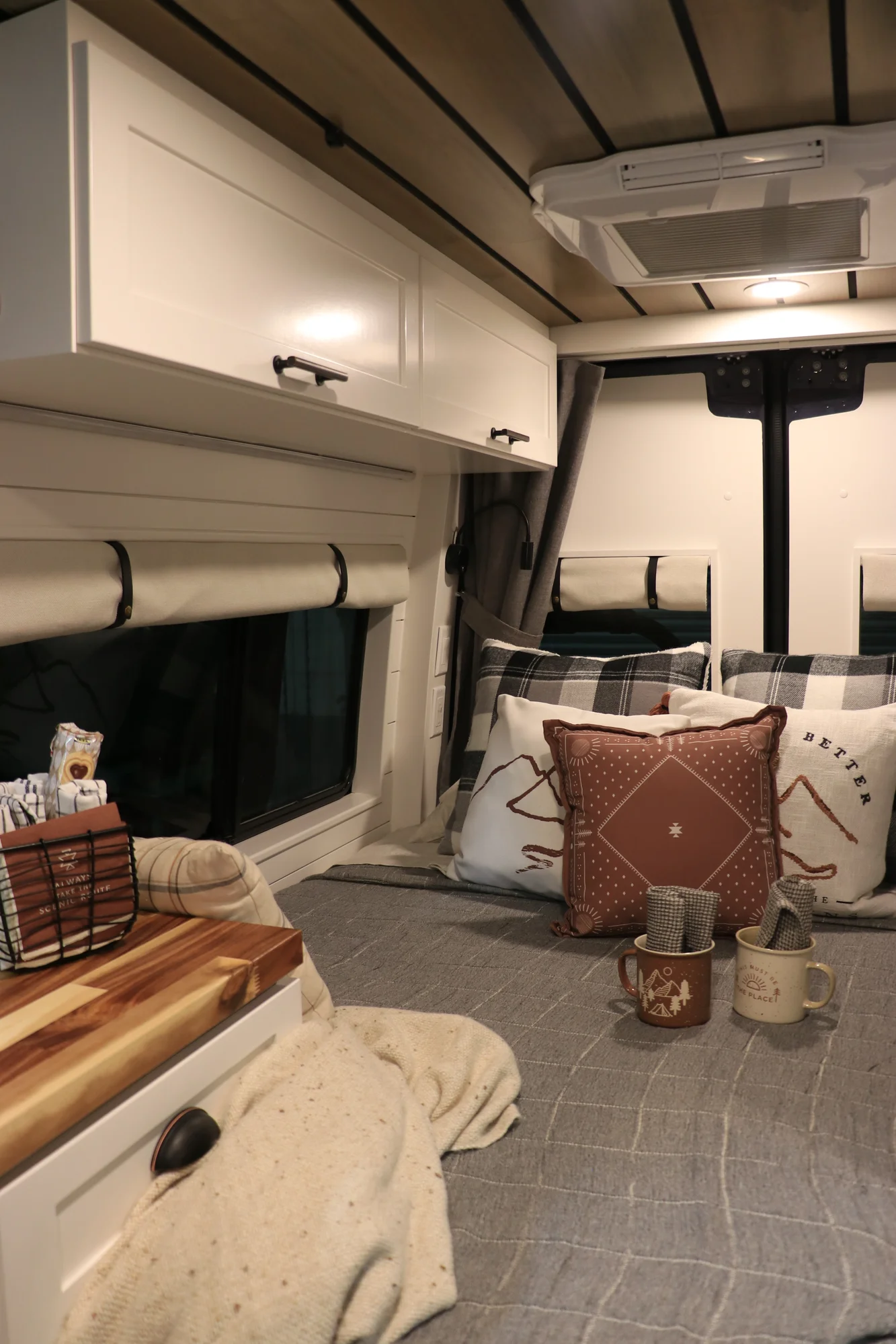
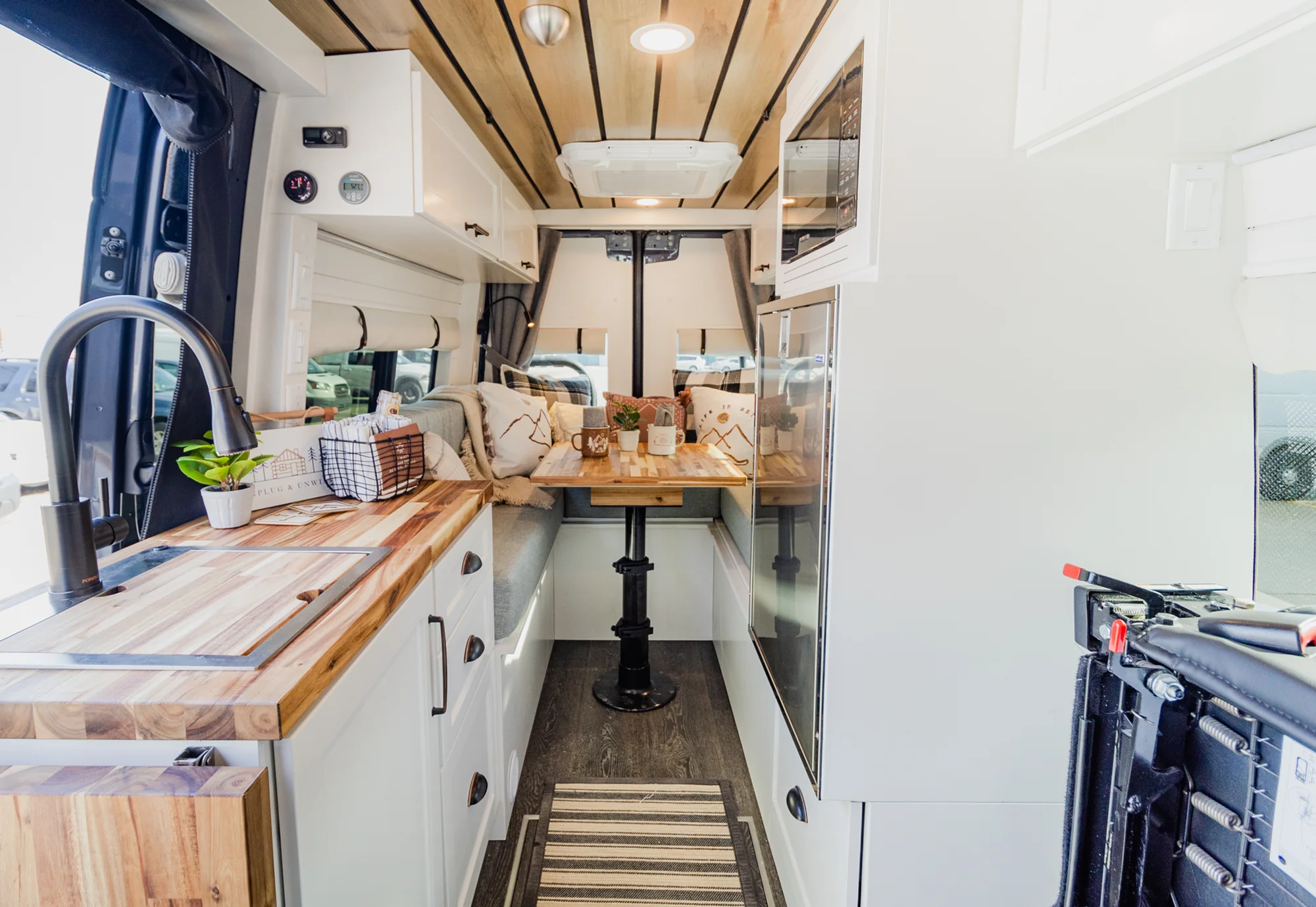
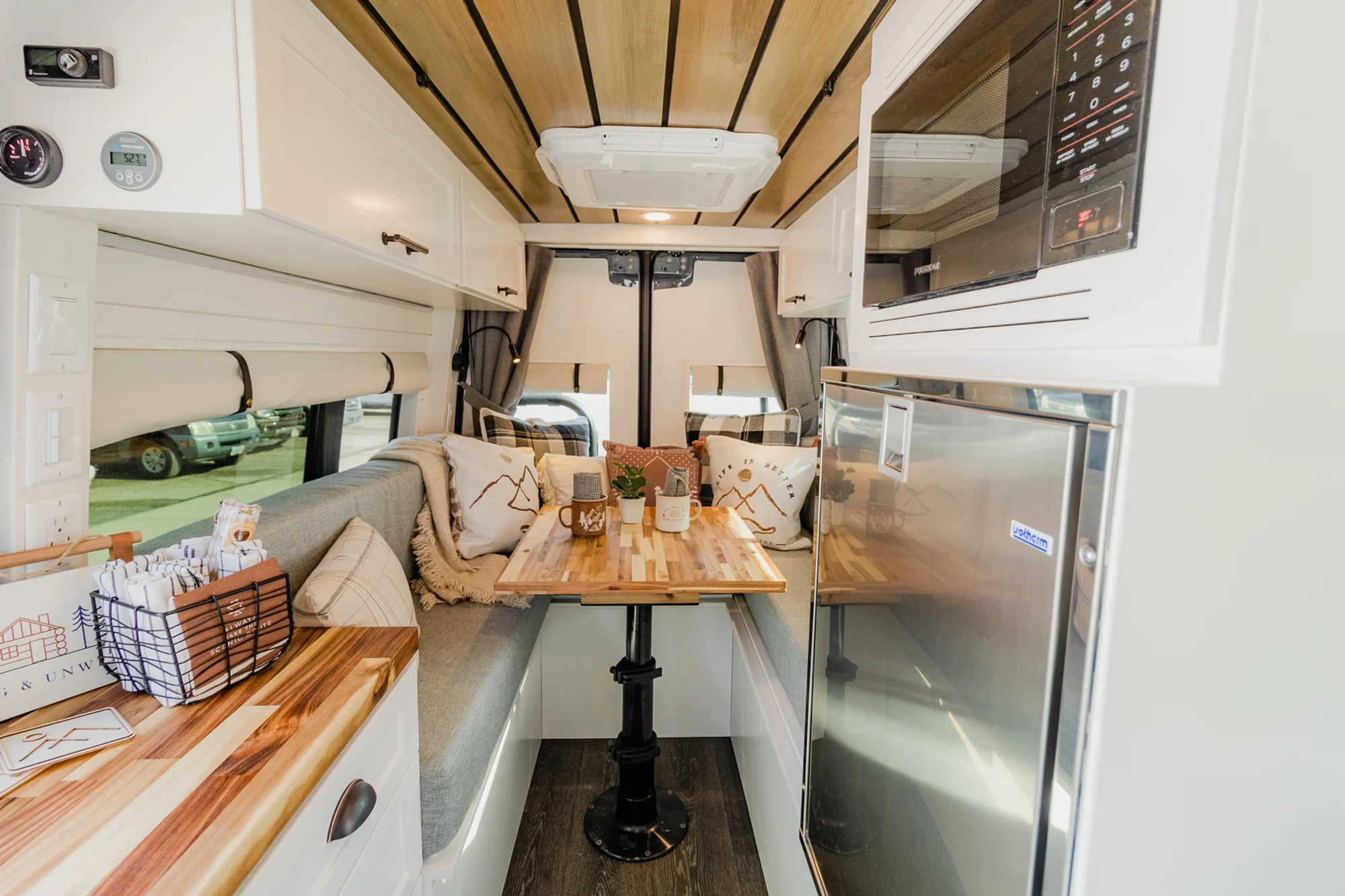
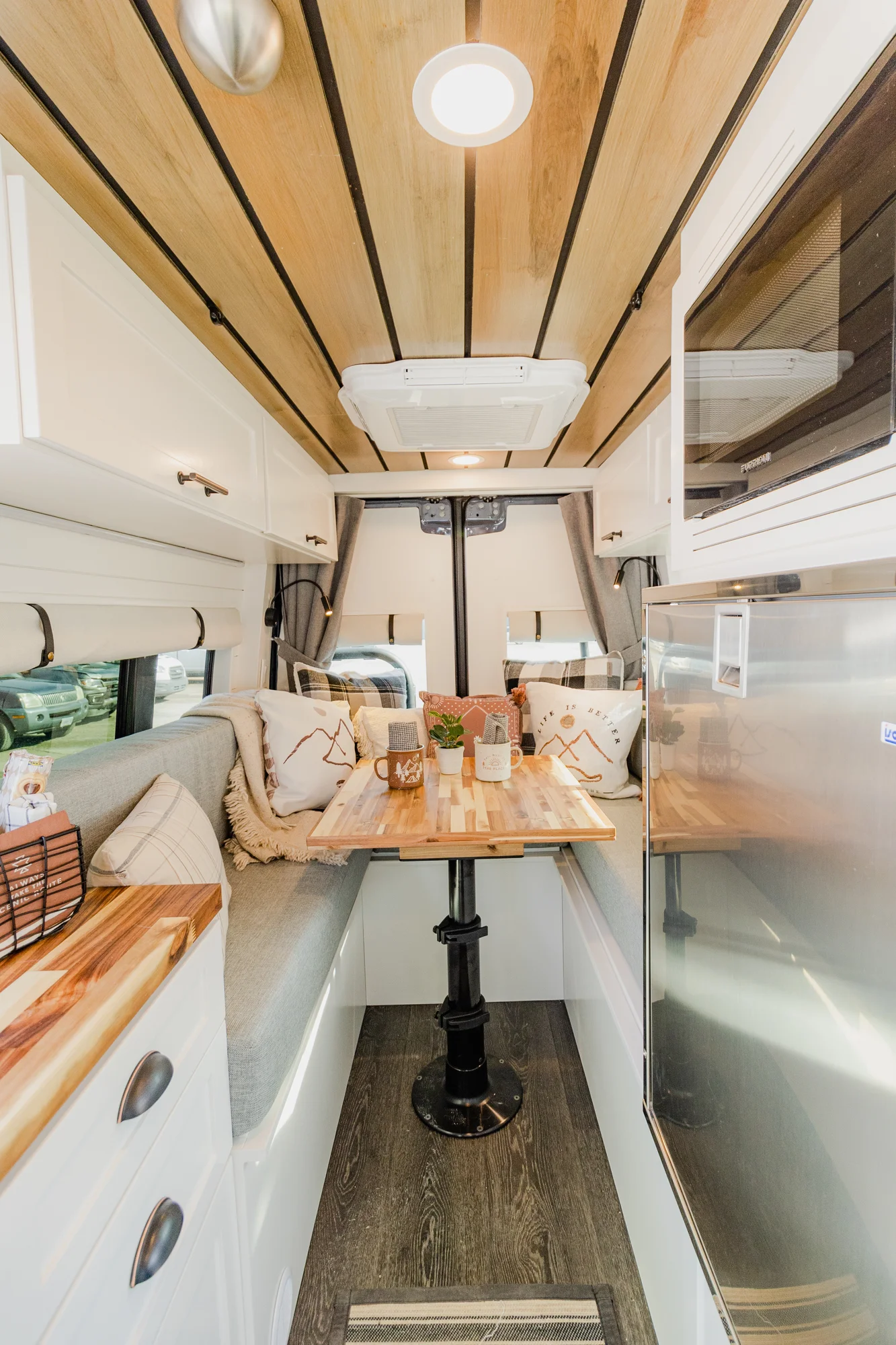
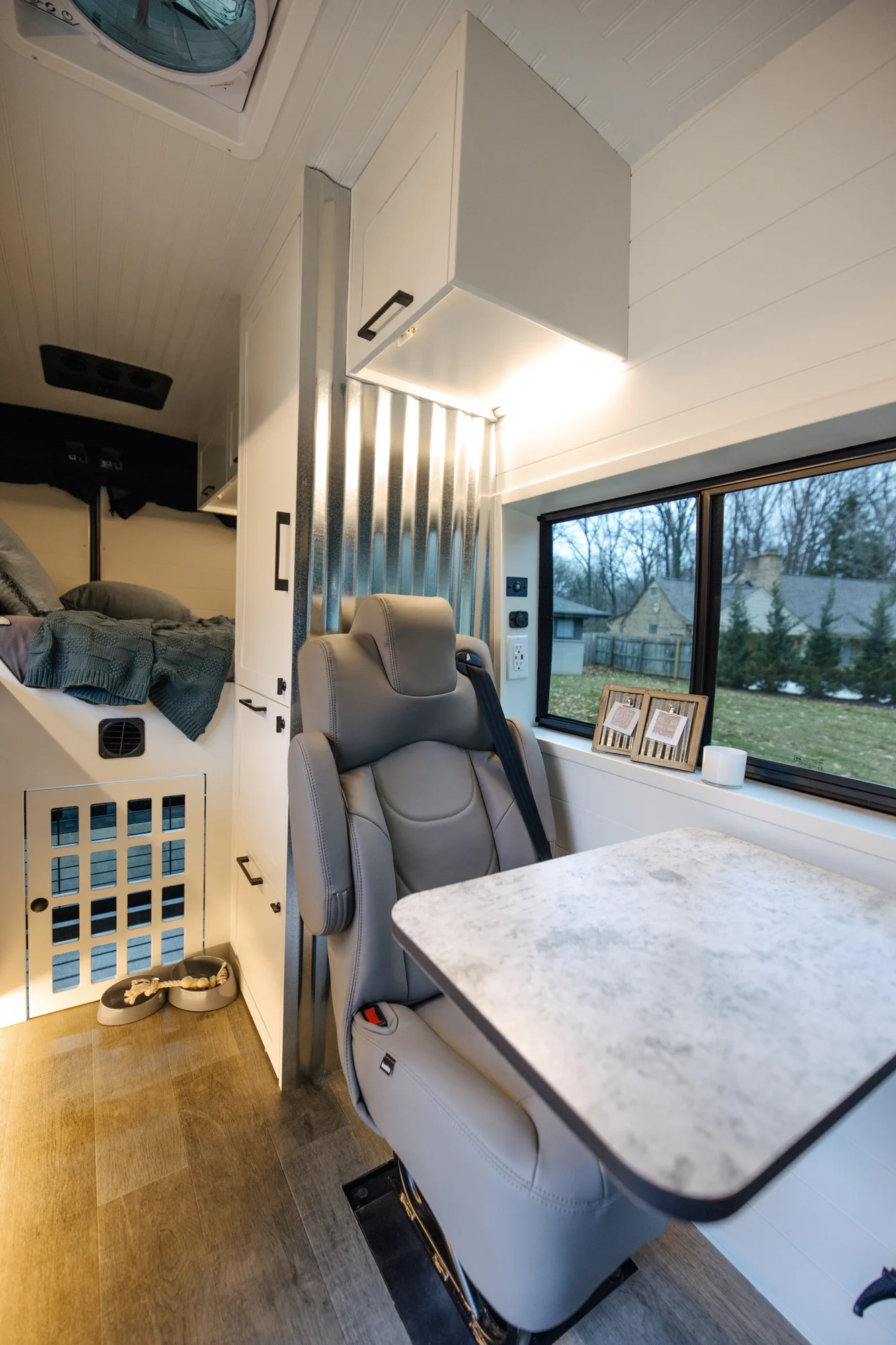
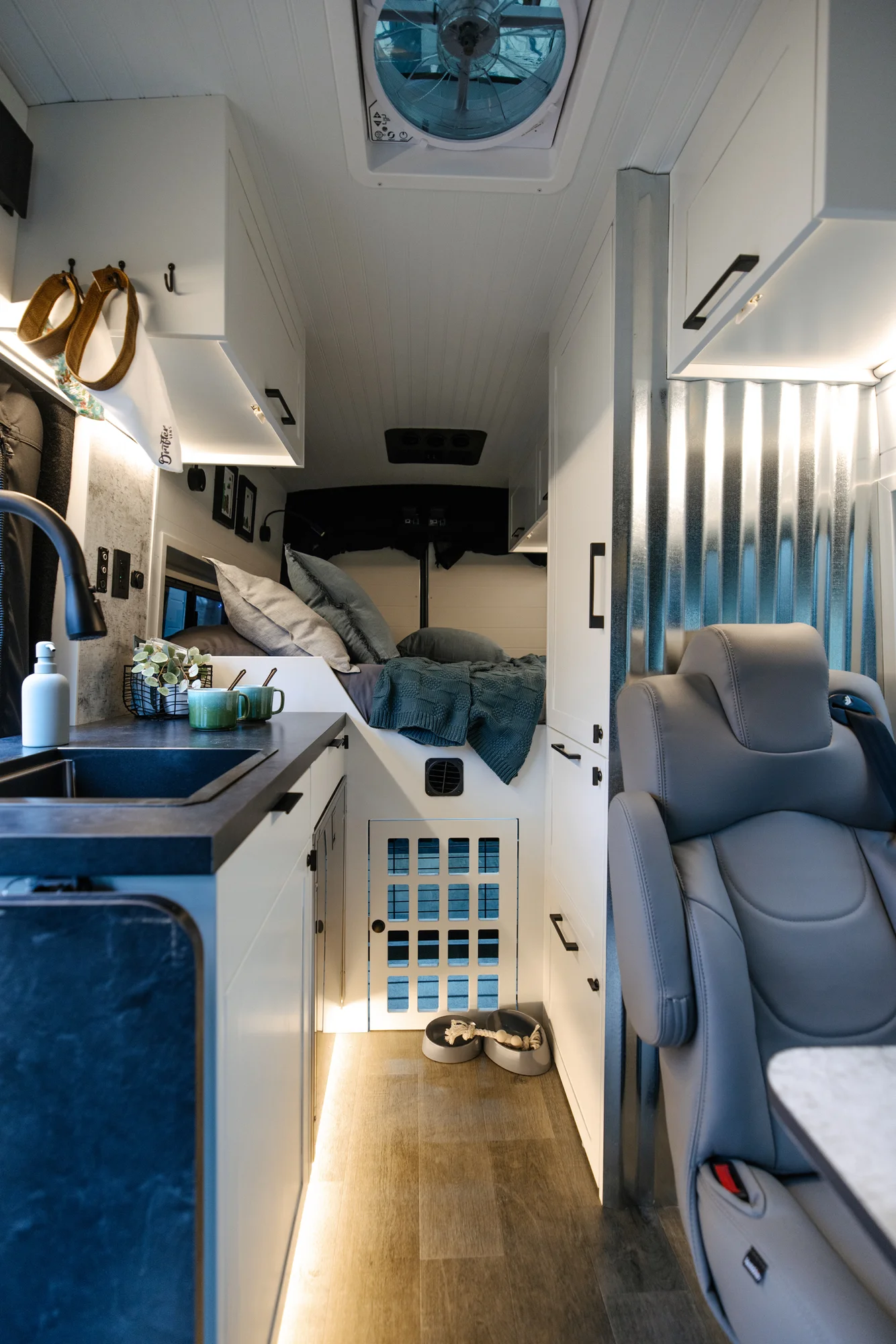
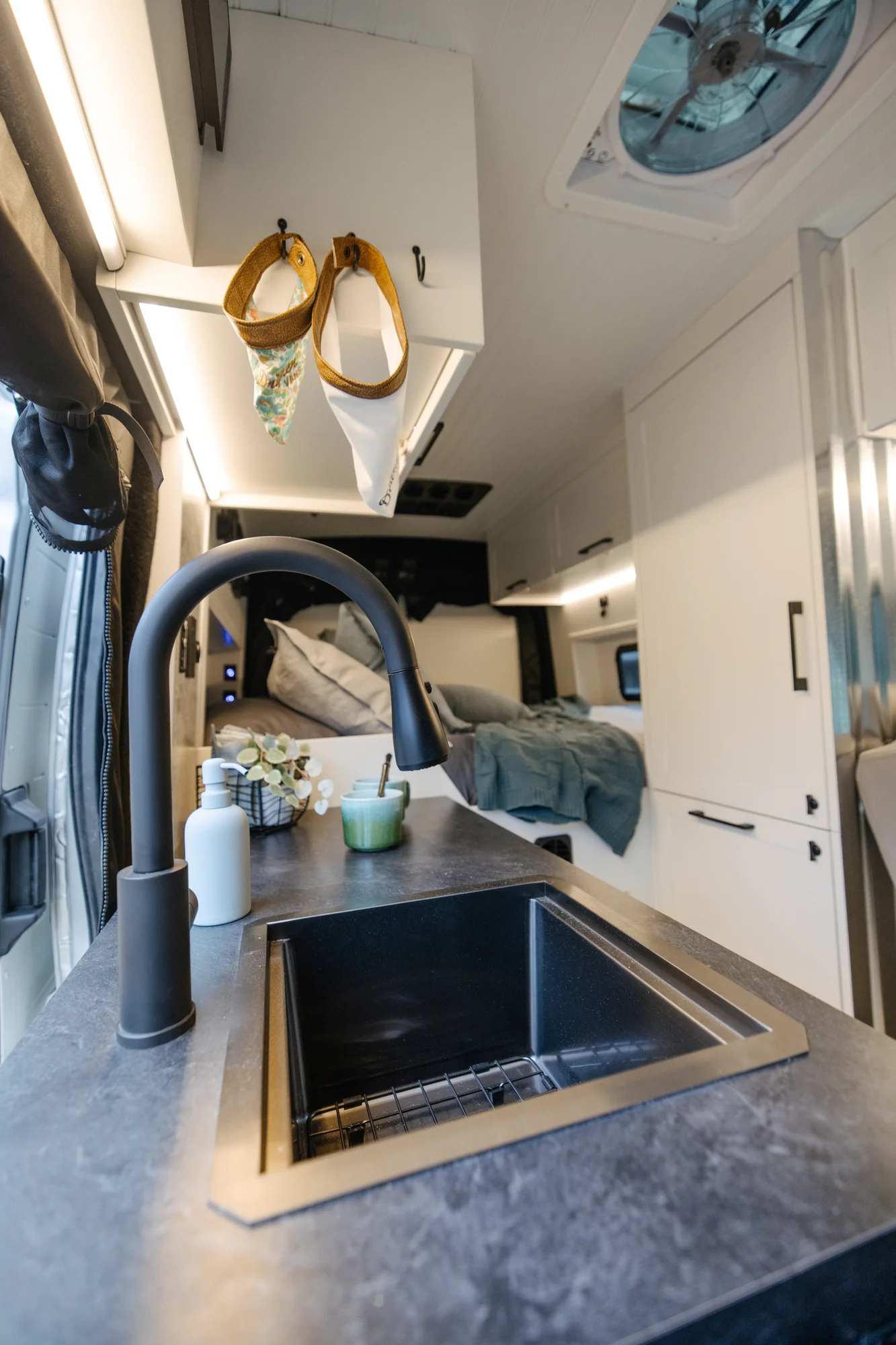
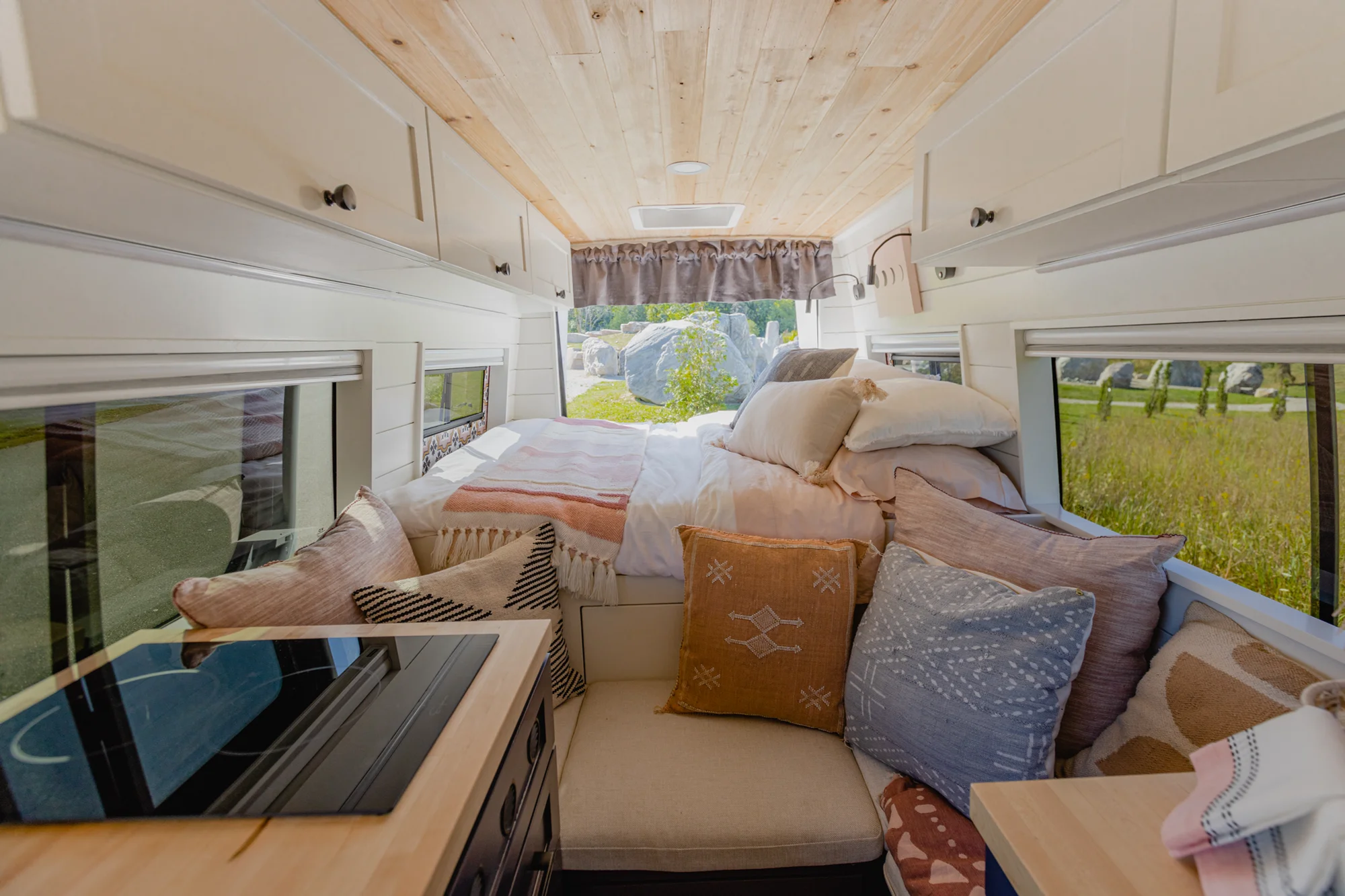
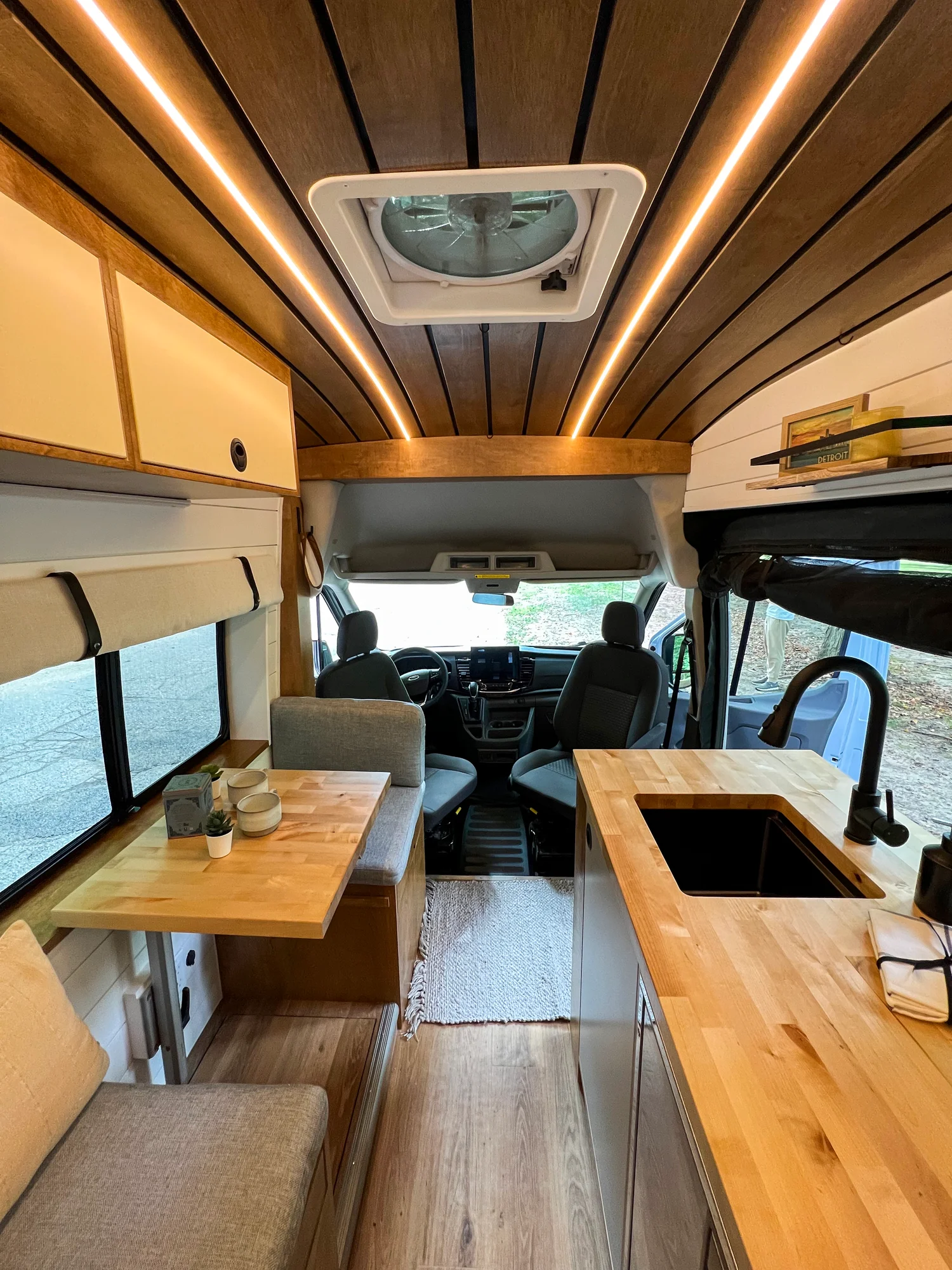
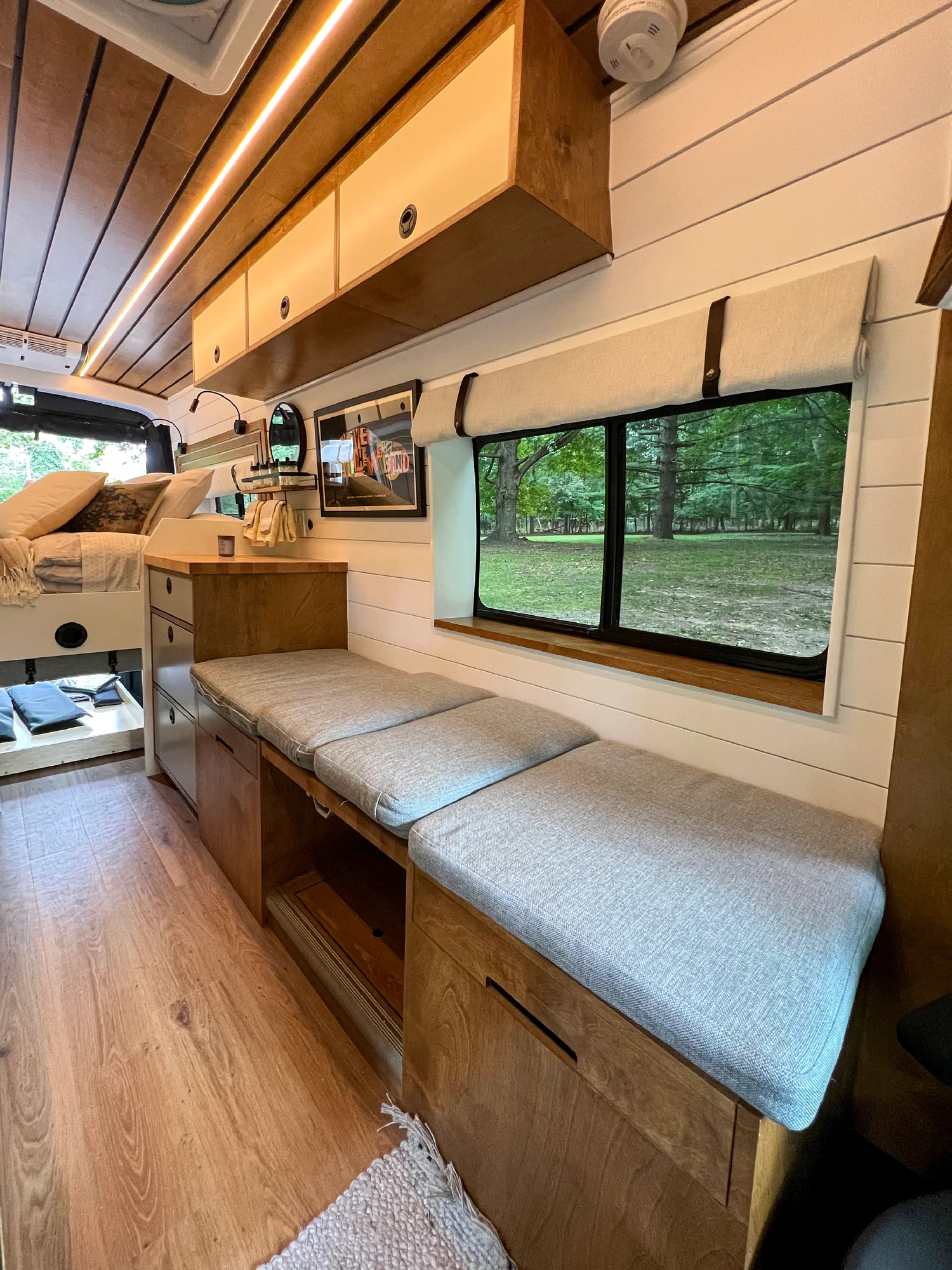
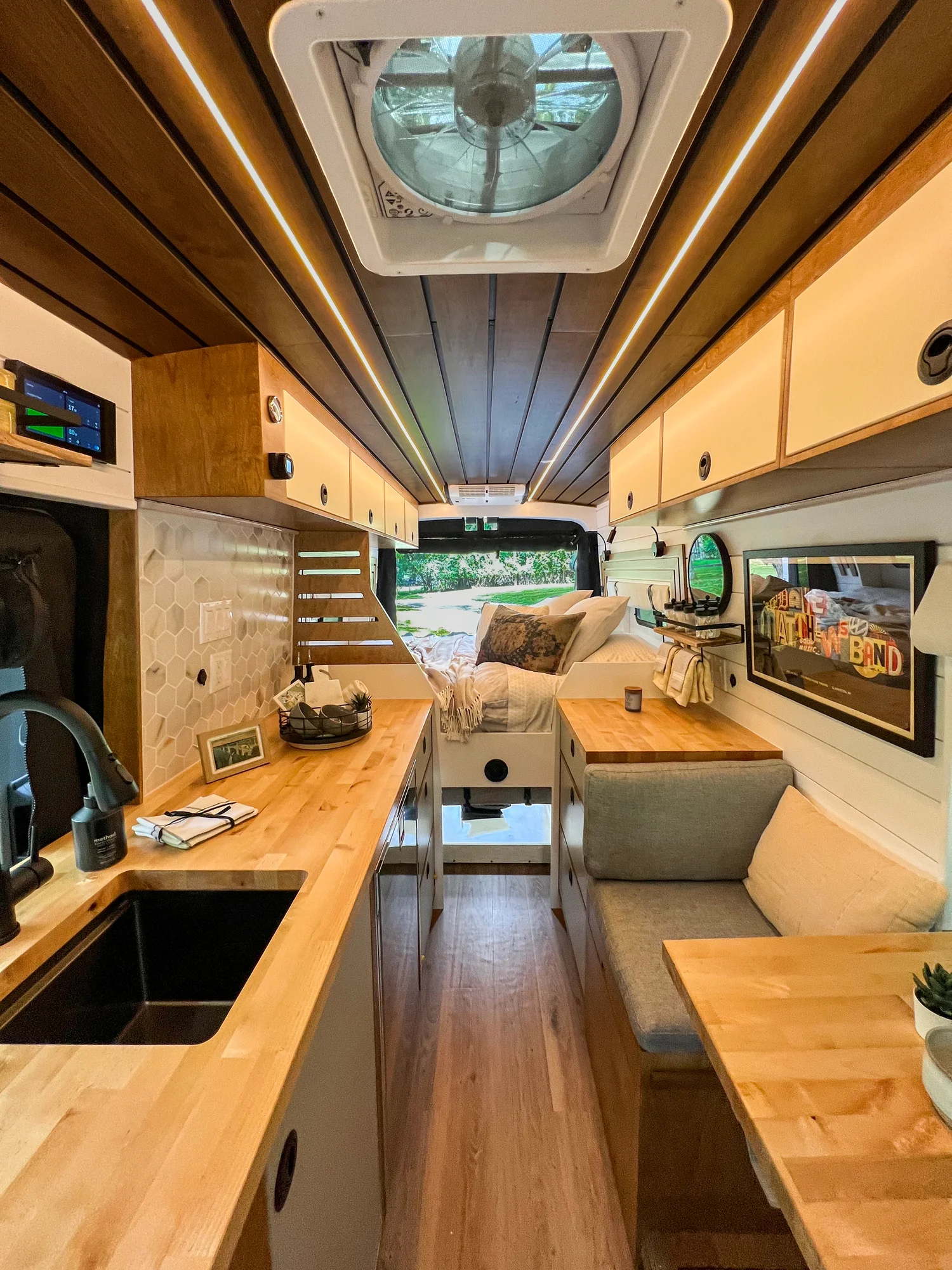
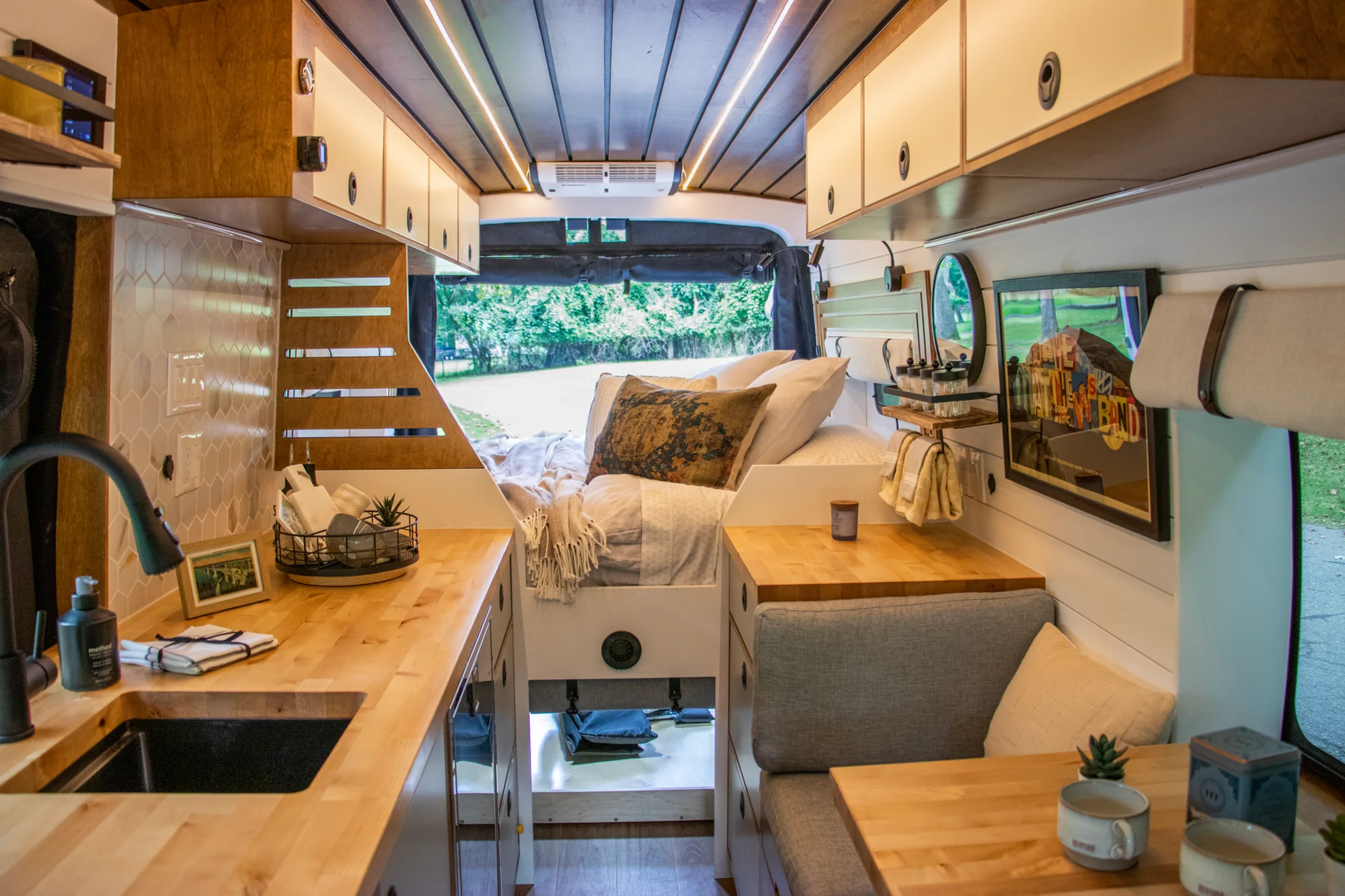
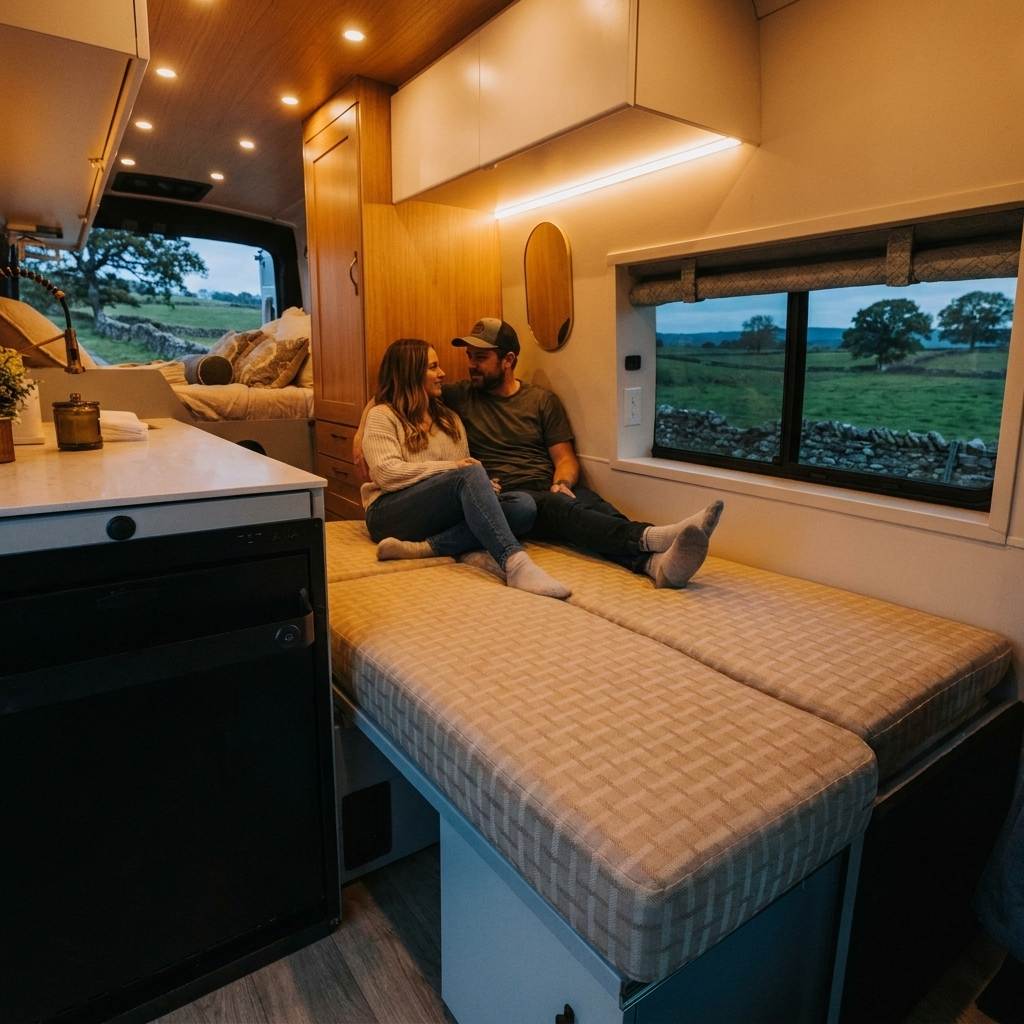
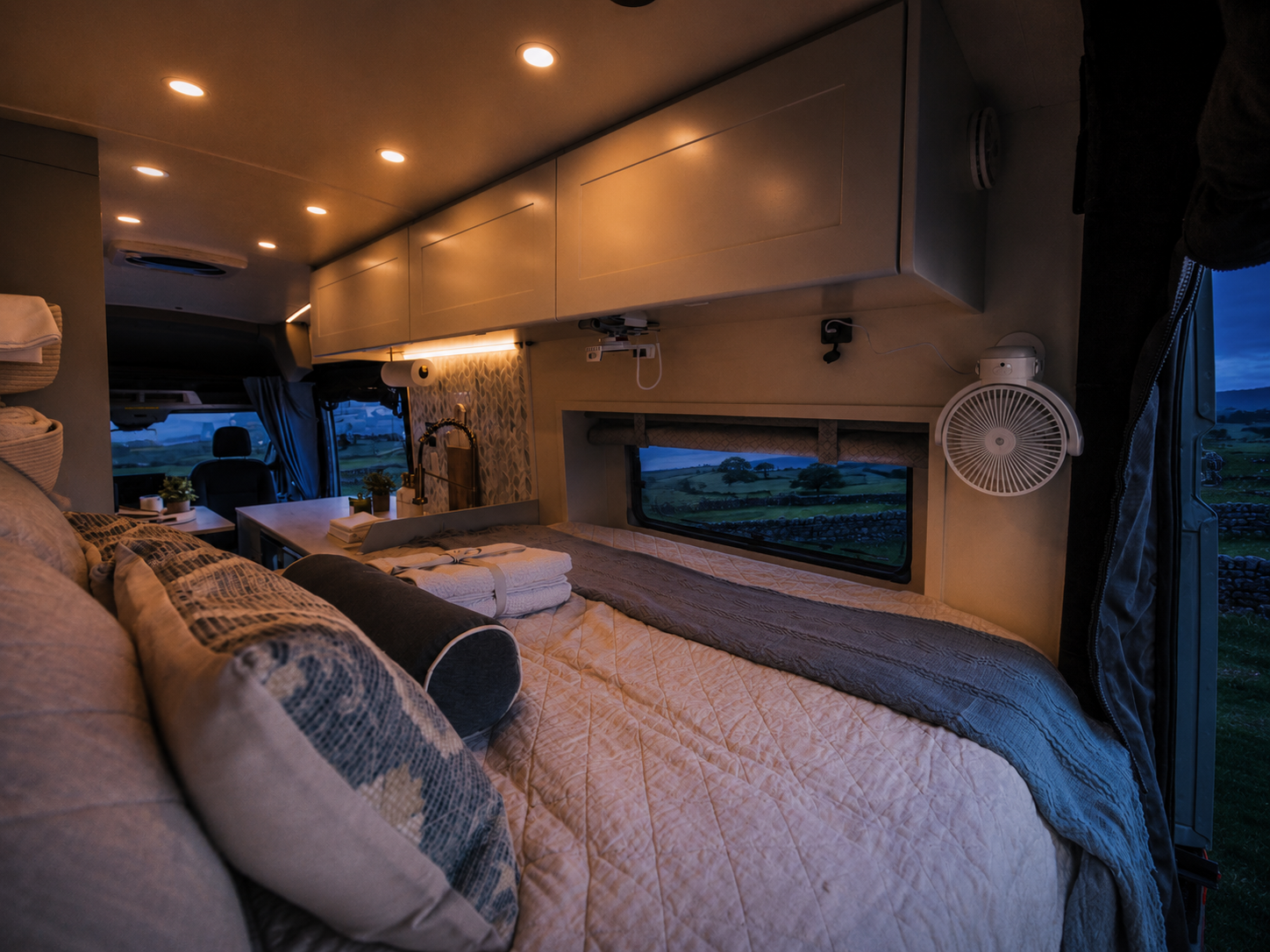
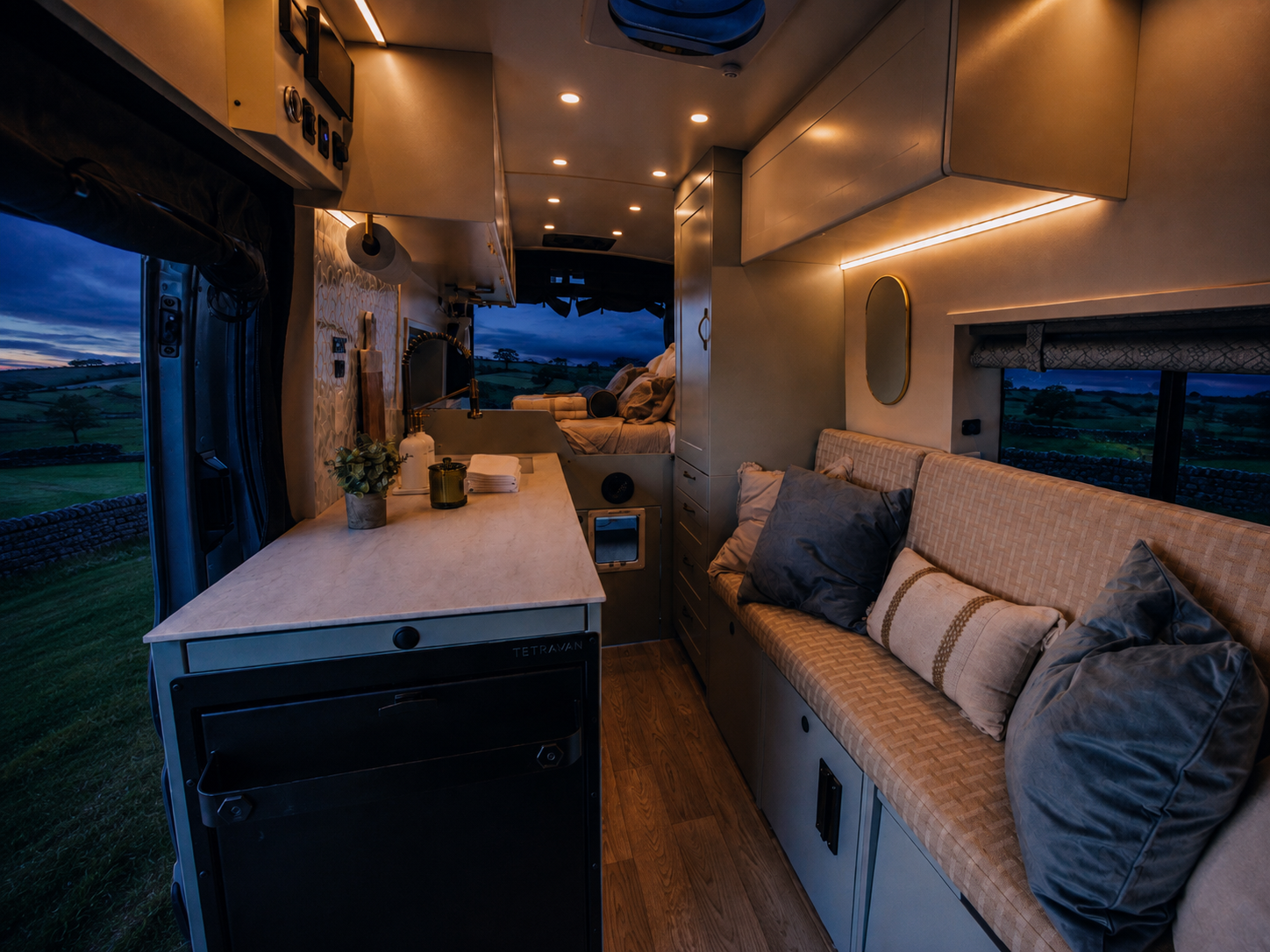
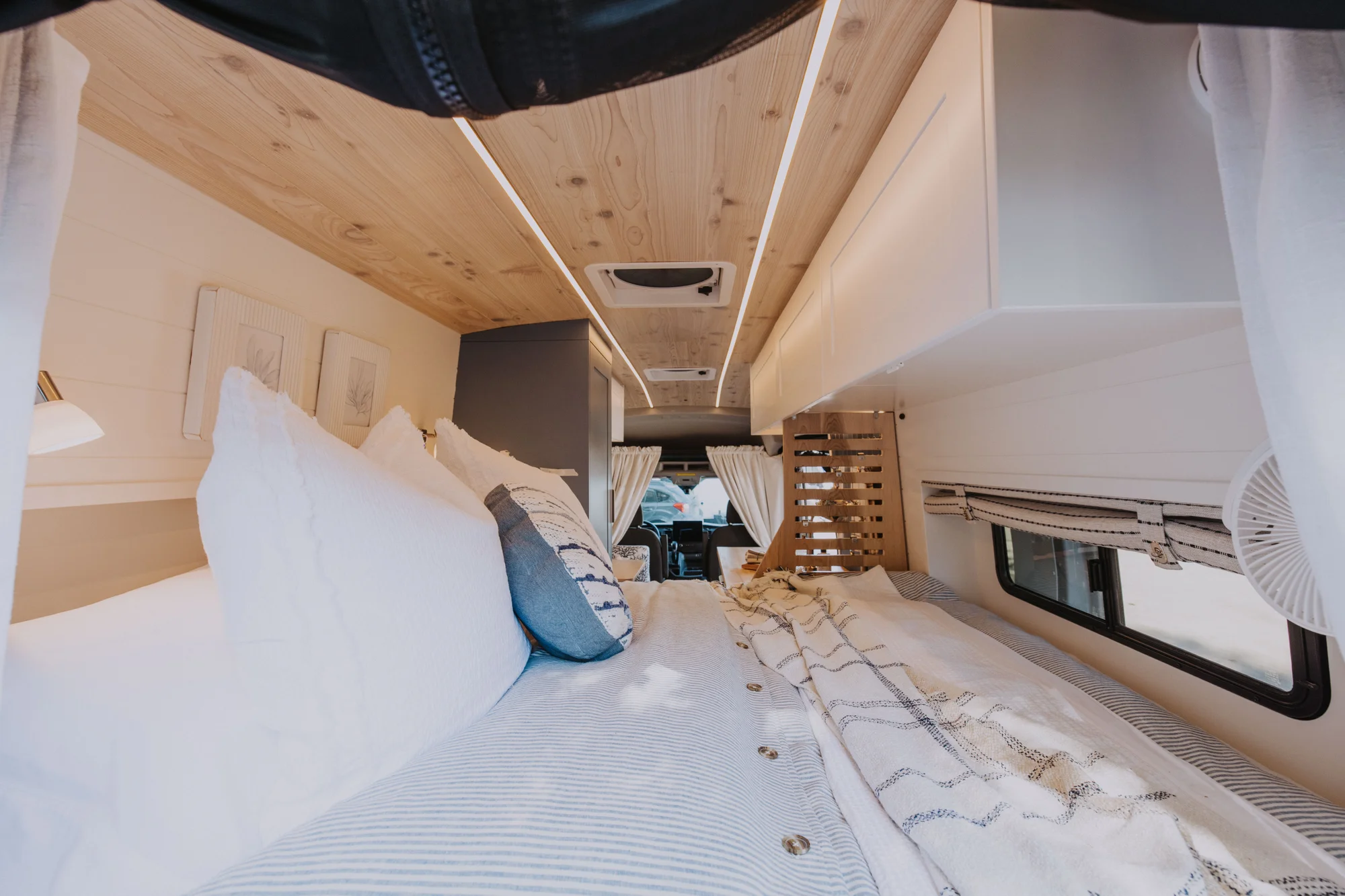
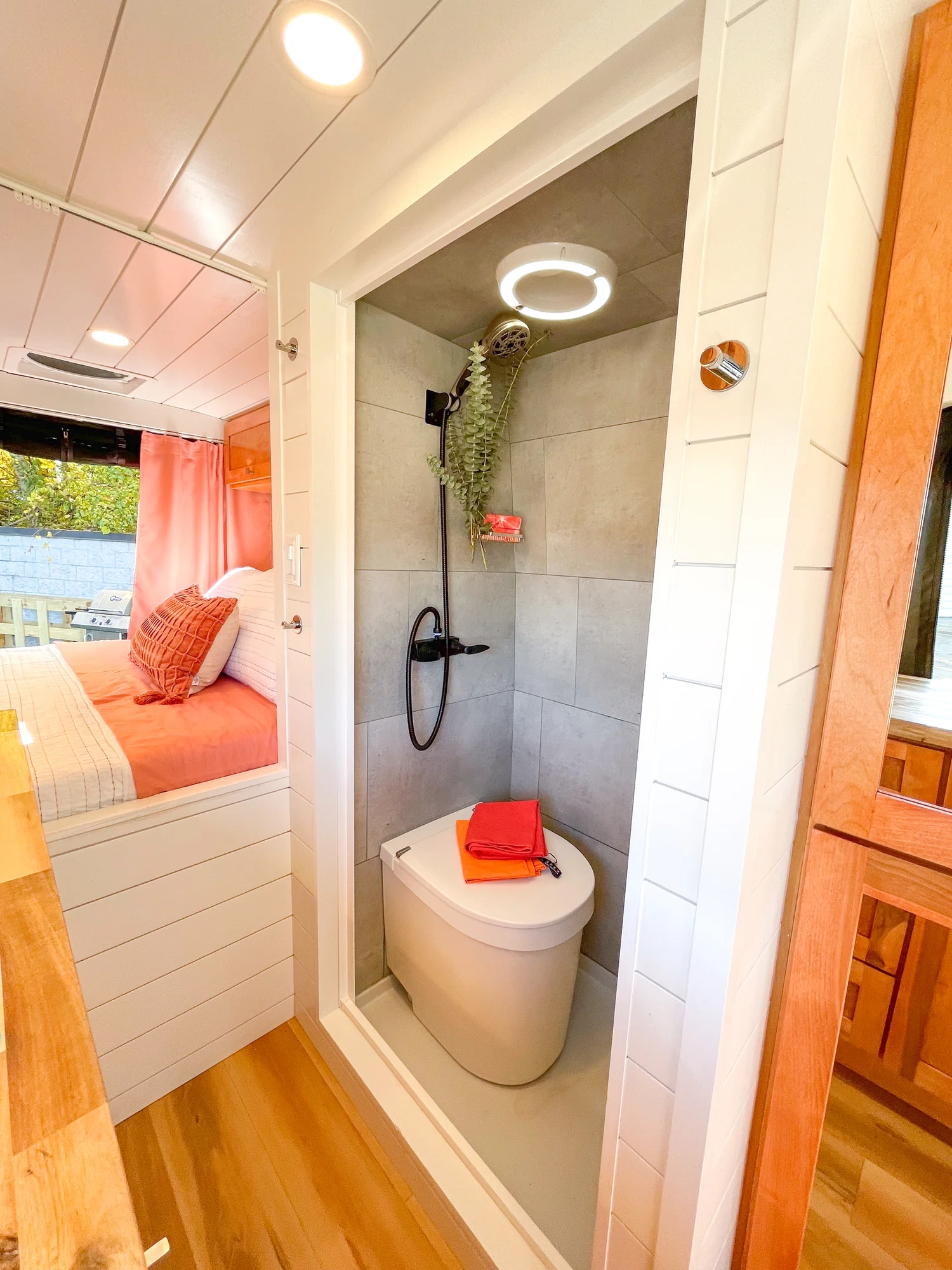
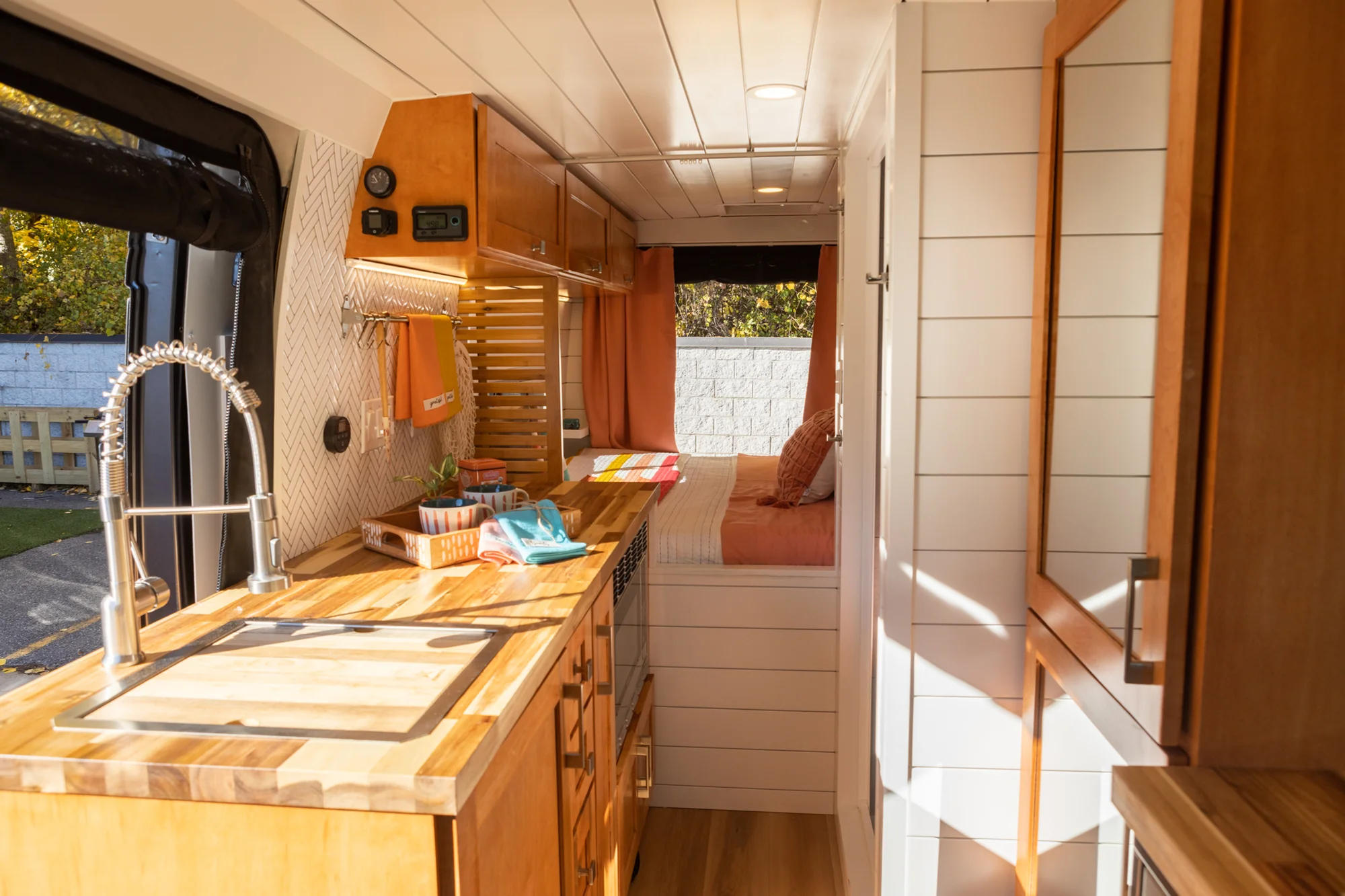
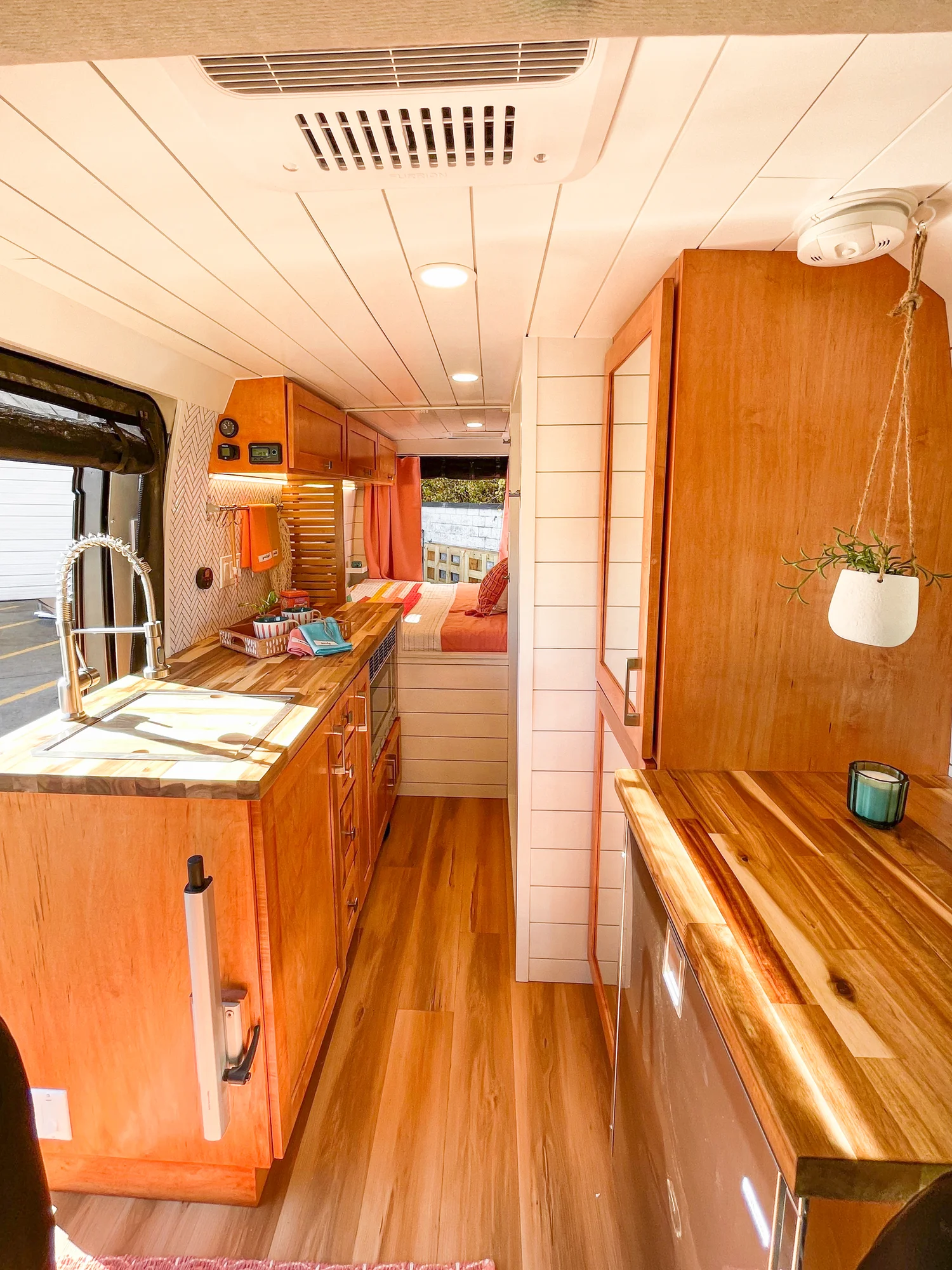
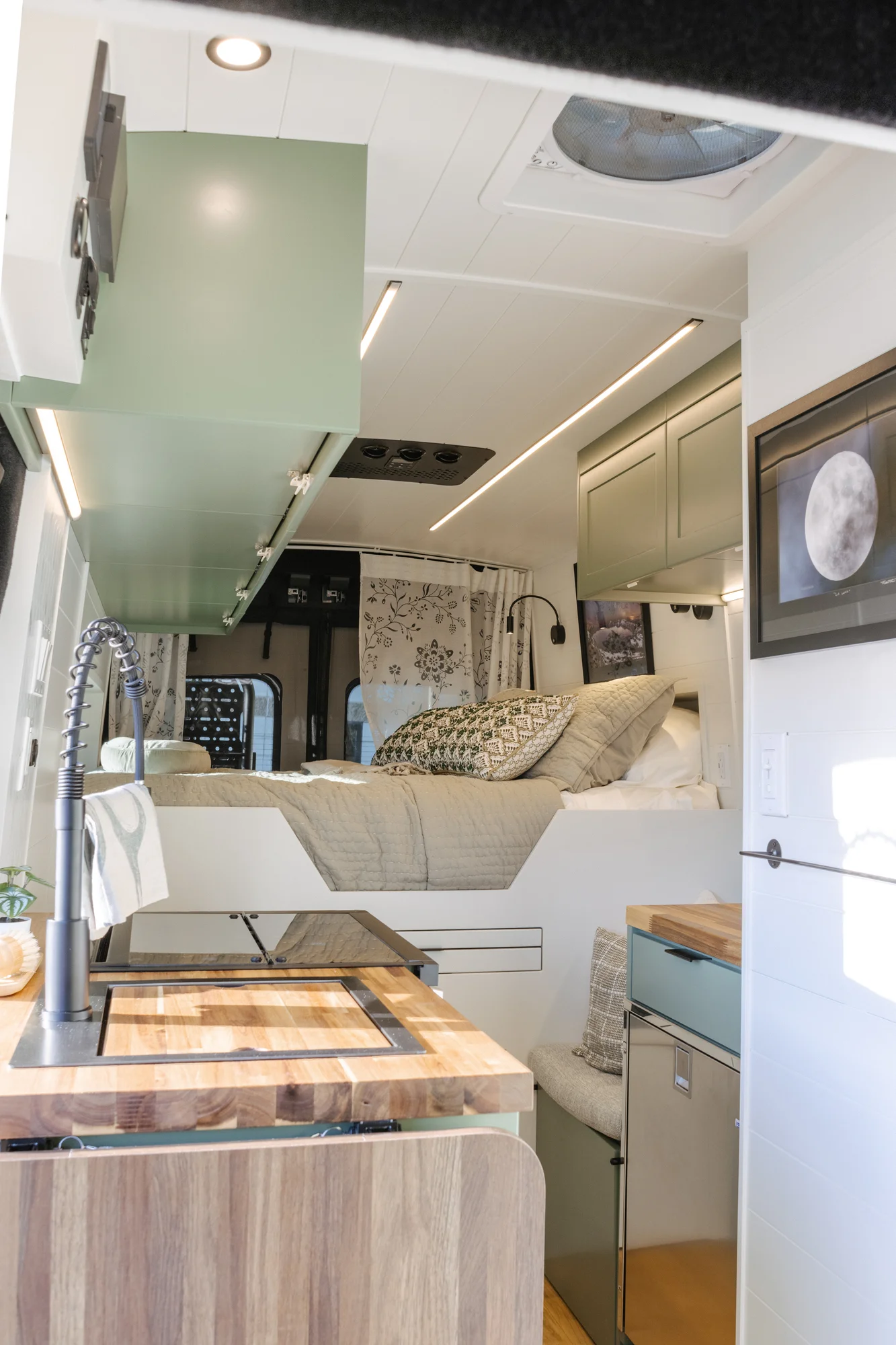
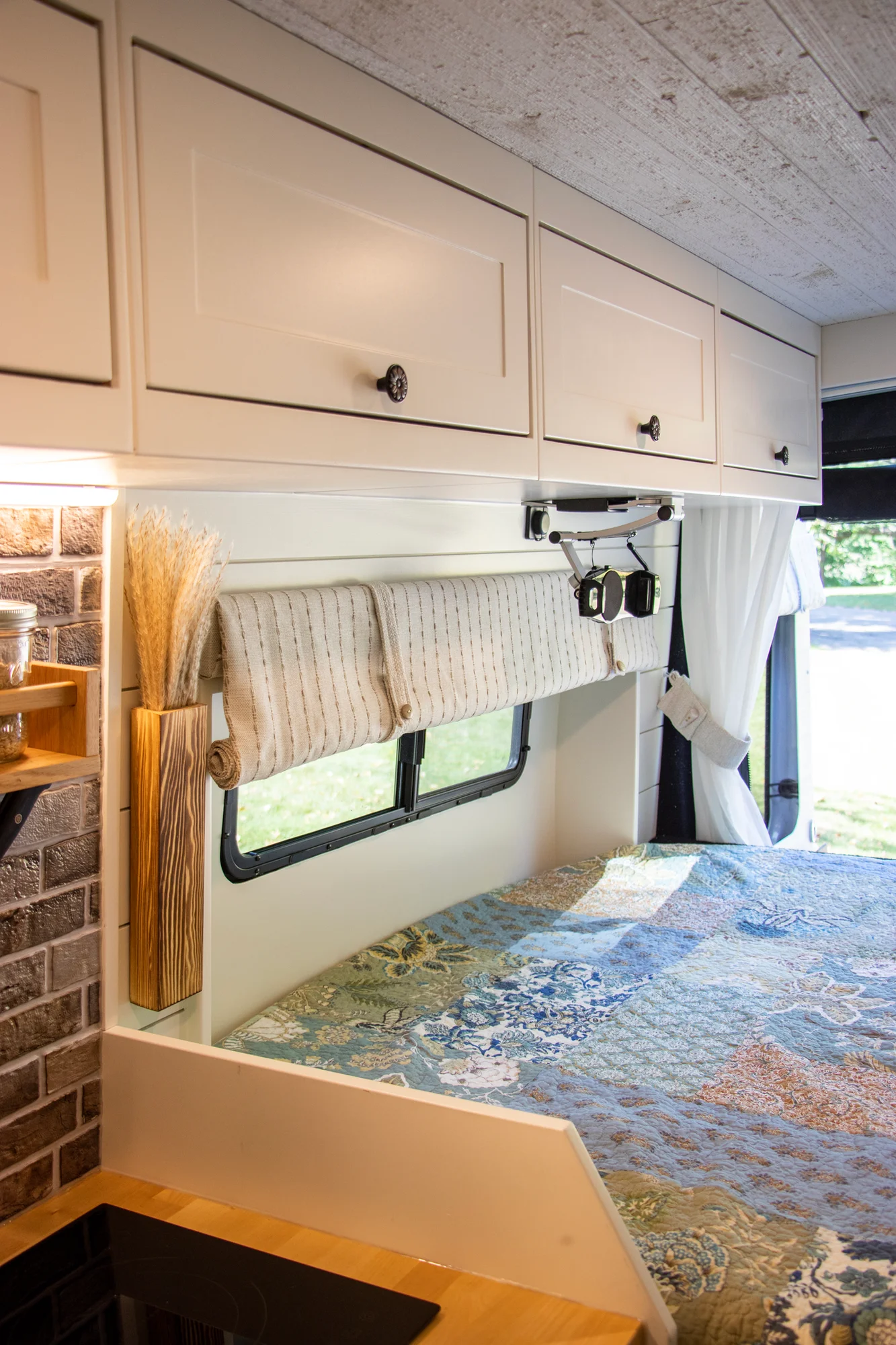
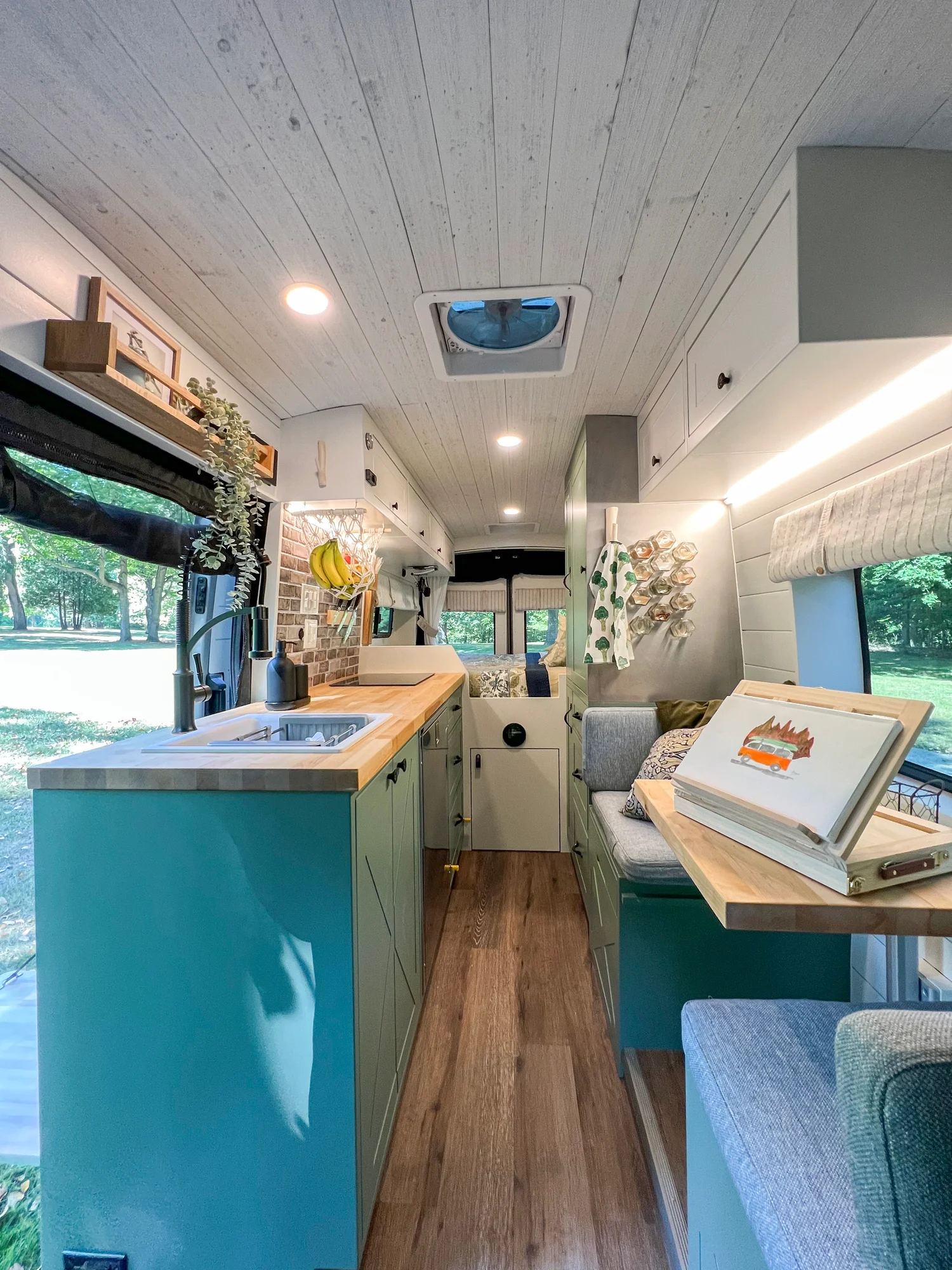
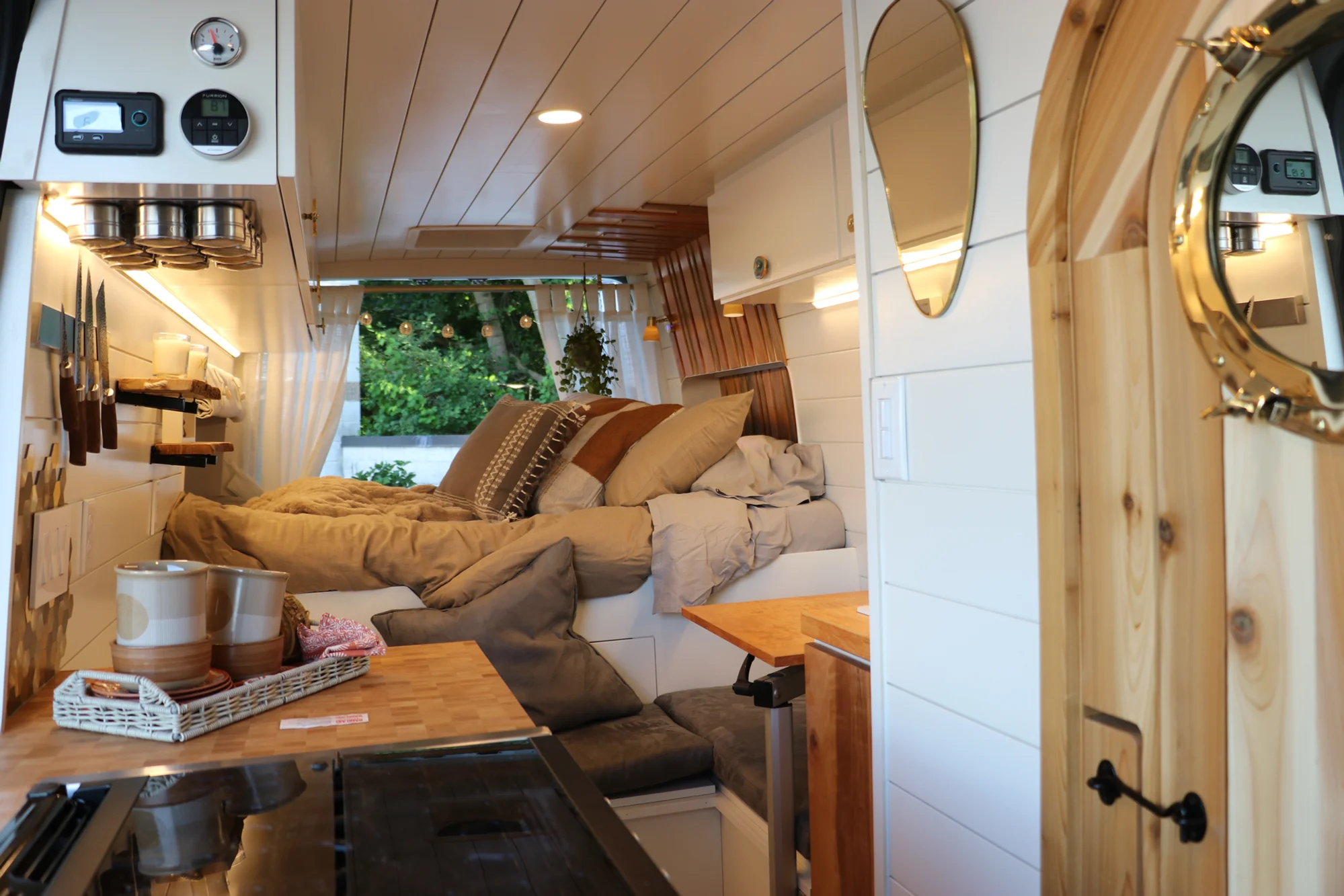
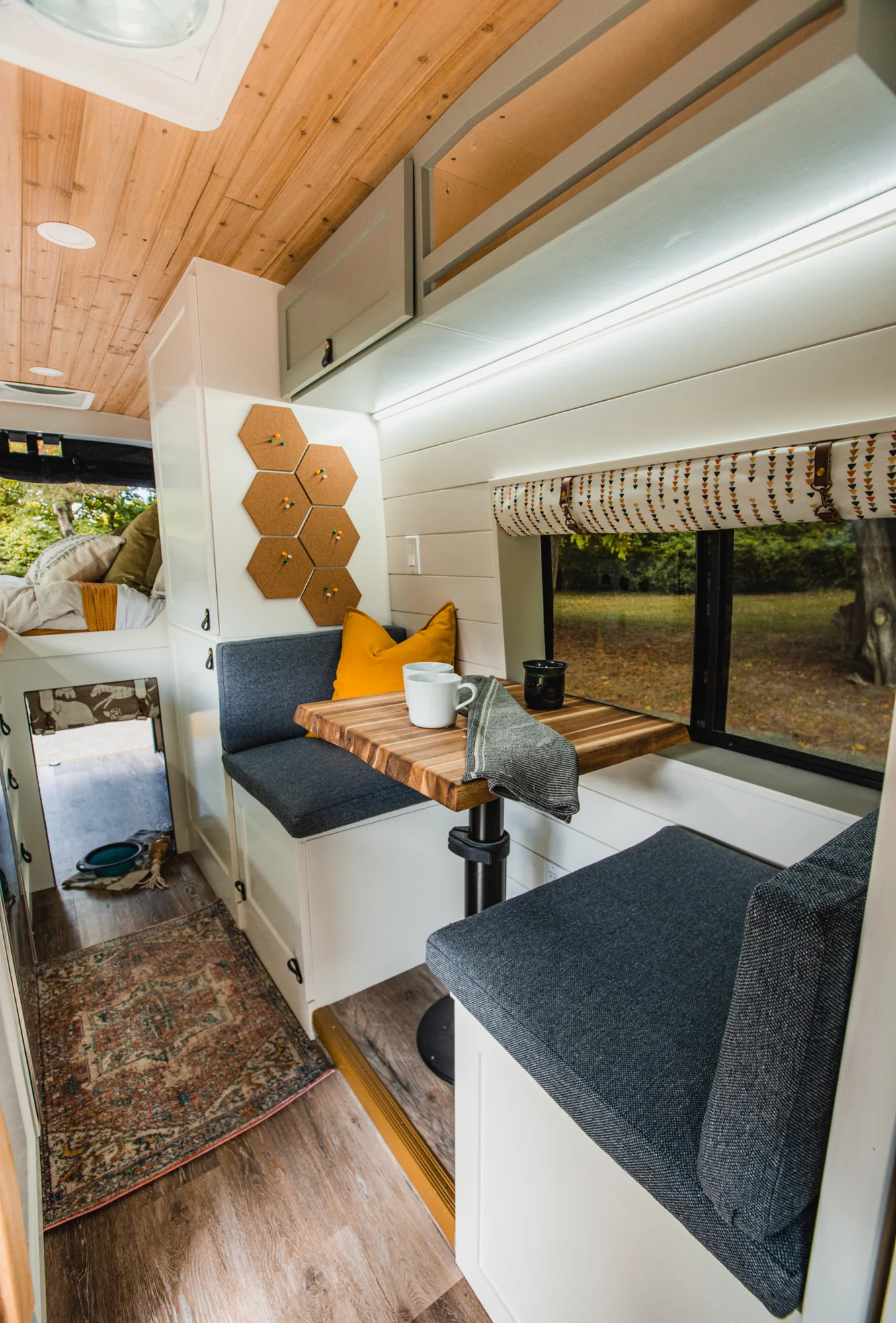
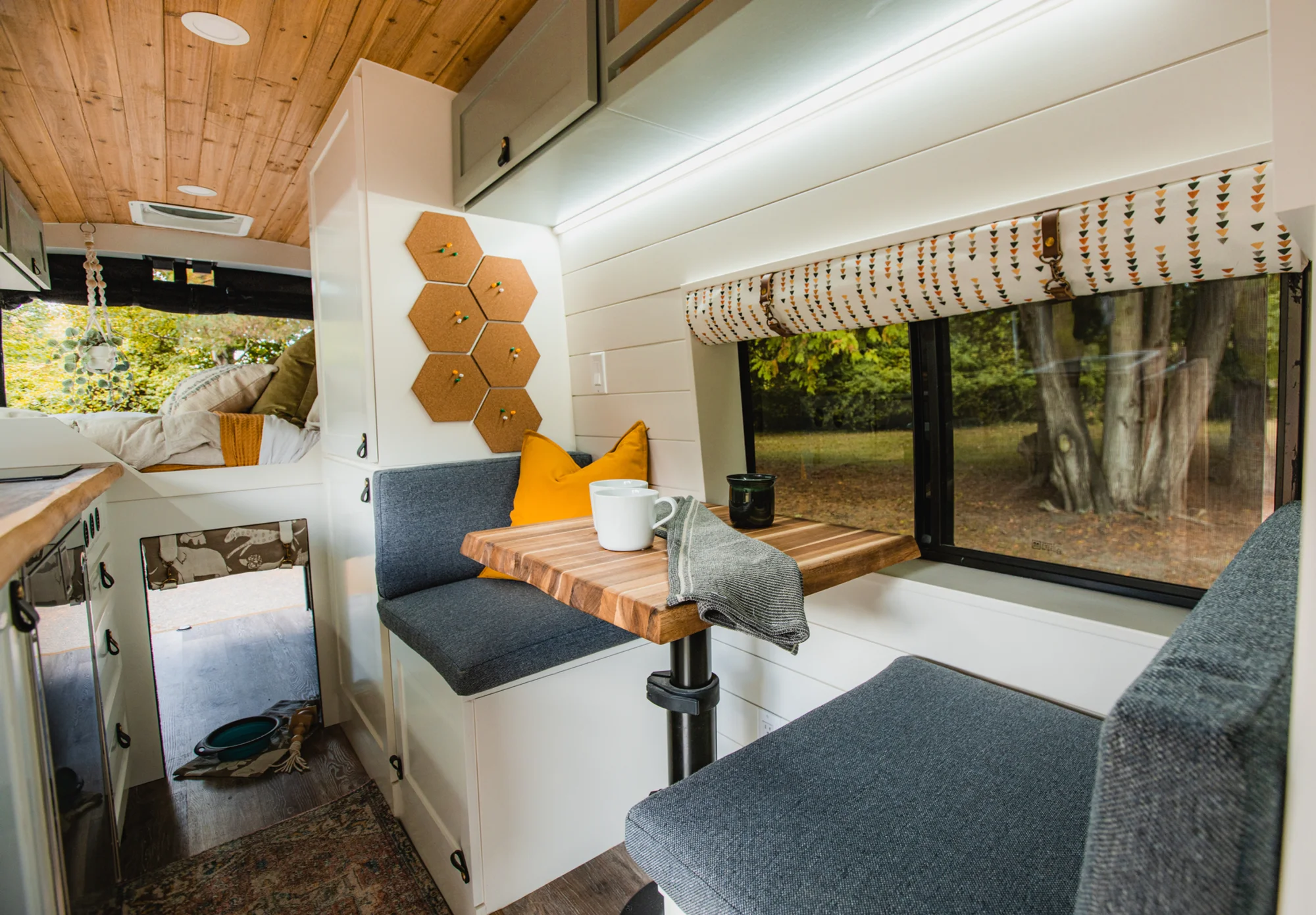
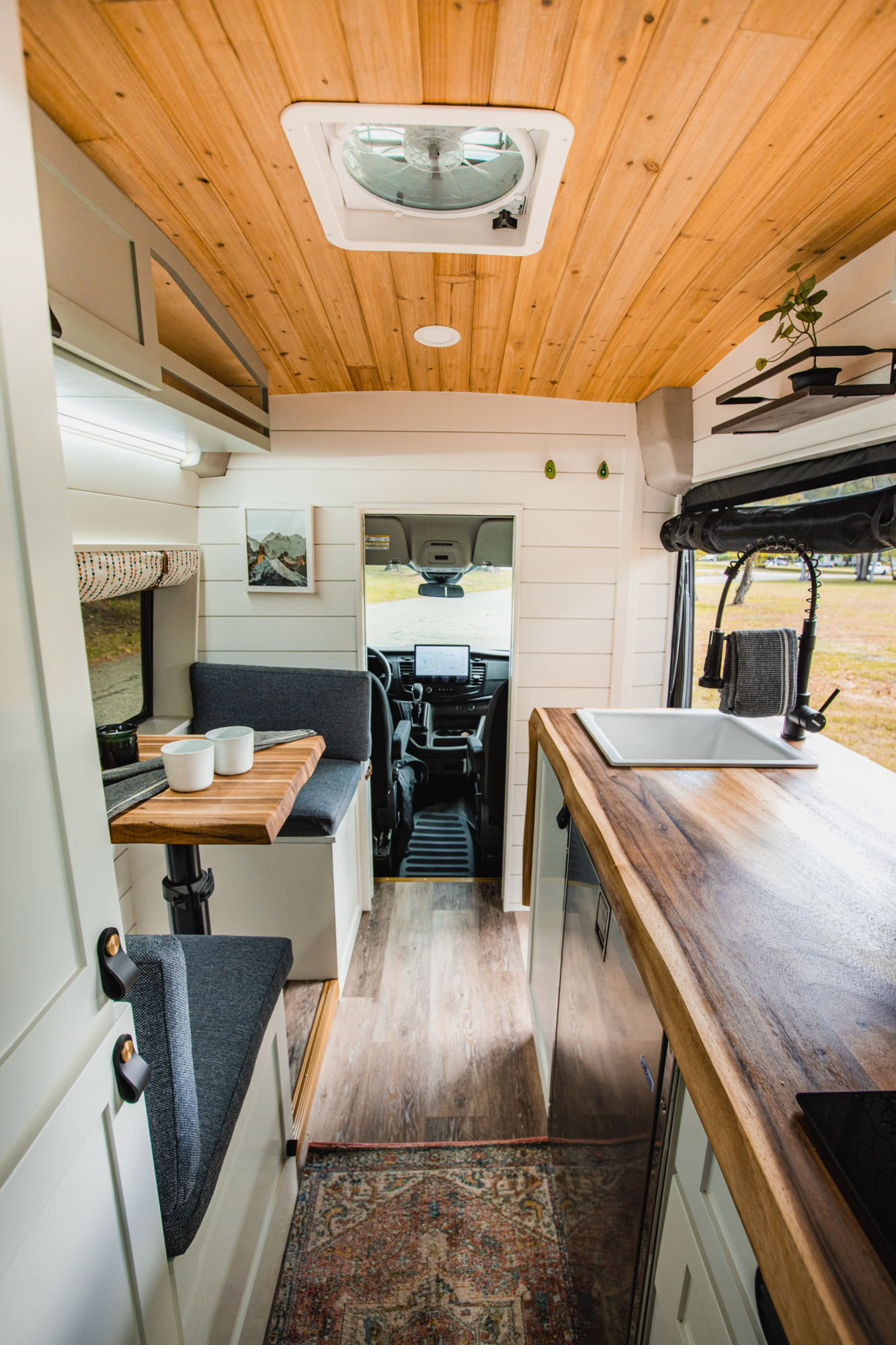
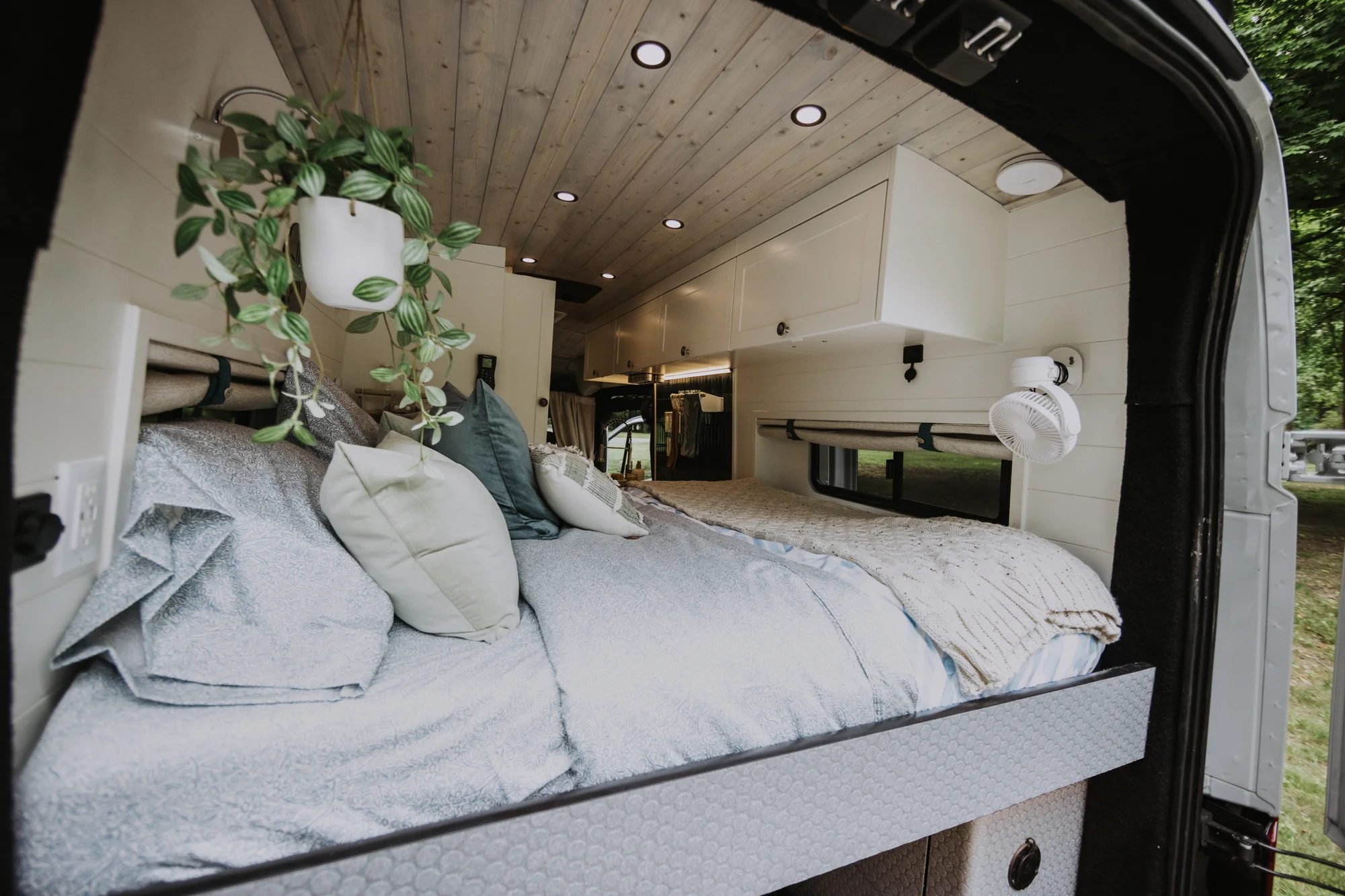
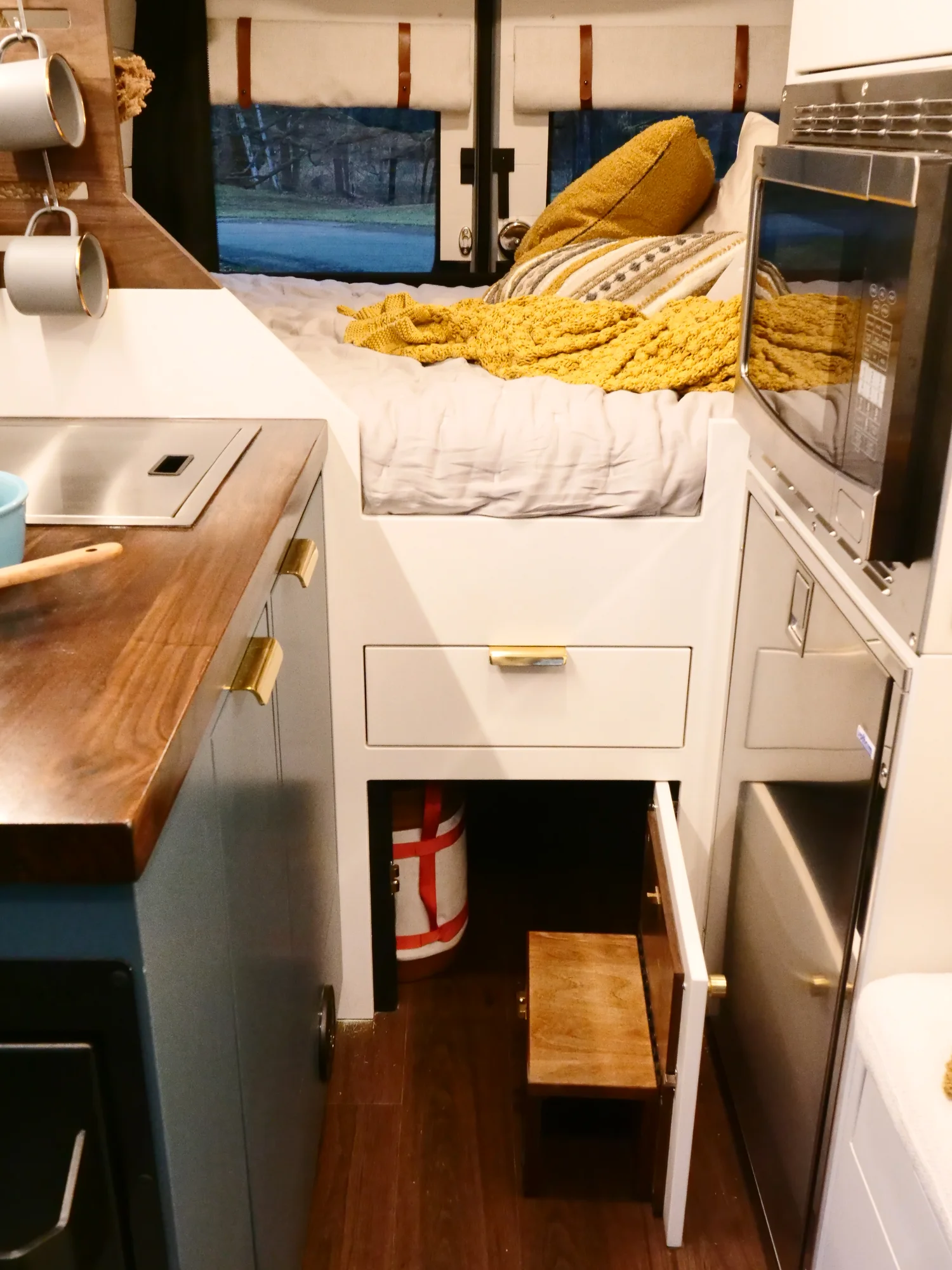
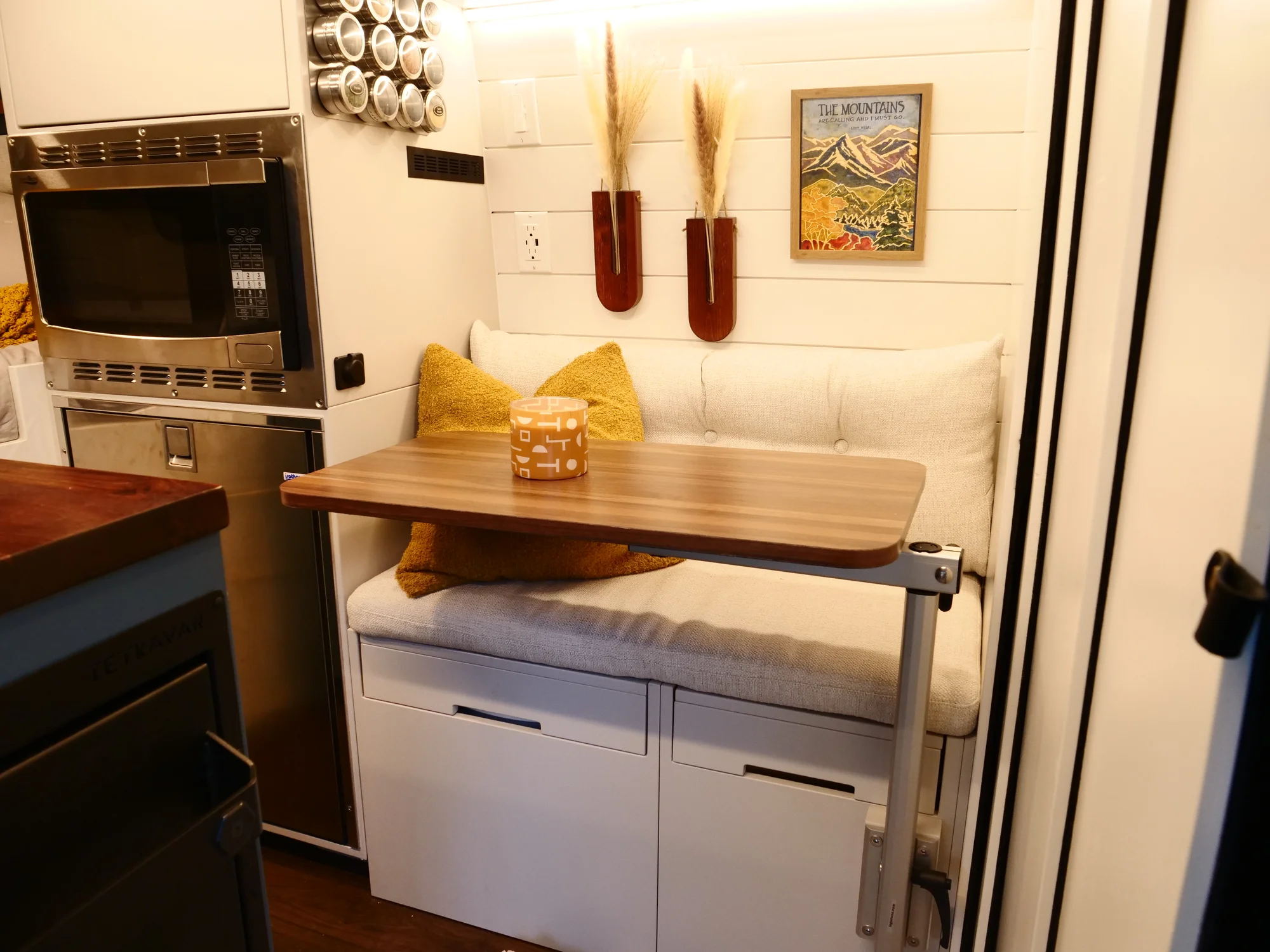
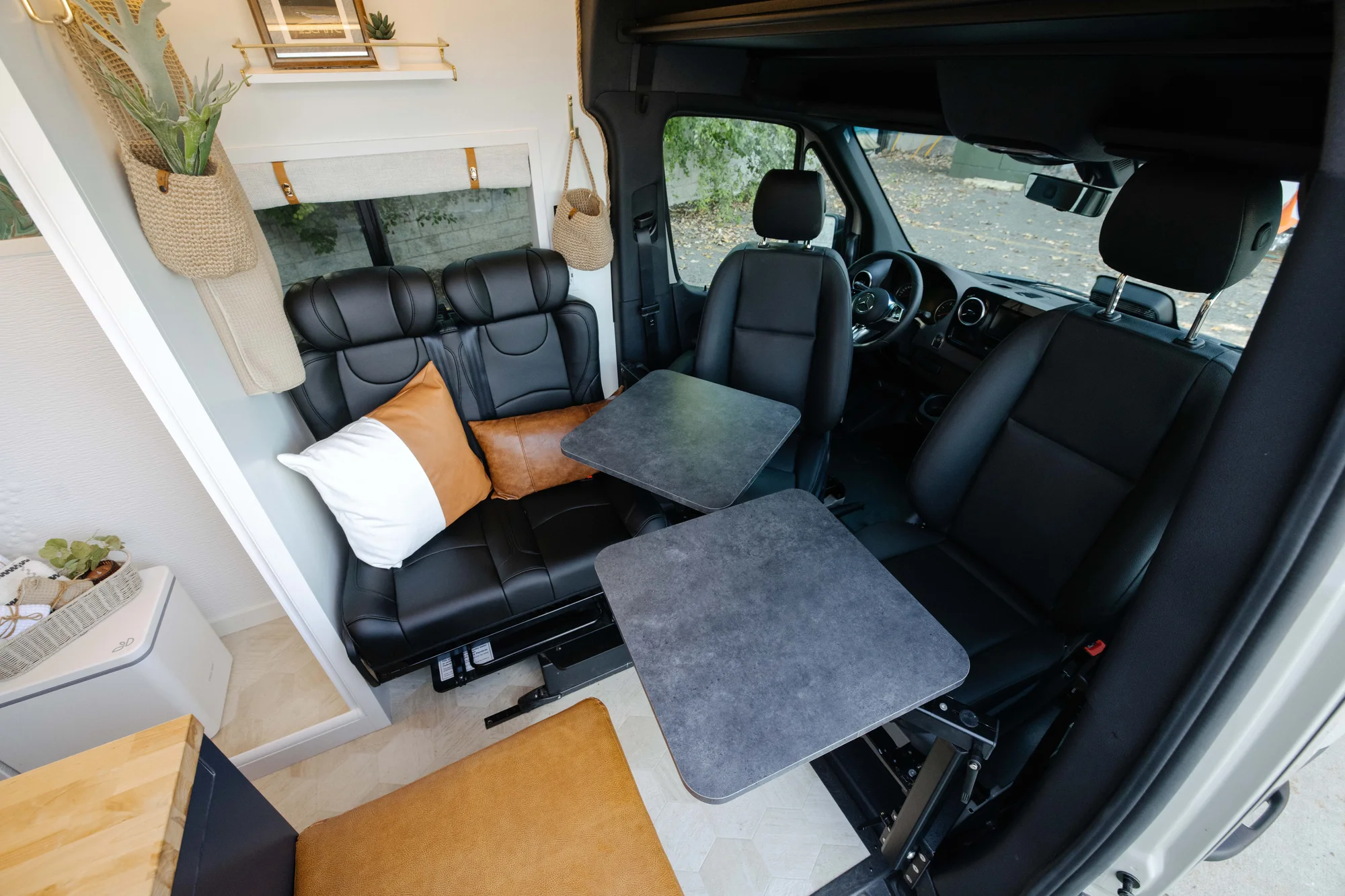
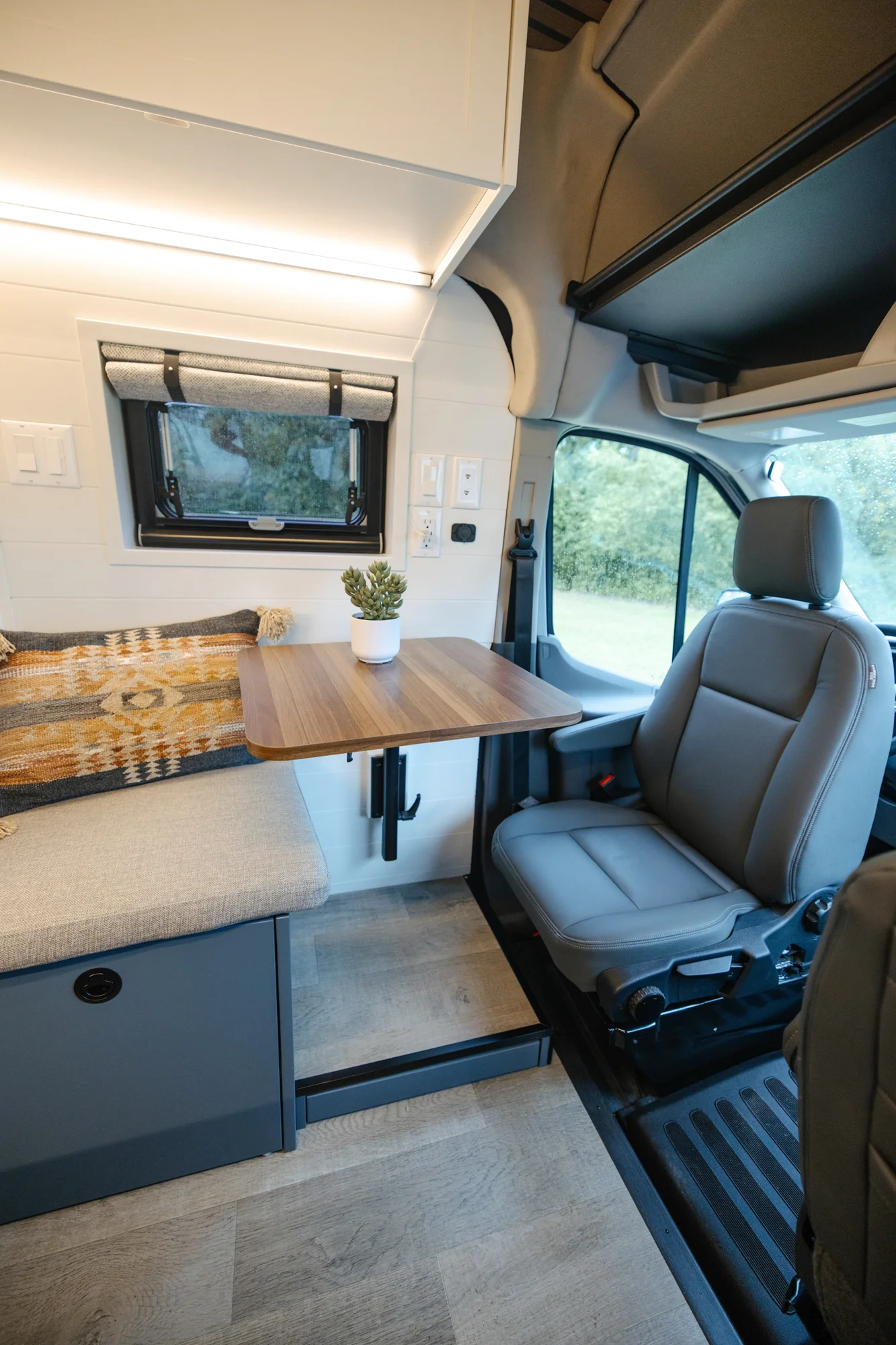
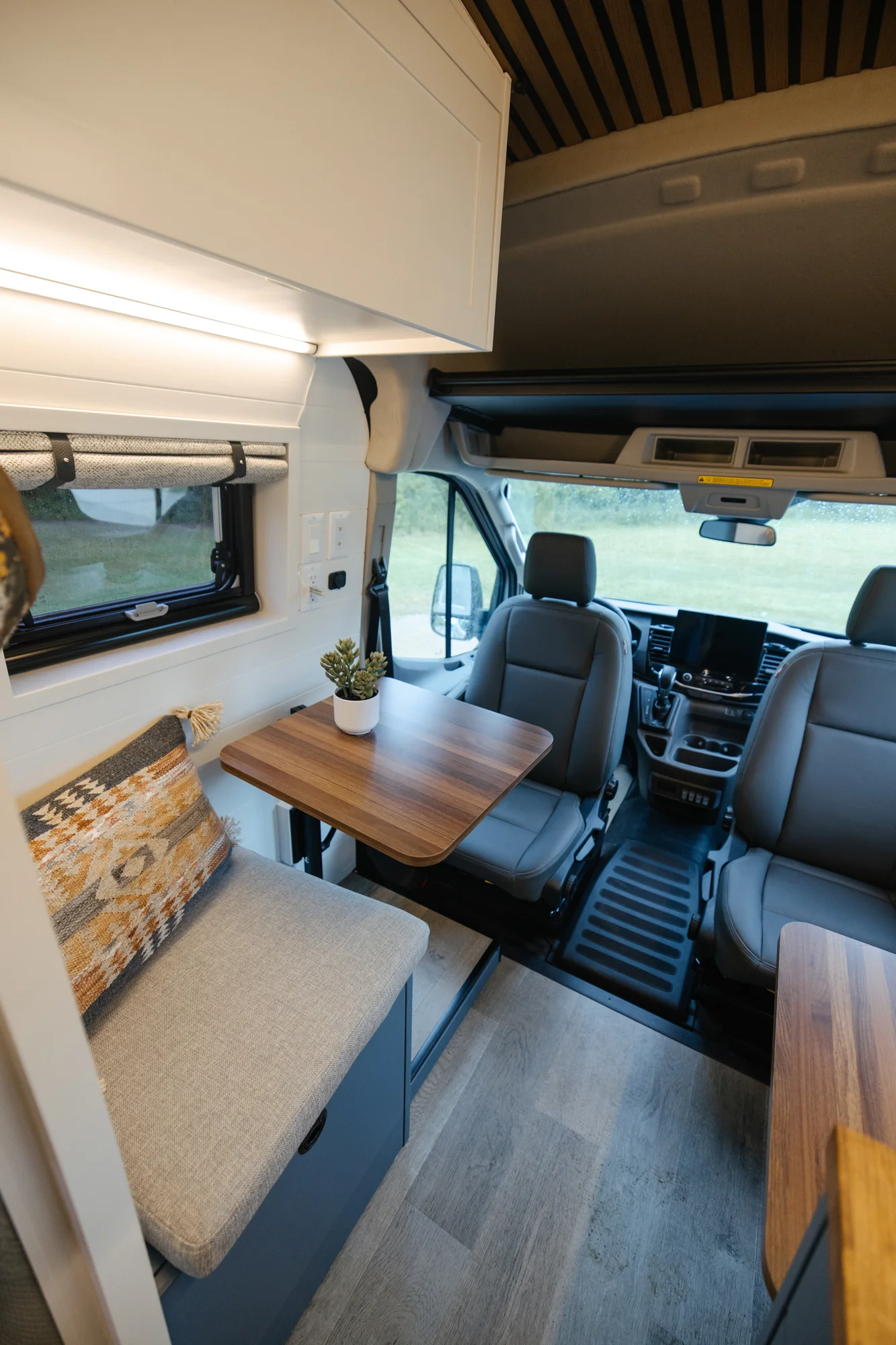
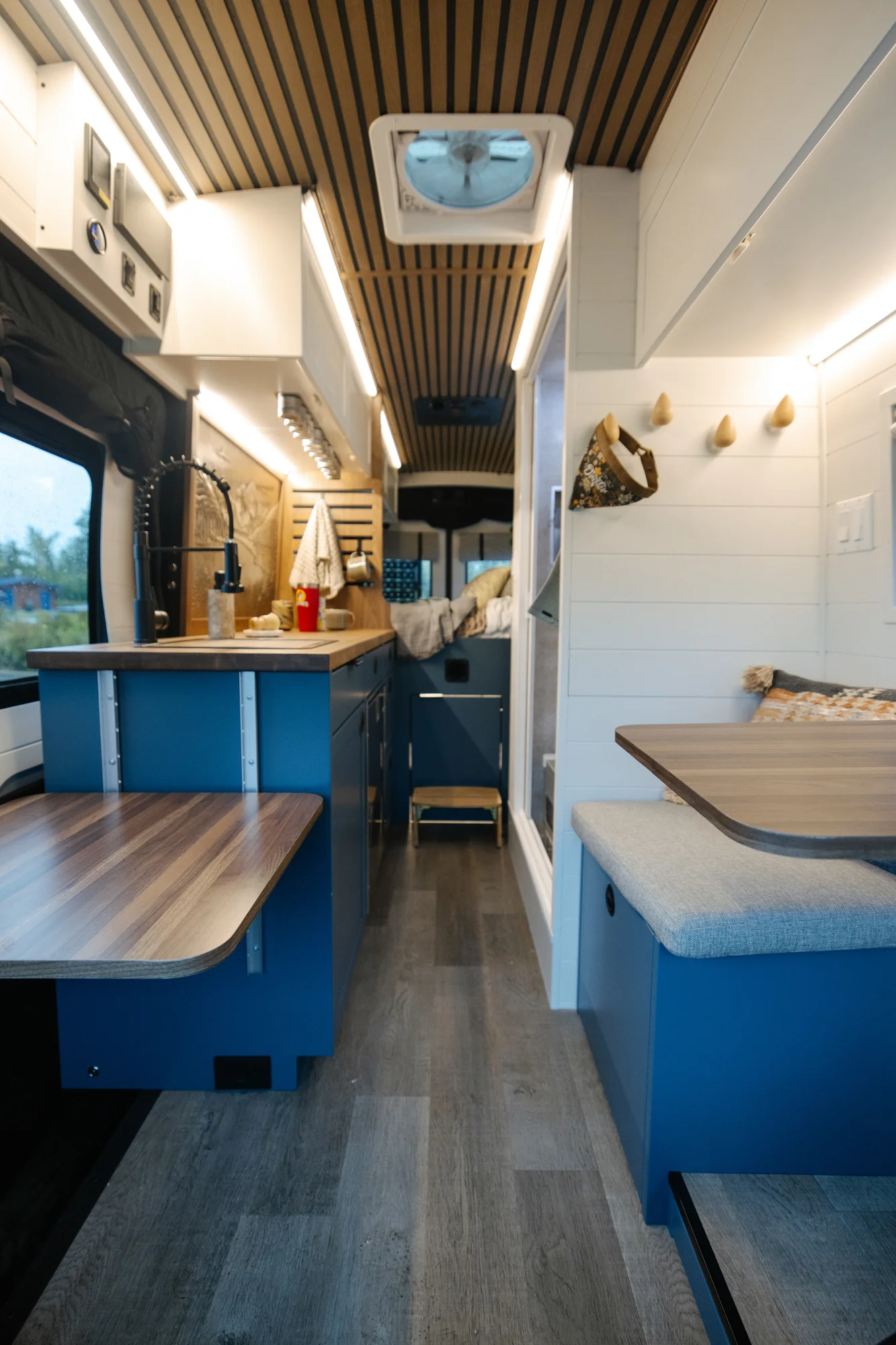
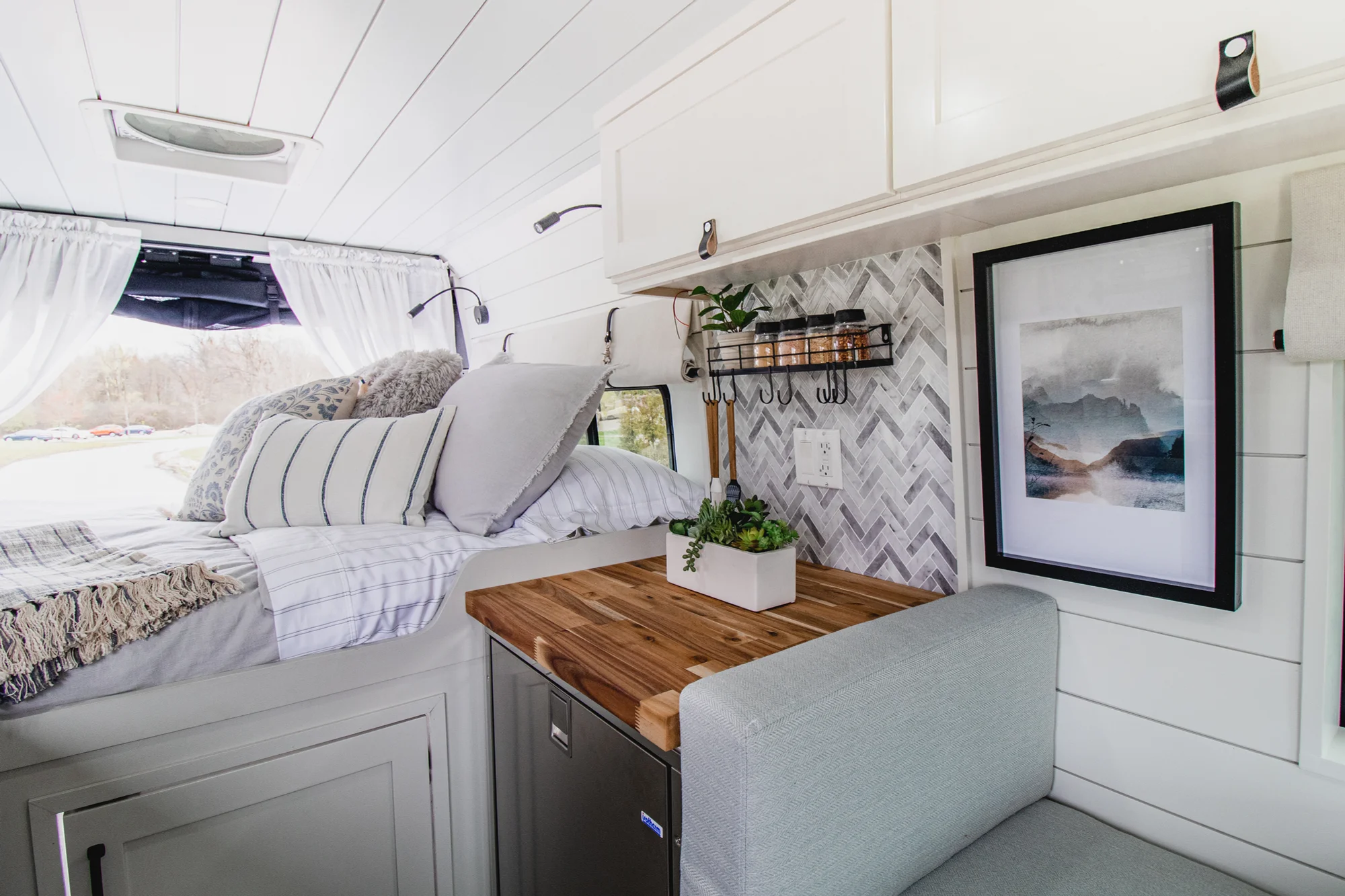
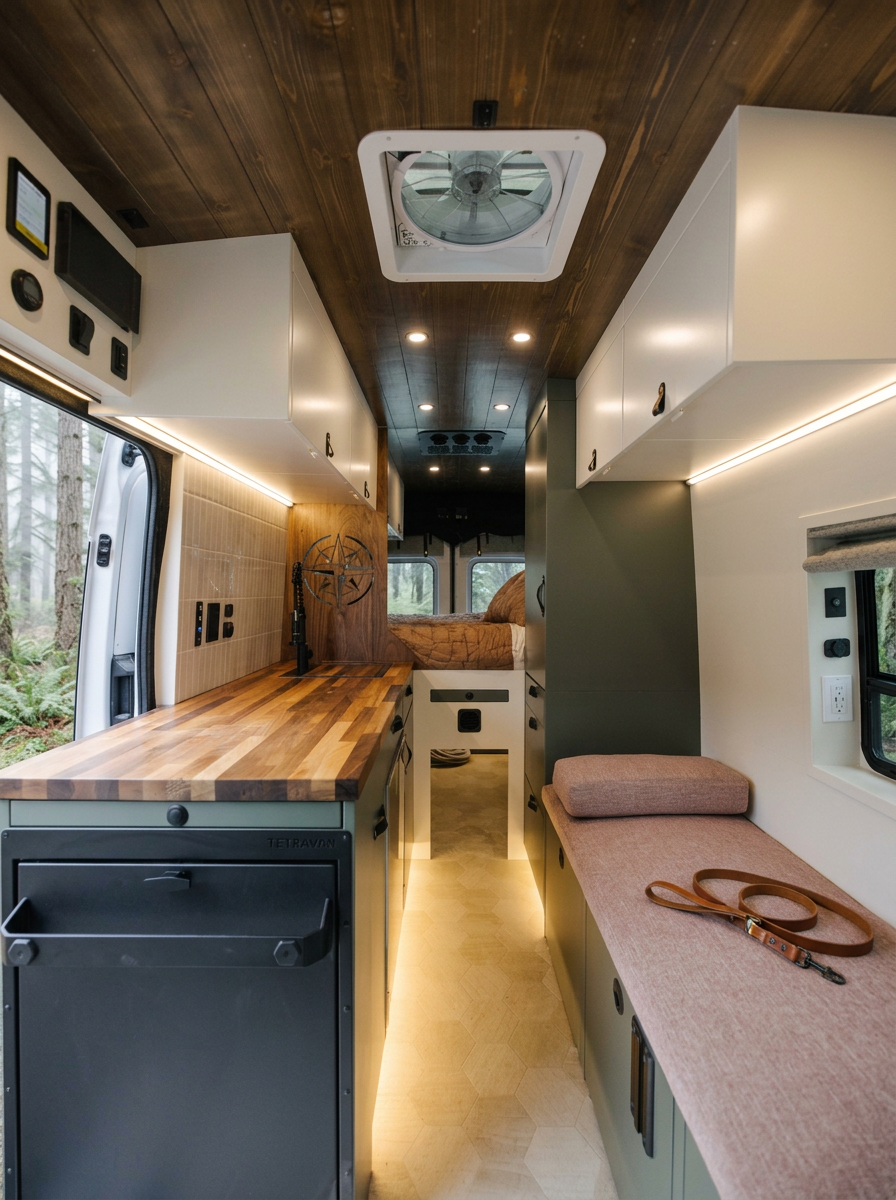
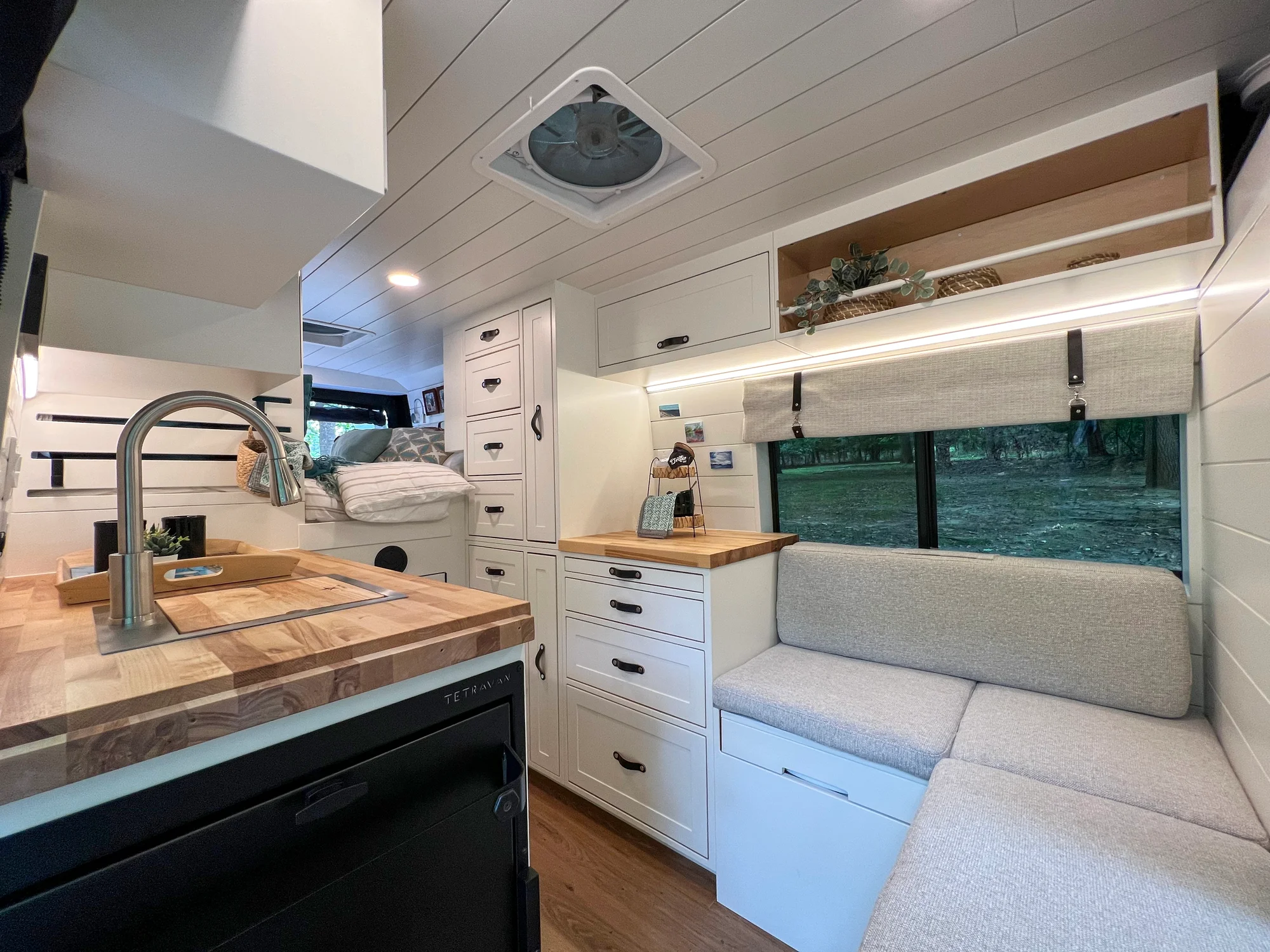
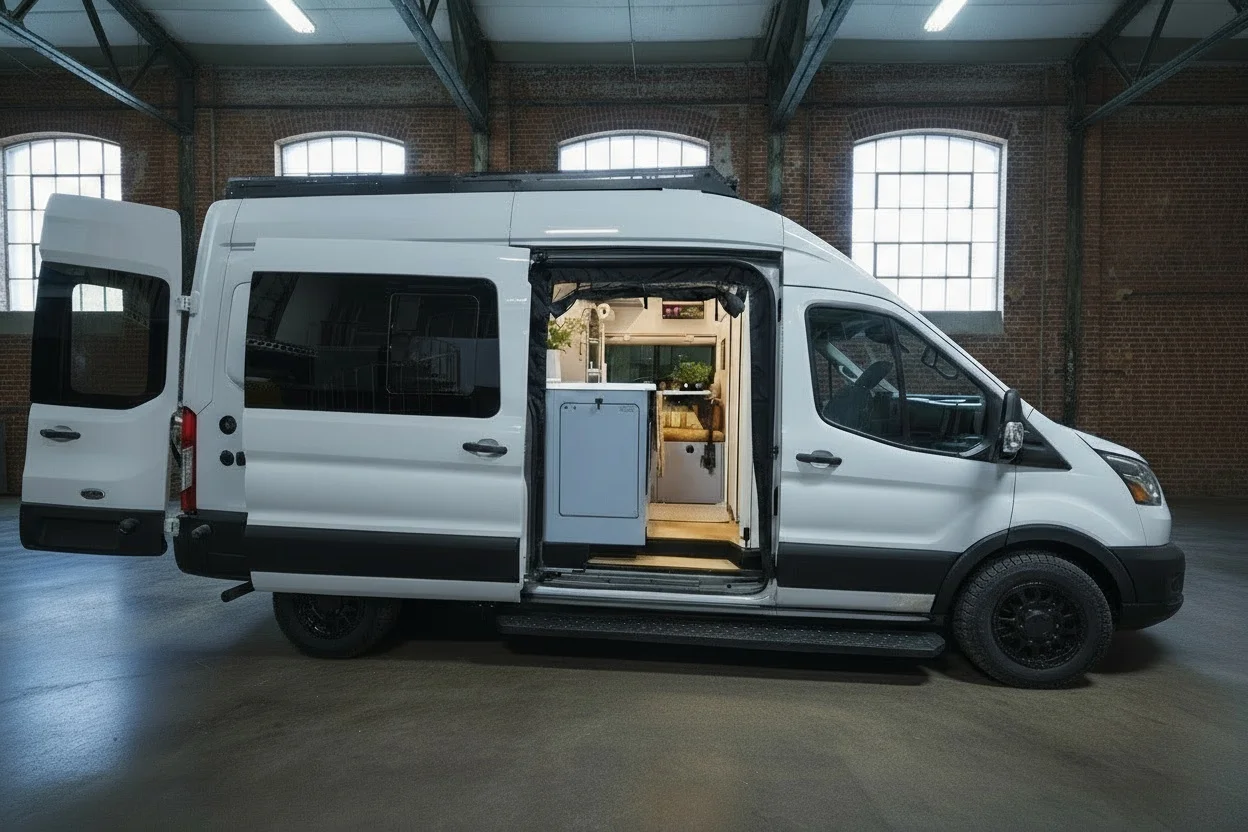
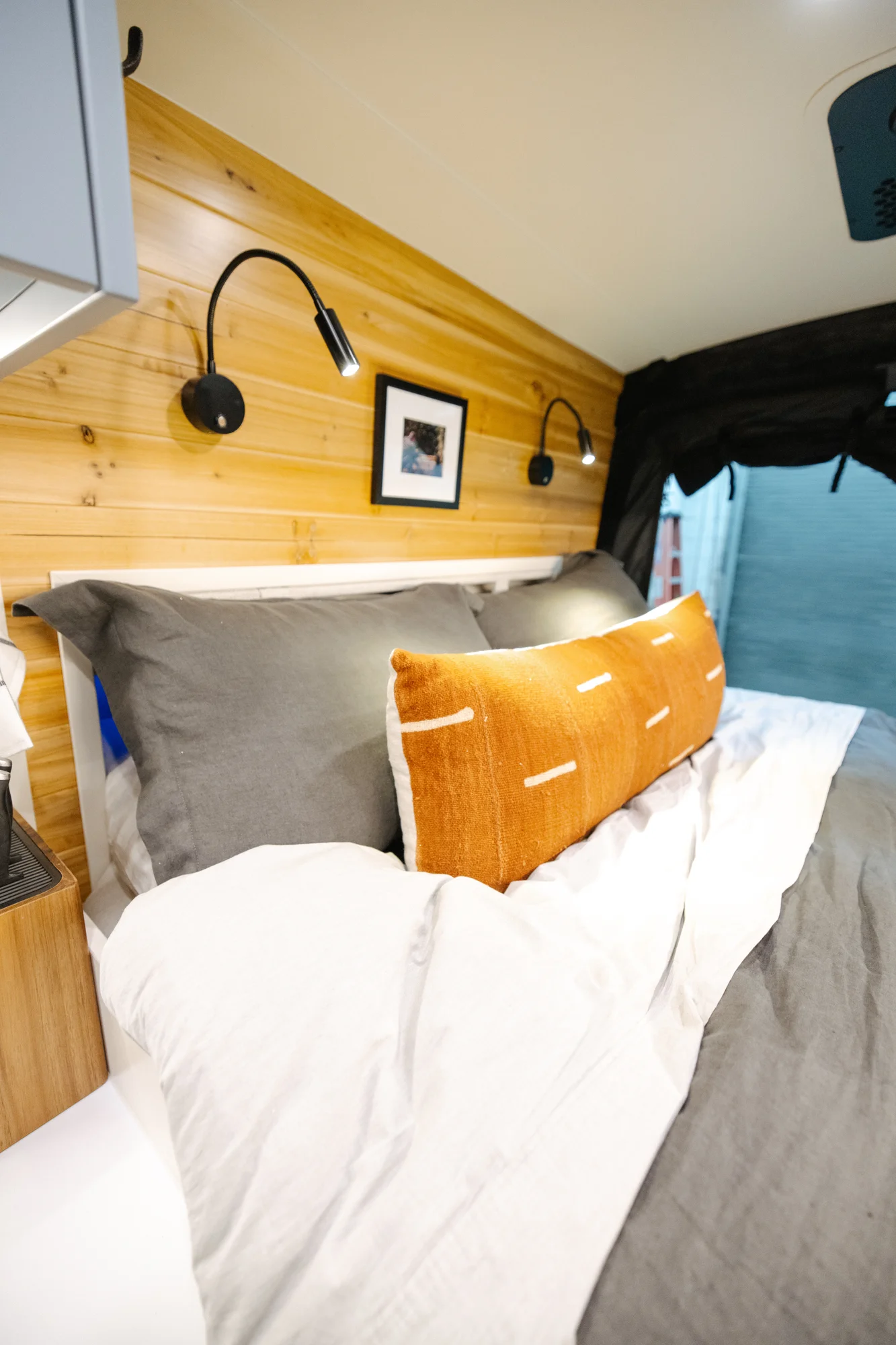
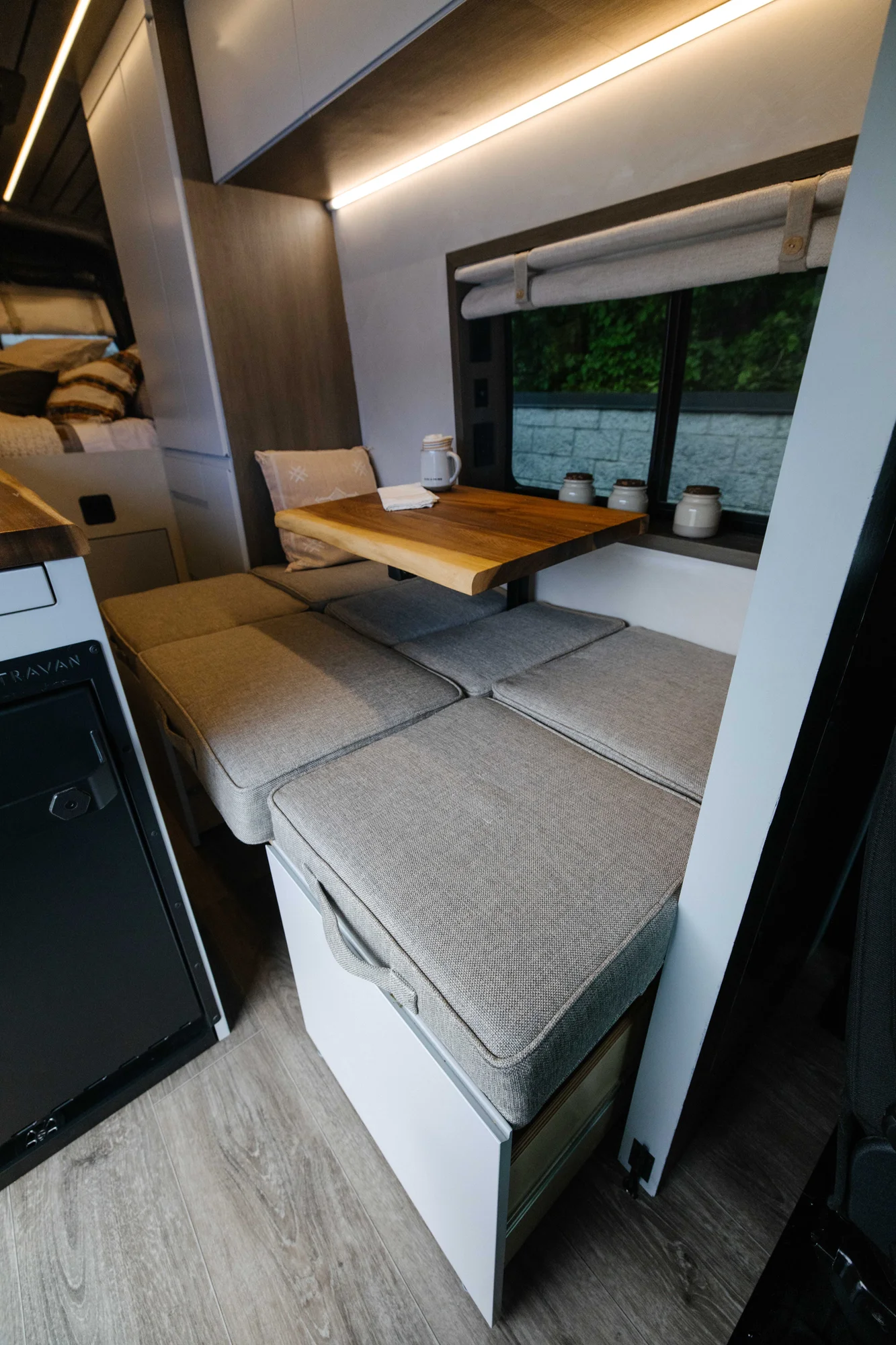
- The Ford Transit typically feels a bit more open in the cabin, with about a couple inches more interior standing height in comparable high-roof configurations. Taller clients — and anyone who likes a more airy feel — tend to notice this right away.
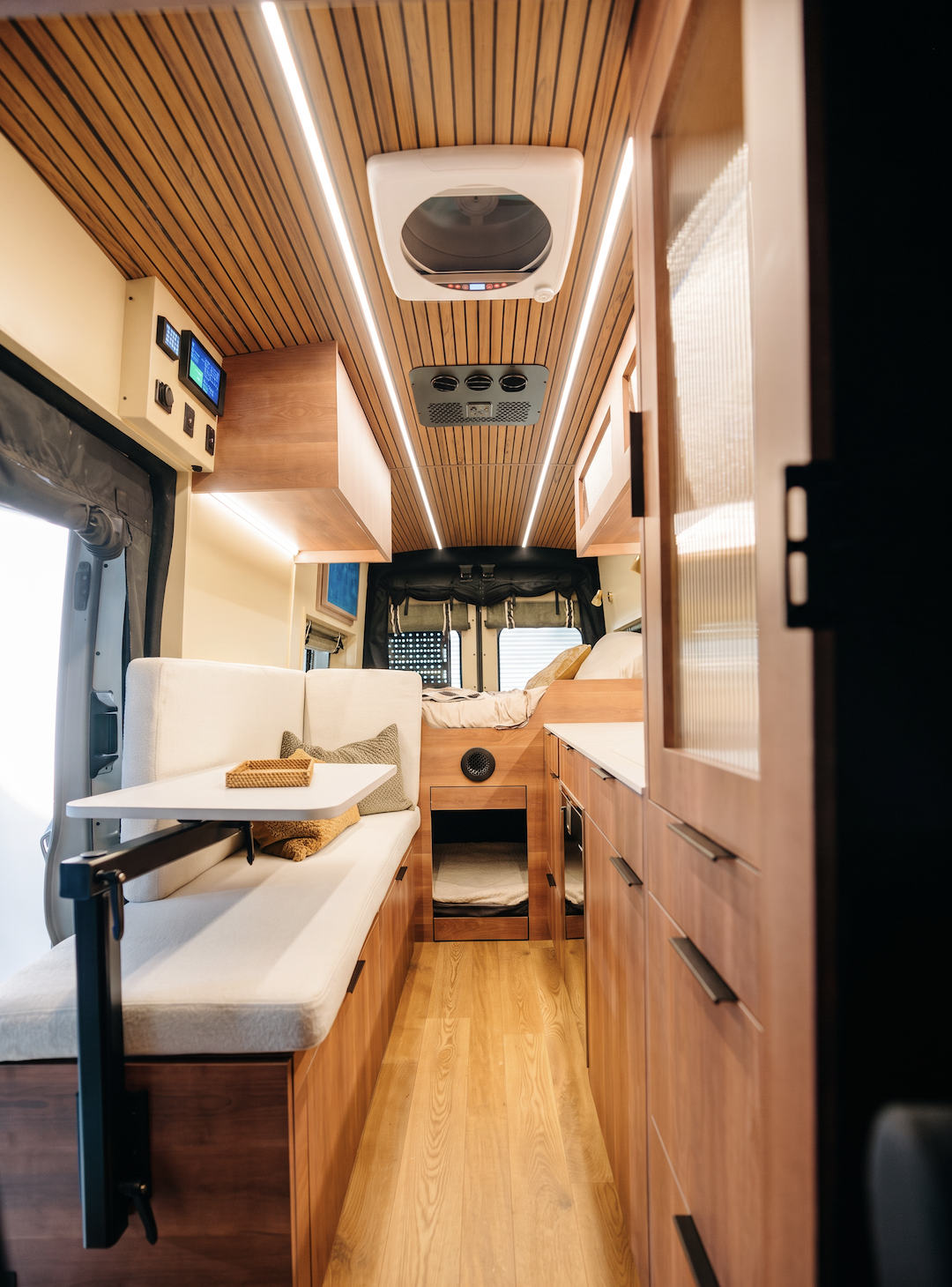
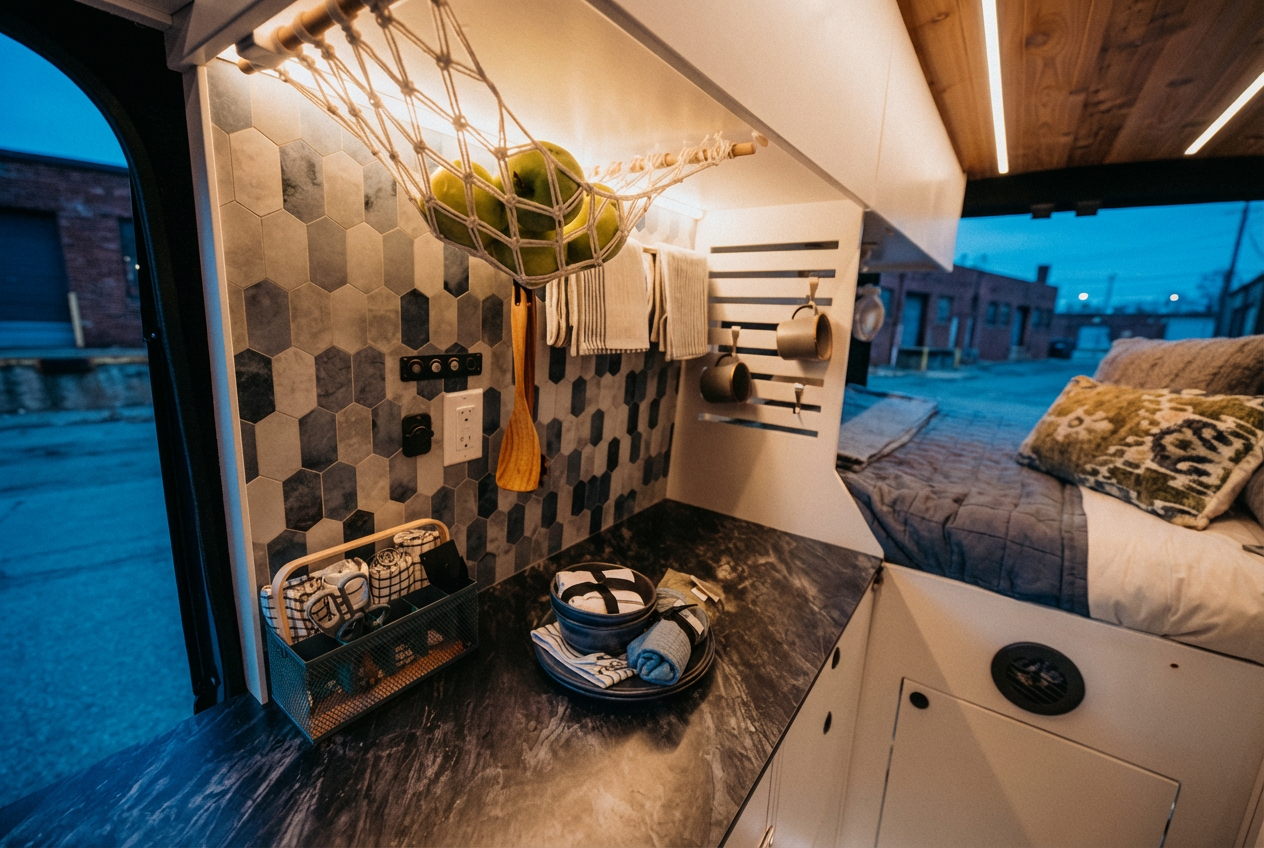
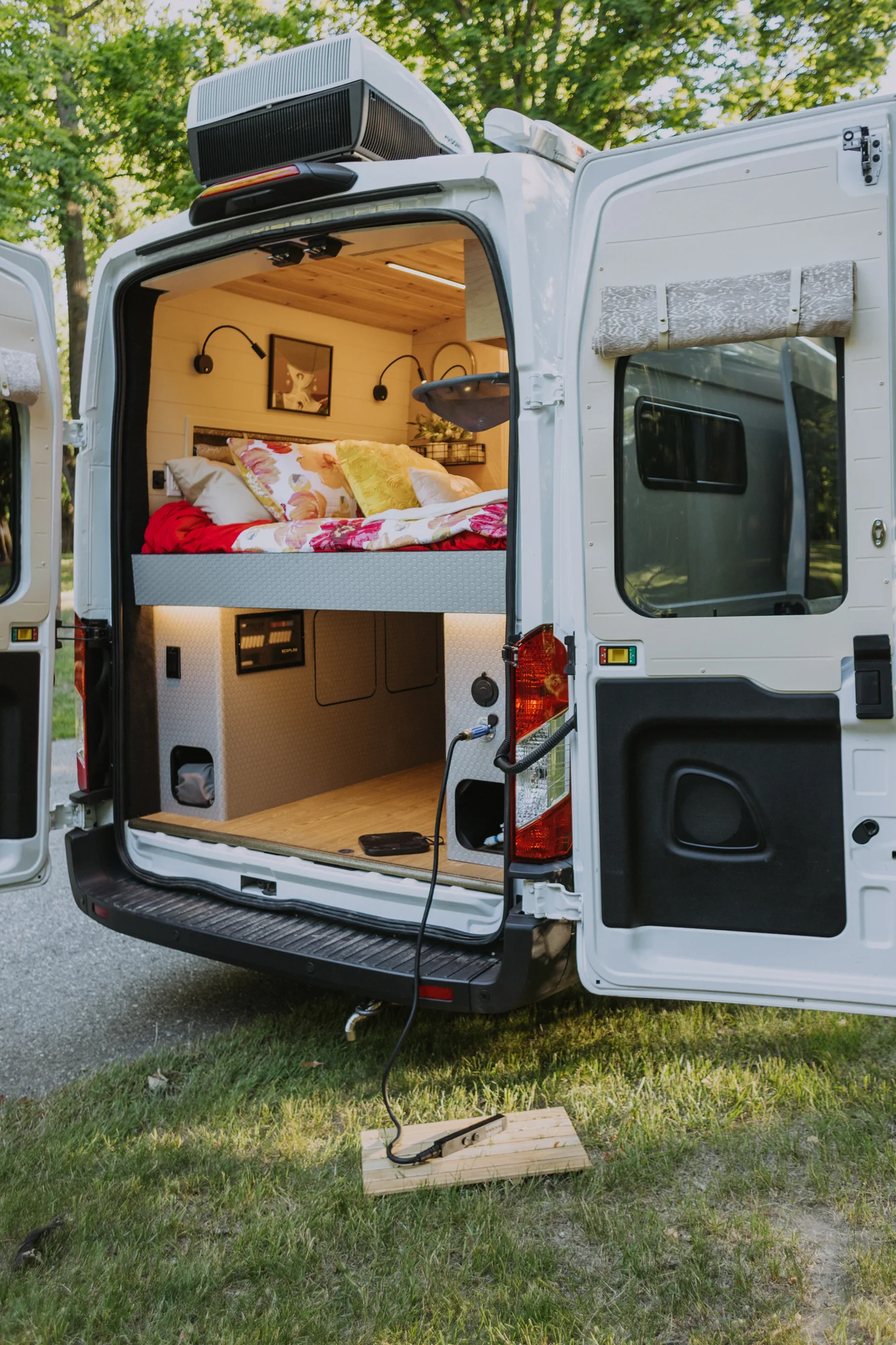
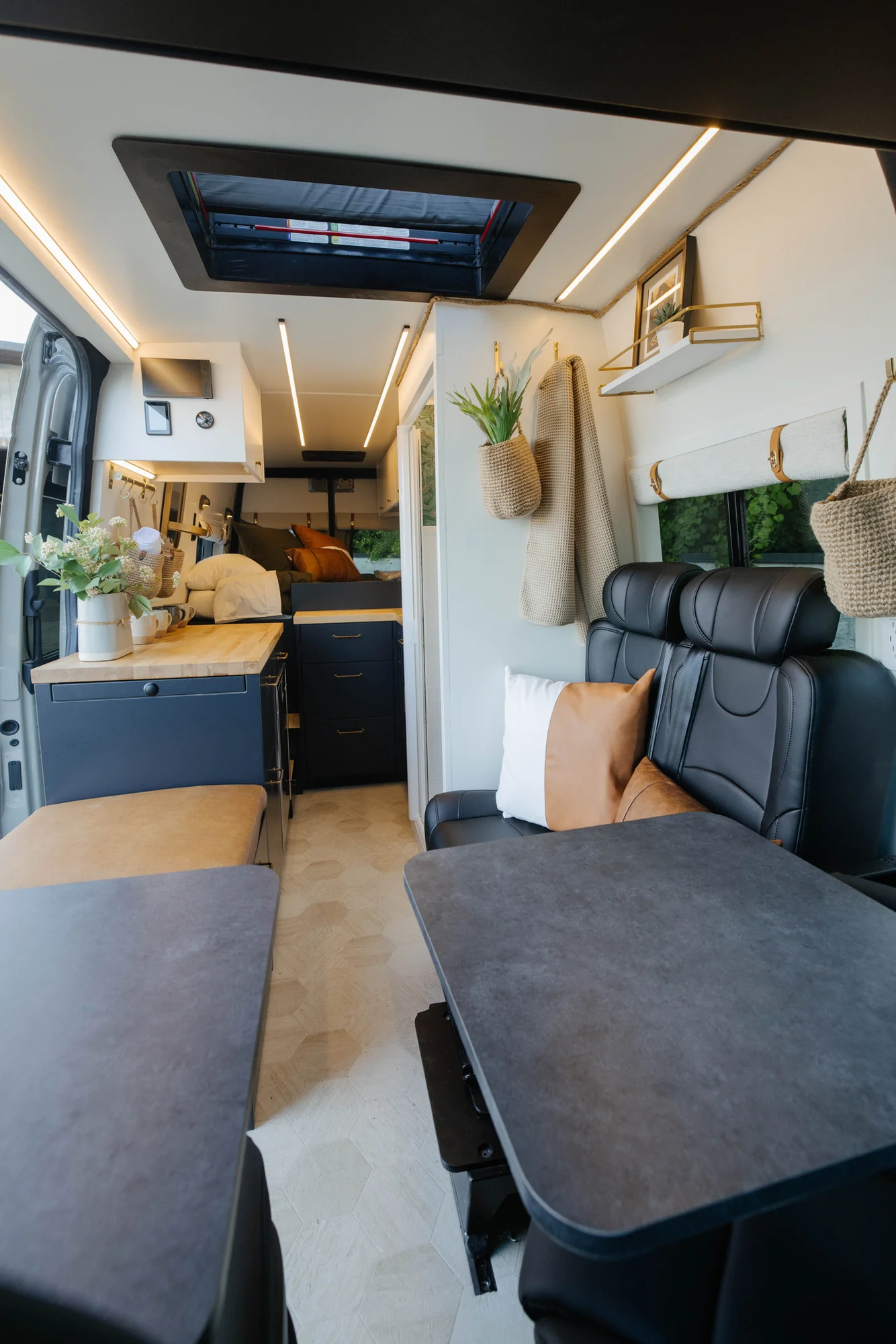
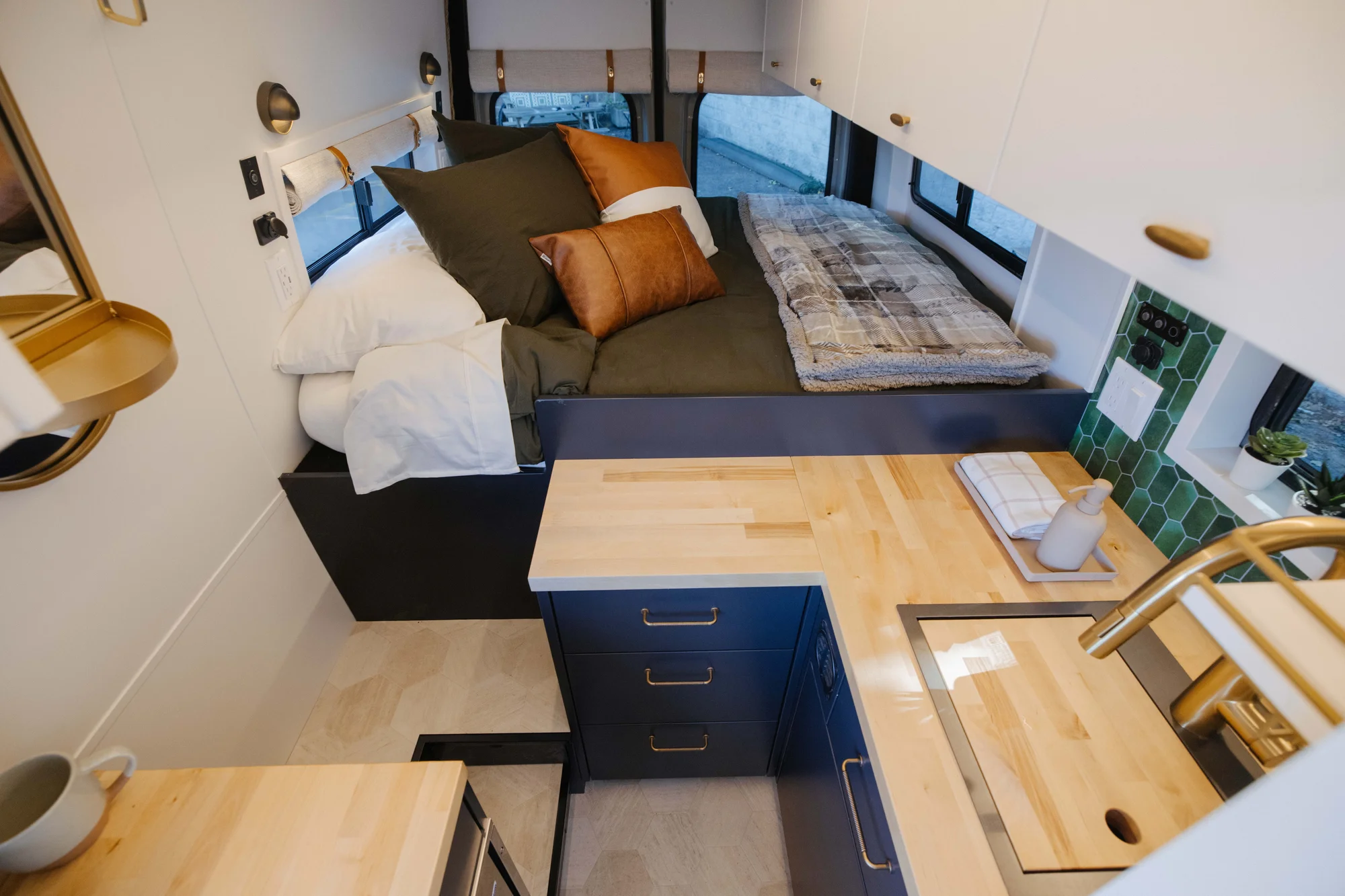
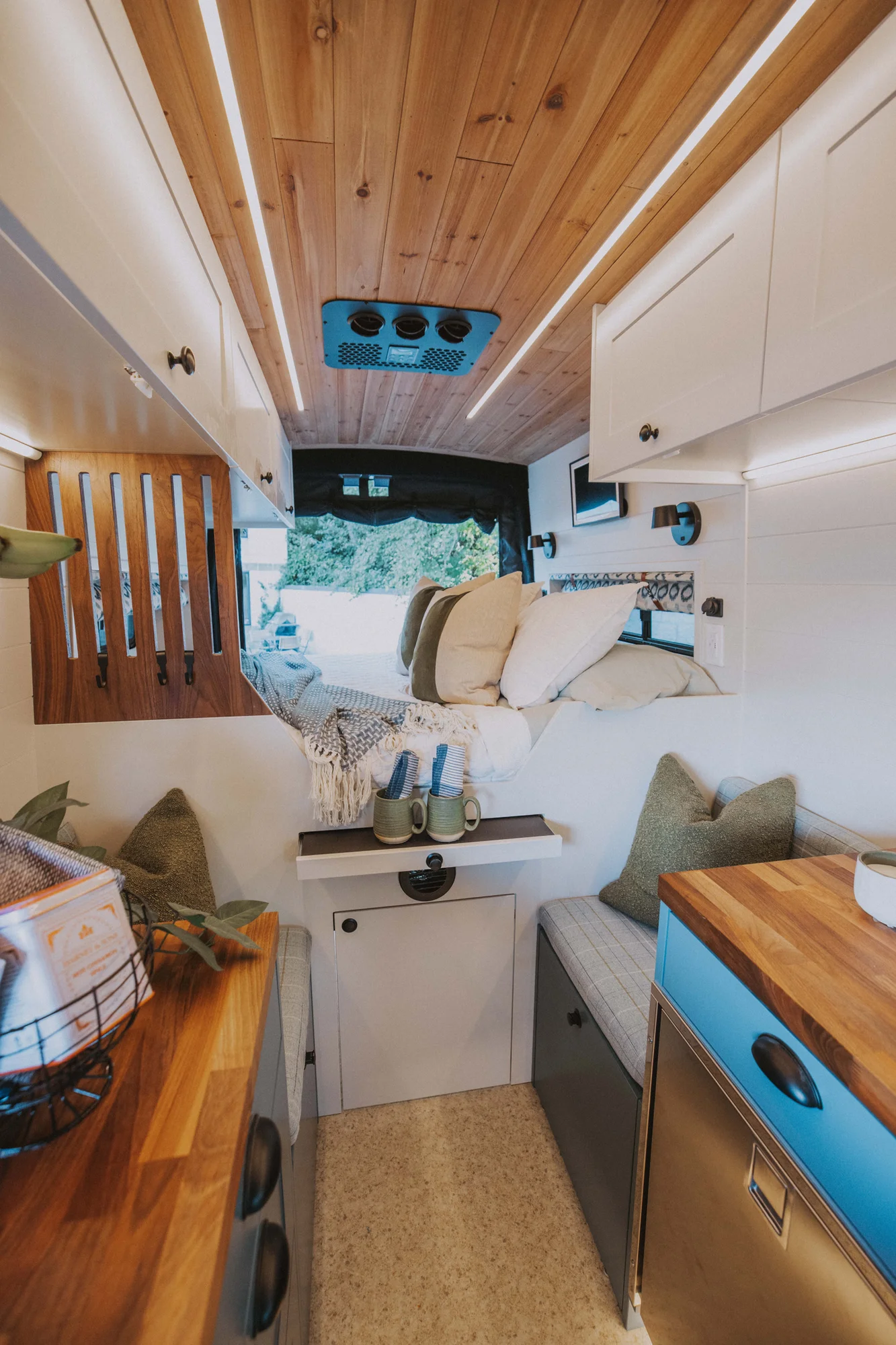
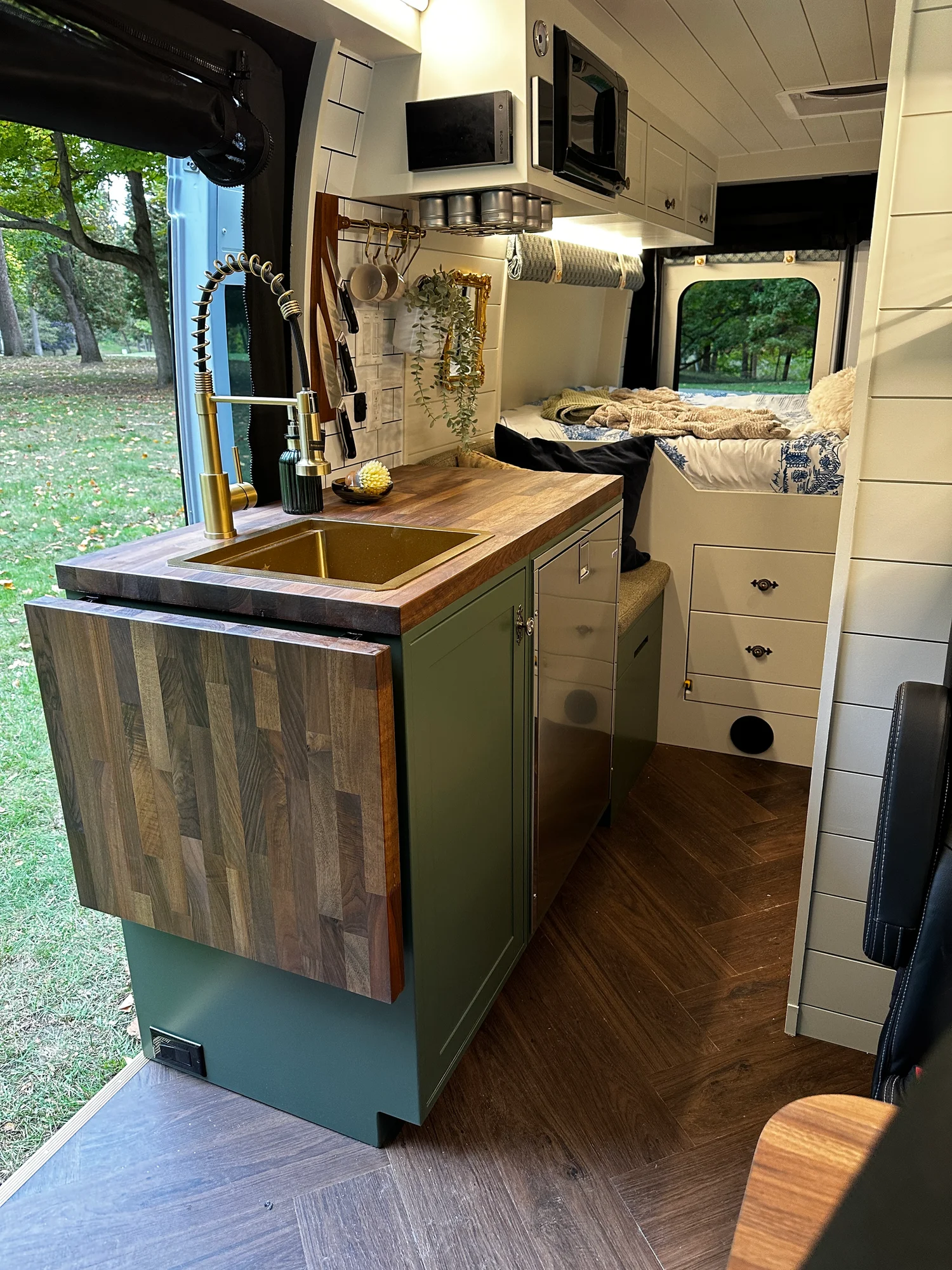
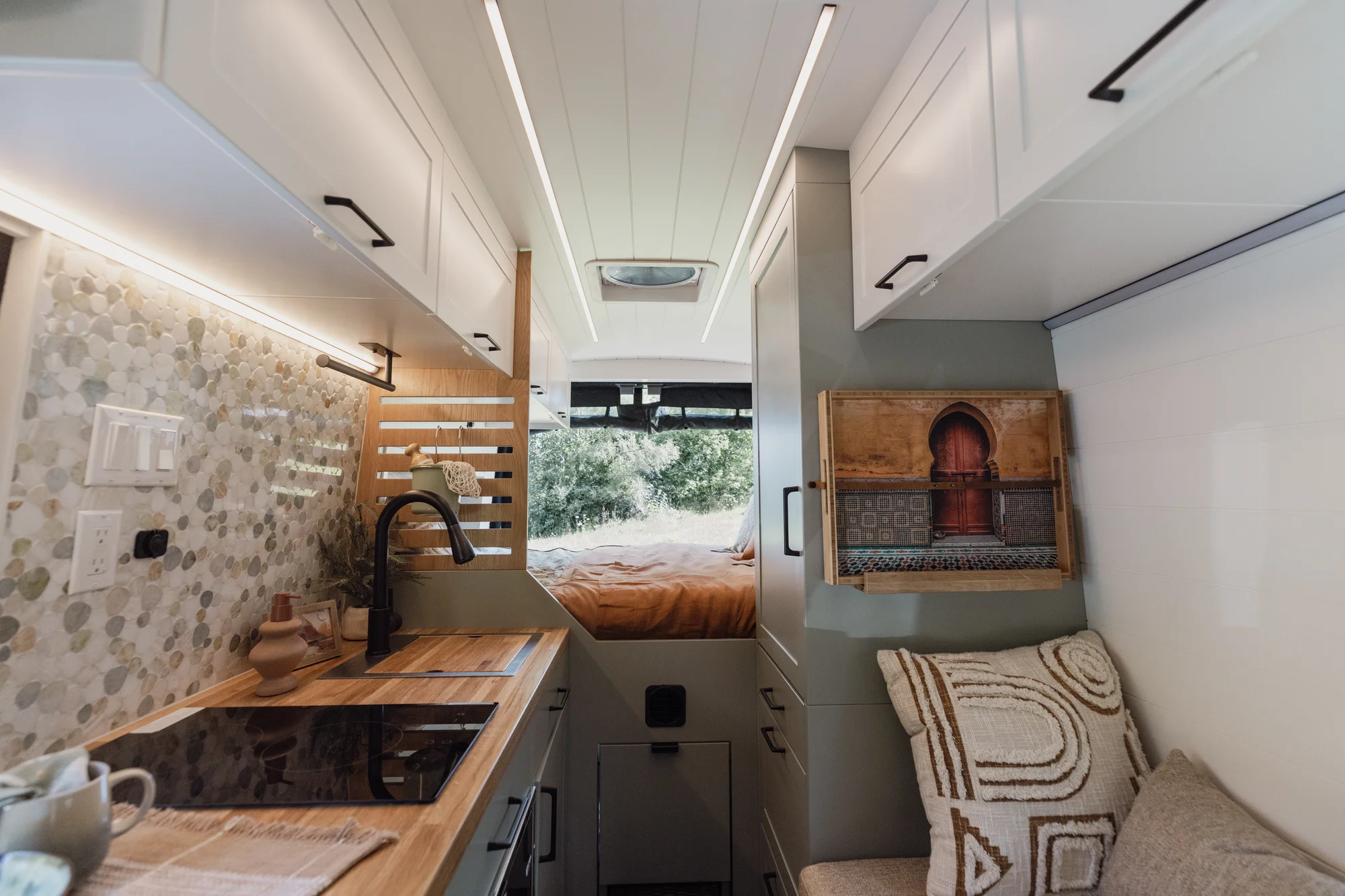
- The Mercedes Sprinter often gives you about 4–5 inches more usable living length in the main cabin area, which helps when you want distinct zones — a larger galley, a longer lounge, or more separation between spaces.
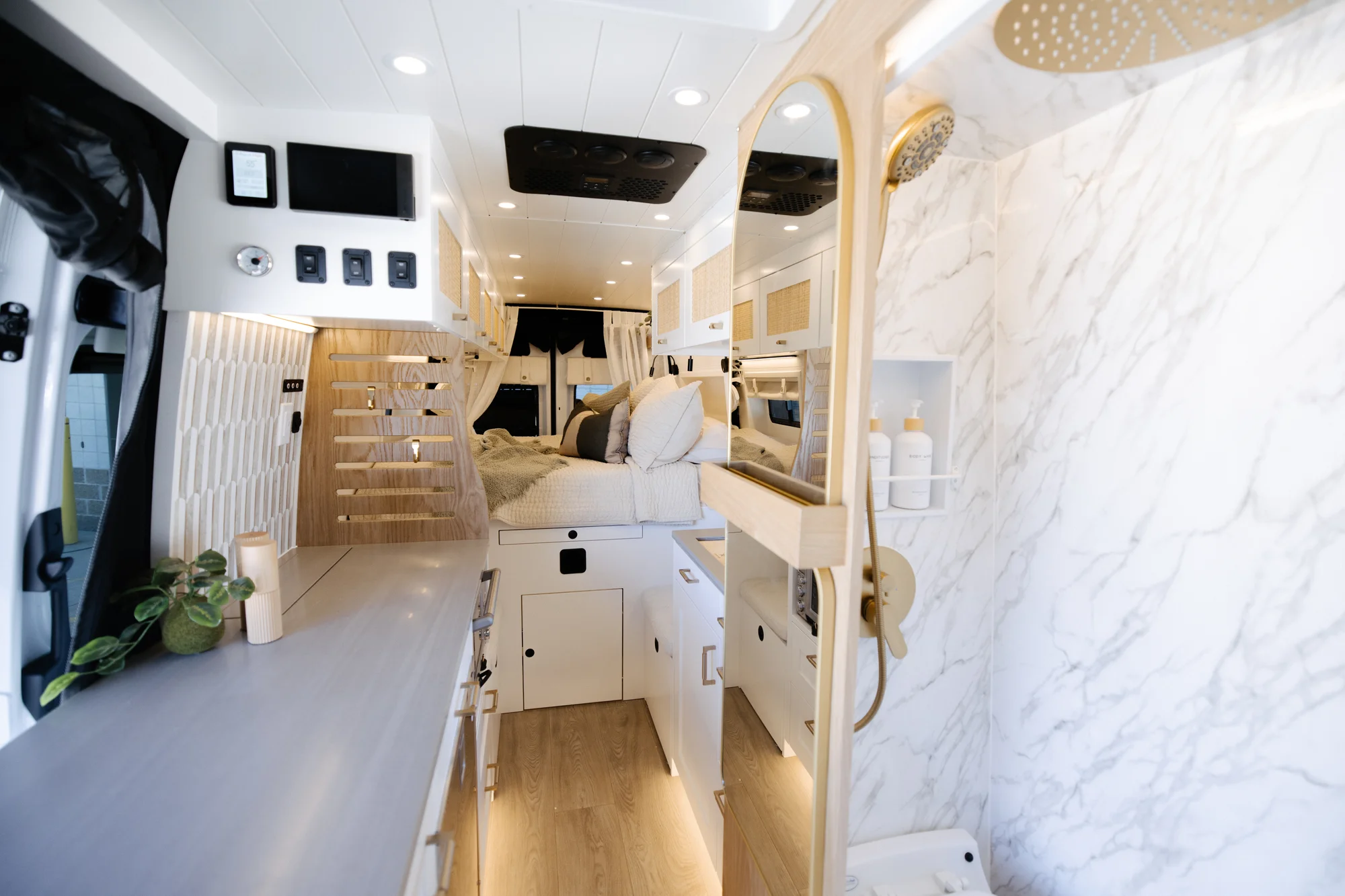
From a layout standpoint, we can adapt our Signature Layouts to either platform. The real question becomes:
- Do you value extra interior height and a slightly more open feel (Transit)?
- Or the longer living area and touring profile (Sprinter)?
AWD & Where You Actually Go
On paper, it’s easy to say, “I want to go everywhere.” In practice, most people frequent:
- Forest roads and dirt access tracks
- Snowy mountain pull-offs
- Muddy trailheads
- Uneven campground roads
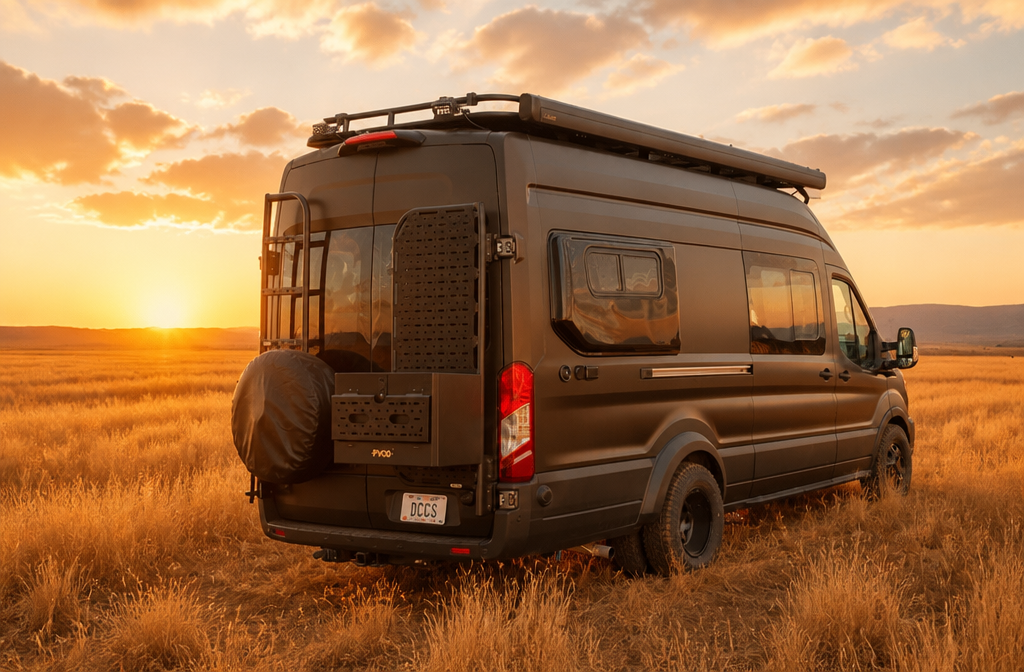
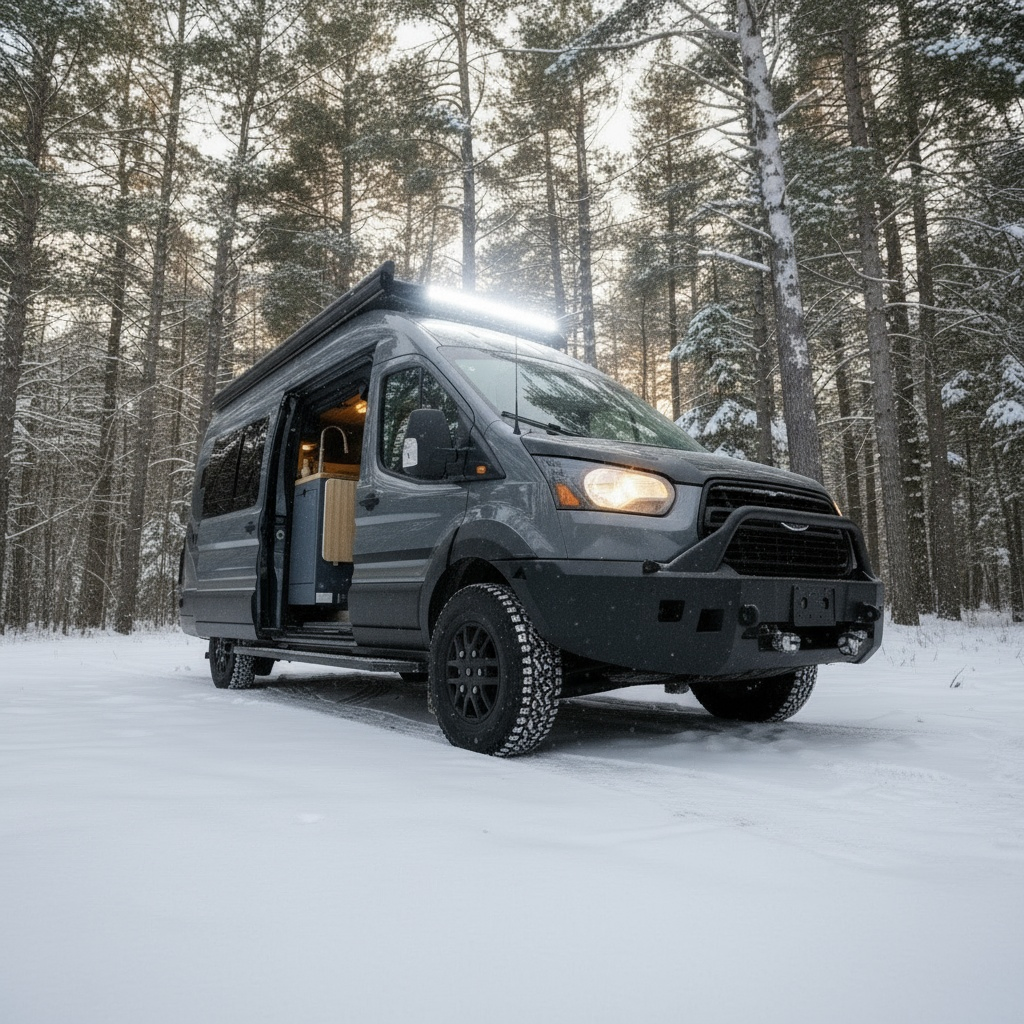
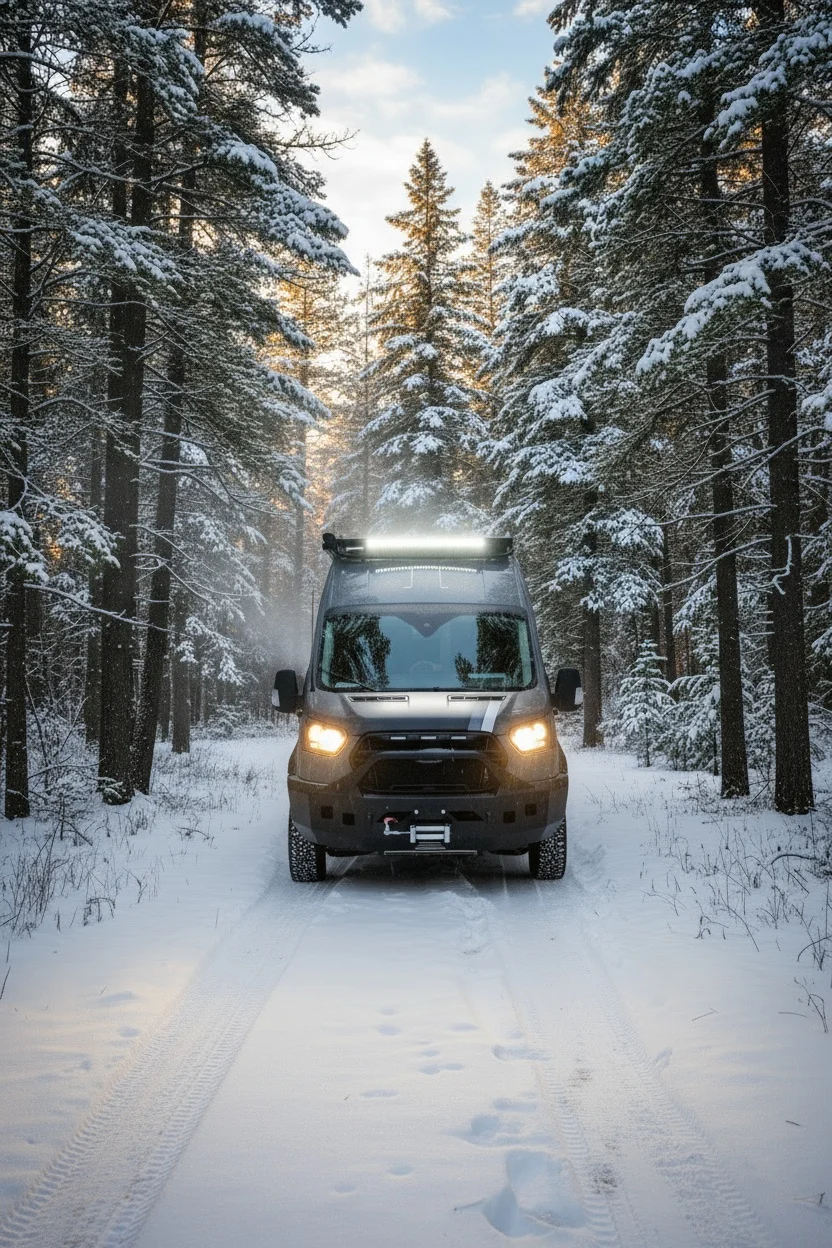
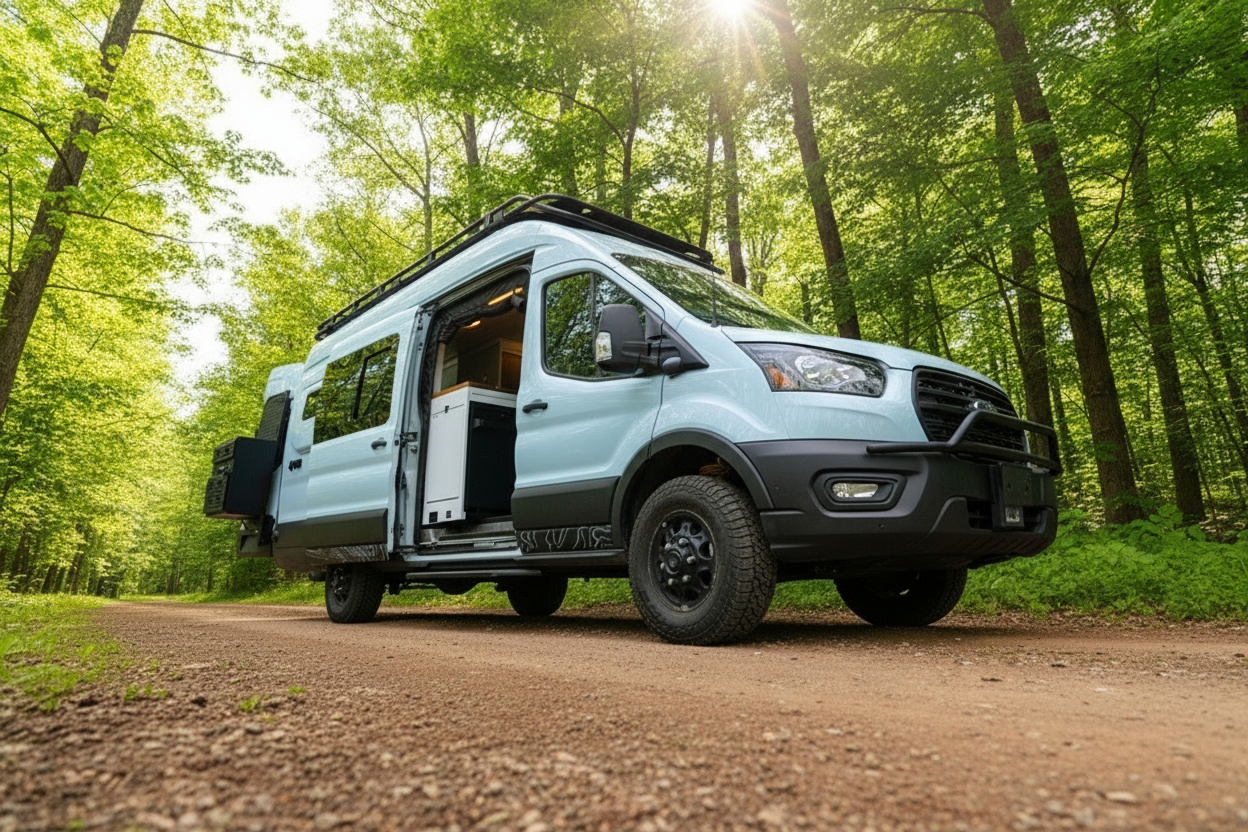
For that type of travel, AWD on either Transit or Sprinter is excellent, especially when paired with:
- A good suspension upgrade like
- All-terrain tires like
- Thoughtful weight distribution
Both platforms handle real-world adventure well. If your goal is technical rock crawling every weekend, we usually have a different conversation about whether a campervan is the right tool.
Comfort & Driving Feel: What Specs Don’t Show
Spec sheets don’t tell you how a van feels after a long day behind the wheel.
Here’s how clients usually describe it:
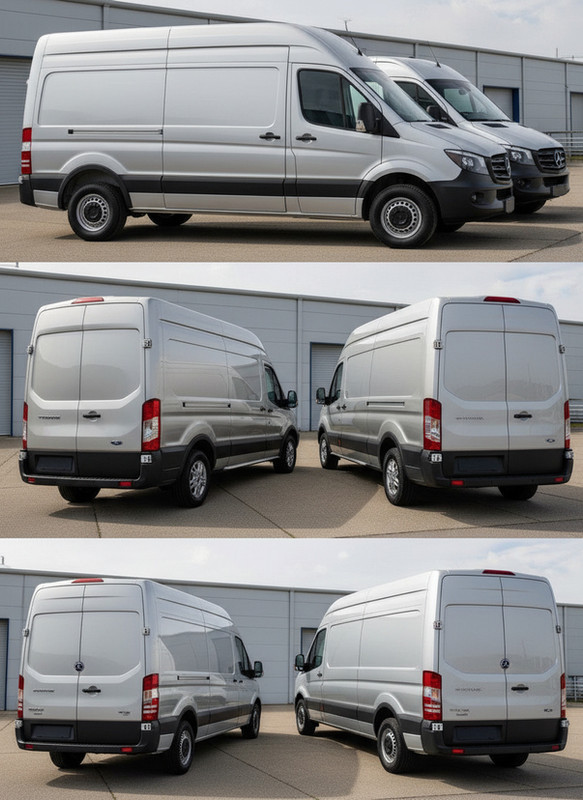
Transit: “The Big SUV”
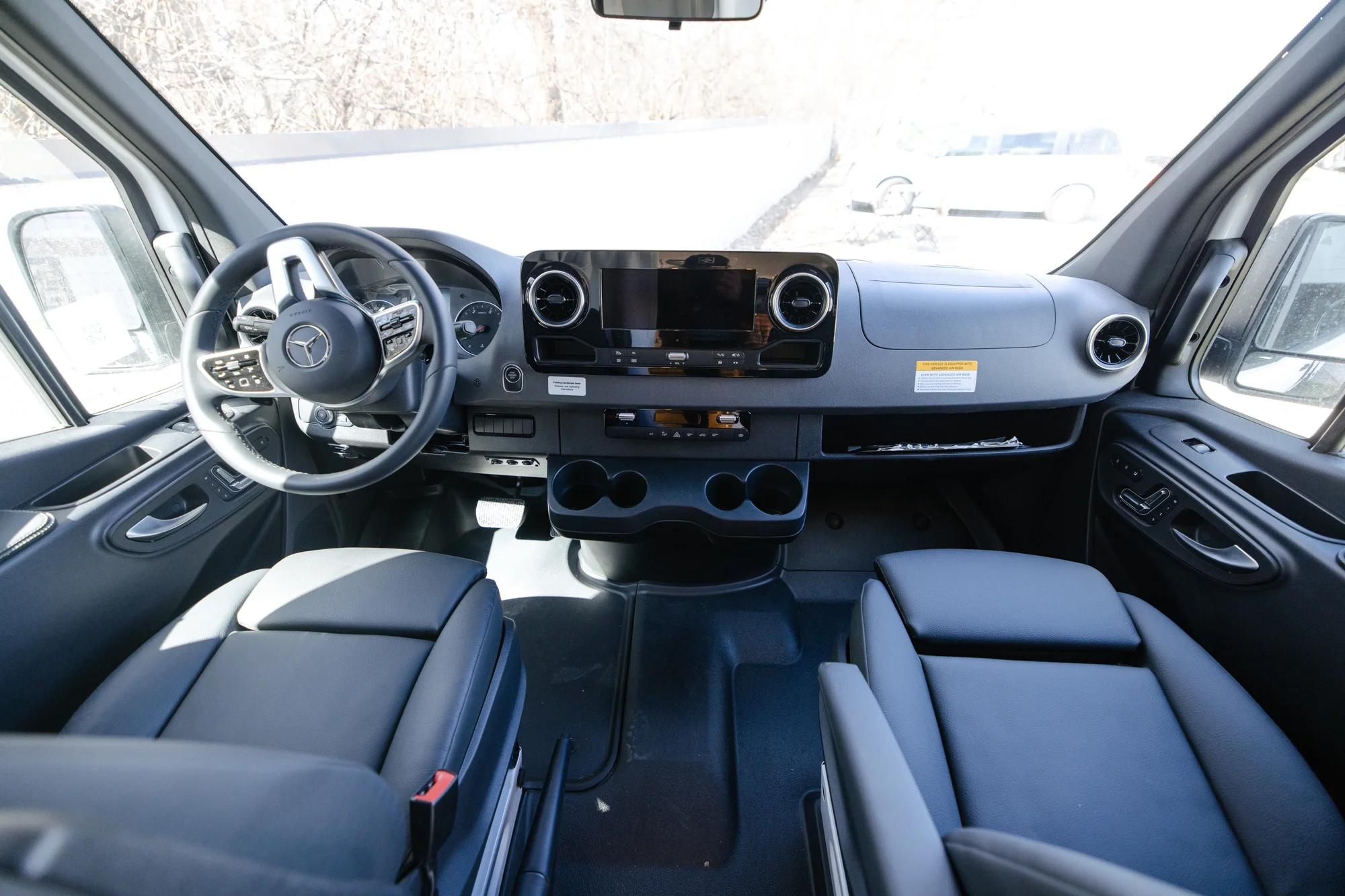
- Feels more like a large SUV or crossover
- Intuitive storage and cupholders
- Plenty of everyday conveniences
- Easy transition for drivers used to modern family vehicles
Sprinter: “The Refined Truck”
- Solid, steady, and purposeful
- Confident on long highway stretches
- Retains some commercial-vehicle character, even in higher trims
Clients who daily-drive their van often prefer the Transit’s cabin feel. Those treating the van as a long-distance touring coach often gravitate toward the Sprinter.
Drivability: Turning, Parking, and Tech
We watch many clients go from nervous to comfortable within the first few minutes of driving.
What we see:
Transit
- Slightly friendlier turning radius
- Easier in tight city streets and parking lots
- Modern driver-assist and camera systems available
Sprinter
- Extremely stable at highway speeds
- Strong driver-assist and camera options for long, tall vans
With a quality suspension package like Van Compass, both platforms become very civilized. The choice comes down to where you drive most and what makes you feel relaxed.
Service & Maintenance: Where Transit Often Wins

This is the point where many people quietly shift their thinking.
In simple terms:
- Ford has a much larger service network across the U.S. — with roughly 2,500–3,000 Ford dealerships and service centers nationwide that can handle Transit maintenance and repairs.
- Gas-engine service is easier to find, especially in small towns and rural areas where most independent shops are familiar with Ford gas platforms.
- Routine maintenance and many repairs are typically less expensive compared to modern diesel systems.
By comparison, Mercedes Sprinter–certified service centers are far fewer — generally estimated at 300–400 locations nationwide, concentrated around major cities and commercial corridors.
We have clients who love their Sprinters and have no regrets — especially those who live near, or travel between, cities with Sprinter-friendly dealers. But clients who drift slowly across the map — national forests, small towns, and remote areas — often appreciate the added peace of mind that comes with Ford’s broader service network.
If you’re considering a Sprinter, it’s worth doing a little homework first: look up how far the nearest Sprinter service center is from where you live and where you plan to travel. That distance can matter more than any spec sheet once you’re out on the road.
Cost & Value: What You’re Really Paying For
This is where priorities start to come into focus.
Here’s how it typically breaks down in the real world:
Mercedes Sprinter
- Higher upfront purchase price — typically $8,000–$15,000 more than a comparable Ford Transit, depending on trim, length, and drivetrain.
- Higher typical maintenance and repair costs, especially related to diesel emissions systems and Sprinter-specific parts.
- Strong resale value and brand recognition, particularly in the campervan and Class B motorhome market.
Ford Transit
- Lower upfront purchase price for a comparable chassis.
- Lower average maintenance costs, with simpler gas-engine service and wider shop availability.
- Leaves more budget for the build itself — upgraded interior materials, systems, suspension — or simply more room for travel.
Some clients are happy to put that extra money into the chassis and long-term resale strength of a Sprinter. Others prefer to keep $10k–$15k in their pocket for interior design, comfort upgrades, or a longer runway of actual adventures.
Neither choice is wrong. It’s just about where you want your money to live — in the chassis, in the coach itself, or out on the road.
Our Bottom Line
If you’re trying to decide between a Ford Transit vs Sprinter camper van, here’s the honest takeaway: both are excellent platforms when they’re built correctly.
The Transit usually wins for owners who prioritize service access, gas simplicity, and a slightly more open interior feel. The Sprinter often wins for those who want the diesel touring experience, a longer living area, and strong resale value, and who are comfortable planning around Sprinter service availability.
The “right” choice isn’t a spec-sheet contest — it comes down to how you actually travel: where you go, how often you roam, how far you drift from major cities, and what kind of ownership experience you want once the build is done.
If you’d like help making the decision, we’ll walk through it with you — chassis, layout, systems, and budget — and point you toward the platform that best supports the way you plan to use the coach.
Let’s Get You Moving in the Right Direction
Kick tires. Ask questions. Drift awhile.
🎥 Explore Our YouTube Channel
Watch van tours, build reveals, and behind-the-scenes footage straight from our shop.
👥 Join Our The Drift Facebook Group
The Drift Facebook group is a community where you can ask questions directly to the builders and designers at Drifter Vans, gaining insights and advice about campervan builds and design.
📜 Checkout The Drift — Vanlife Blog
Created by builders. Filled with vanlife tips, design inspiration, product reviews, and real client stories from the road.
🖼️ Check Out The Clients Gallery
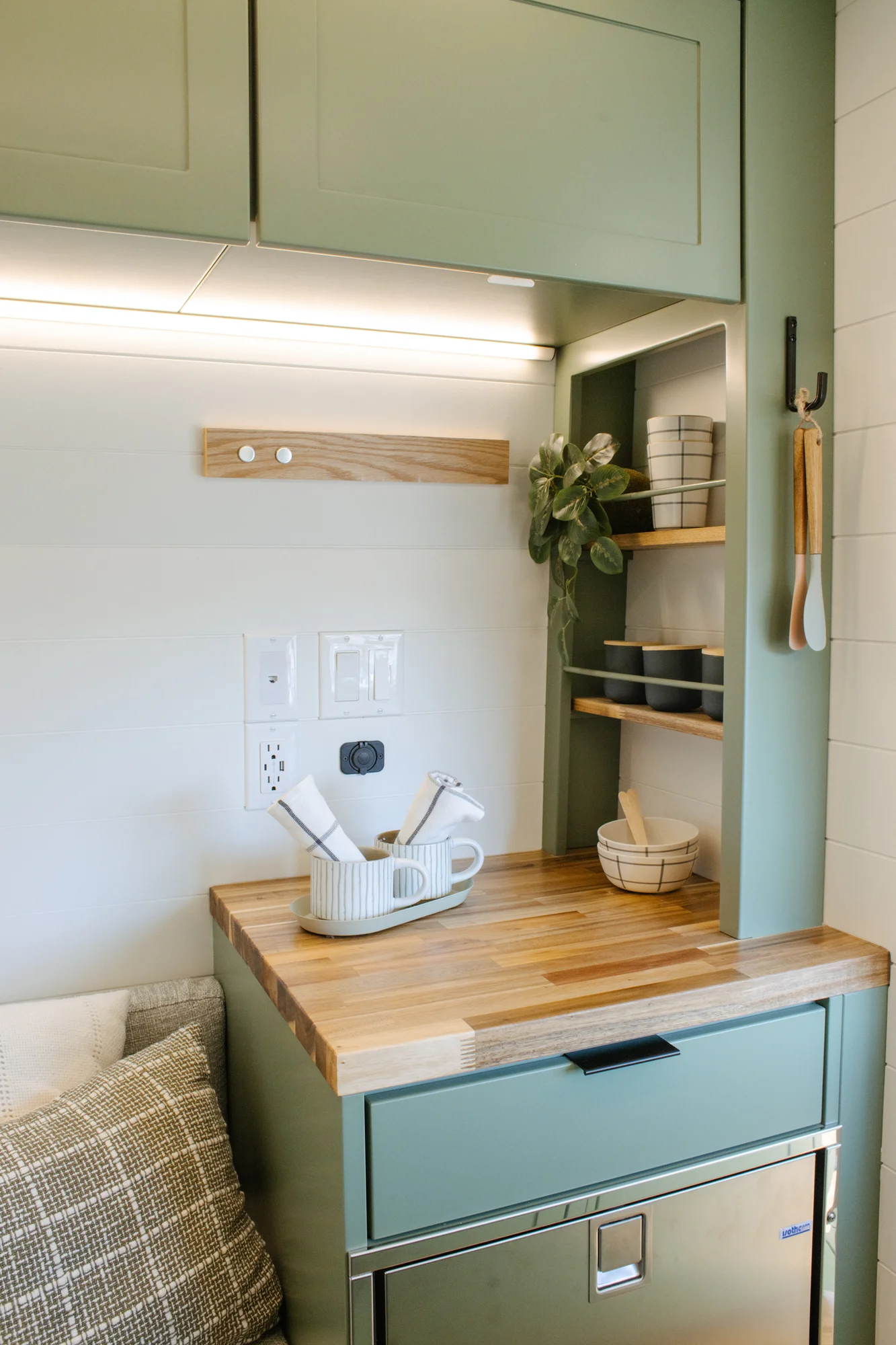
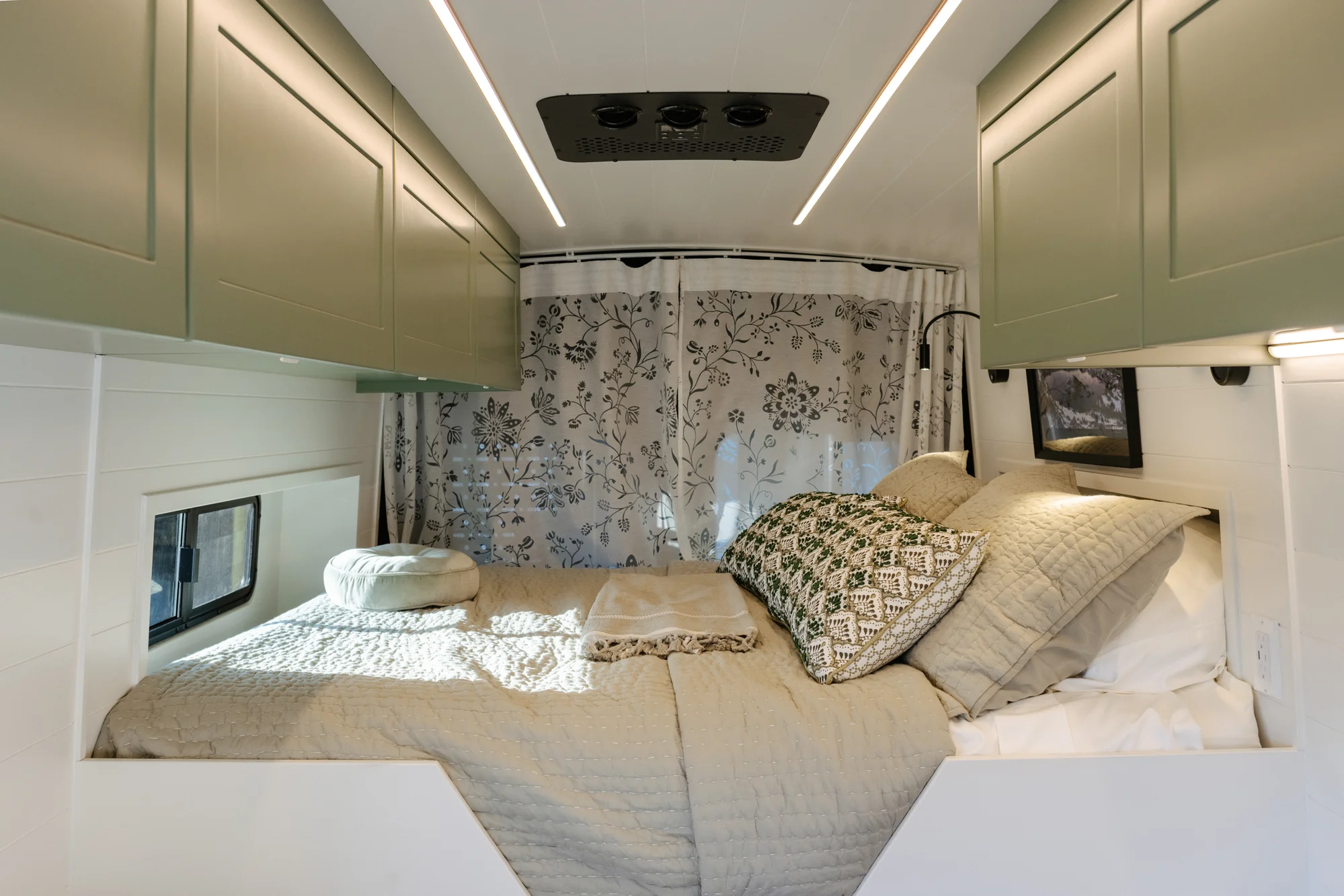
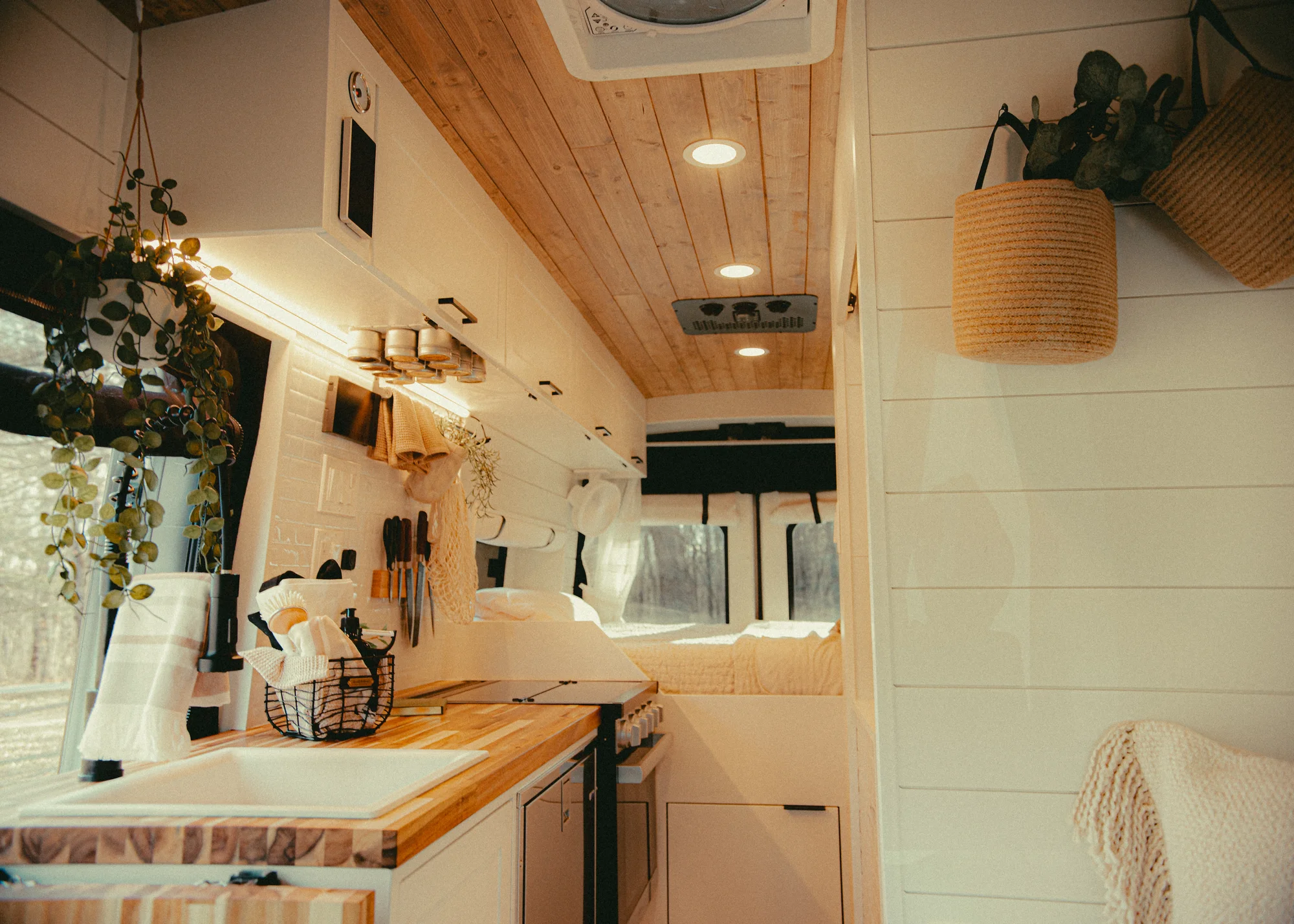
Browse layout inspiration, interior finishes, and the creative details that make each Drifter Van unique.
Contact Drifter Vans Today
If you’re ready to start exploring, click below. There’s no pressure—just a starting point. This isn’t a commitment. It’s a door opening.
Crafted
Certified
Never Repeated
The Owners Club.
Discover
Coachbuilt Campervans, Michigan


Schedule
a call
15 Minute Discovery Call
Begin with a 15-minute discovery call: how you'll use the van, platform, investment range, and whether the project fits the 2027 Andara Collection. If it fits, the next step is a one-hour proposal call, and Drifter prepares a full proposal.